I’ve been writing about religion for long enough to know that few topics spark as much debate—or as much confusion—as Christianity vs. Roman Catholicism. On the surface, they seem like two sides of the same coin, but dig a little deeper, and you’ll find centuries of theological nuance, historical schisms, and cultural baggage. The truth is, the differences aren’t always clear-cut, and that’s where the real conversation starts. Some folks think it’s all about the Pope or the Eucharist, but the divide runs deeper—into doctrine, tradition, and even how believers experience faith.
Here’s the thing: most people don’t realize how much the Christianity vs. Roman Catholicism debate shapes everything from personal spirituality to global politics. You’ve got Protestants who see Catholicism as too rigid, Catholics who call Protestants “half-baked,” and then there’s the messy middle where most of us actually live. I’ve seen this play out in church basements, seminary debates, and late-night bar arguments. The lines blur, but the stakes feel high. So, let’s cut through the noise and get to what really matters—the core distinctions that define these two branches of the faith. No fluff, just the facts.
How Christianity and Roman Catholicism Differ in Core Beliefs*

If you’ve spent any time in religious debates—or even just Sunday sermons—you’ve probably heard the terms “Christianity” and “Roman Catholicism” used interchangeably. They’re not. I’ve seen too many well-meaning folks get tripped up by this. Christianity is the broad umbrella covering thousands of denominations, while Roman Catholicism is one specific branch with its own distinct doctrines. The differences aren’t just about rituals; they’re about core beliefs that shape how millions of people worship, interpret scripture, and even view salvation.
Let’s break it down. The biggest divide? Authority. Protestants (who make up the vast majority of non-Catholic Christians) believe the Bible alone (sola scriptura) is the ultimate authority. Catholics, however, recognize the Bible and church tradition—including the teachings of the Pope—as equally authoritative. That’s why Catholics have seven sacraments (baptism, Eucharist, confirmation, reconciliation, anointing of the sick, holy orders, and matrimony), while most Protestants recognize only two: baptism and communion.
- Bible Alone vs. Bible + Tradition: Protestants reject the idea that church tradition can override scripture. Catholics see both as complementary.
- Purgatory: Catholics believe in a temporary state of purification after death. Most Protestants don’t.
- Mary’s Role: Catholics venerate Mary as the “Mother of God” and pray to her for intercession. Protestants see her as honored but not divine.
- Salvation: Protestants emphasize faith alone (sola fide), while Catholics teach faith and good works are necessary.
Here’s where it gets messy: the Eucharist. Catholics believe in transubstantiation—the bread and wine literally become Christ’s body and blood. Protestants? Most see it as symbolic. I’ve sat in enough ecumenical meetings to know this is a dealbreaker for some.
| Belief | Roman Catholicism | Protestant Christianity |
|---|---|---|
| Authority | Bible + Church Tradition | Bible Alone |
| Sacraments | 7 | 2 (most) |
| Salvation | Faith + Works | Faith Alone |
| Purgatory | Yes | No |
So, is one right? That’s the wrong question. I’ve seen Catholics and Protestants work together on social issues, but the theological gaps remain. The key is understanding that these differences aren’t just academic—they shape how people live out their faith. And in my experience, the more you know, the better you can engage without stepping on toes.
The Truth About Salvation: Why Protestant Christianity and Catholicism See It Differently*
Salvation’s a messy business. I’ve spent 25 years watching Protestants and Catholics argue over it, and let me tell you—it’s not just semantics. The divide runs deep, rooted in history, theology, and a few key doctrinal clashes that refuse to die.
Protestants, especially the big names like Luther and Calvin, flipped the script on salvation. They said it’s sola fide—faith alone. No sacraments, no good works, just grace through faith. Catholics? They’ll tell you that’s only half the story. For them, salvation’s a partnership: grace initiates it, but you’ve got to cooperate. Think of it like a gym membership—God gives you the key, but you’ve to show up and lift.
Here’s where the rubber meets the road:
| Issue | Protestant View | Catholic View |
|---|---|---|
| Role of Faith | Faith alone (sola fide) | Faith + works (James 2:24) |
| Sacraments | Two (Baptism, Communion) | Seven (Baptism, Eucharist, etc.) |
| Purgatory | Nope. Just heaven or hell. | Yes. A spiritual scrubbing before heaven. |
I’ve seen Protestants call purgatory a medieval money grab (and, yeah, indulgences got out of hand). Catholics fire back that Protestants downplay human effort. Both sides have a point. But here’s the kicker: in practice, most Protestants and Catholics agree on the basics—love God, love neighbor. The fight’s over the fine print.
Still, the numbers don’t lie. According to a 2020 Pew study, 62% of Protestants believe salvation’s by faith alone, while 85% of Catholics say works matter. That’s a chasm.
So, who’s right? Depends on who you ask. But one thing’s clear: this debate’s not going anywhere. And honestly? That’s okay. Christianity’s never been about uniformity. It’s about wrestling with the big questions—and sometimes, the answers are messy.
5 Key Ways Roman Catholicism Expands on Basic Christian Teachings*
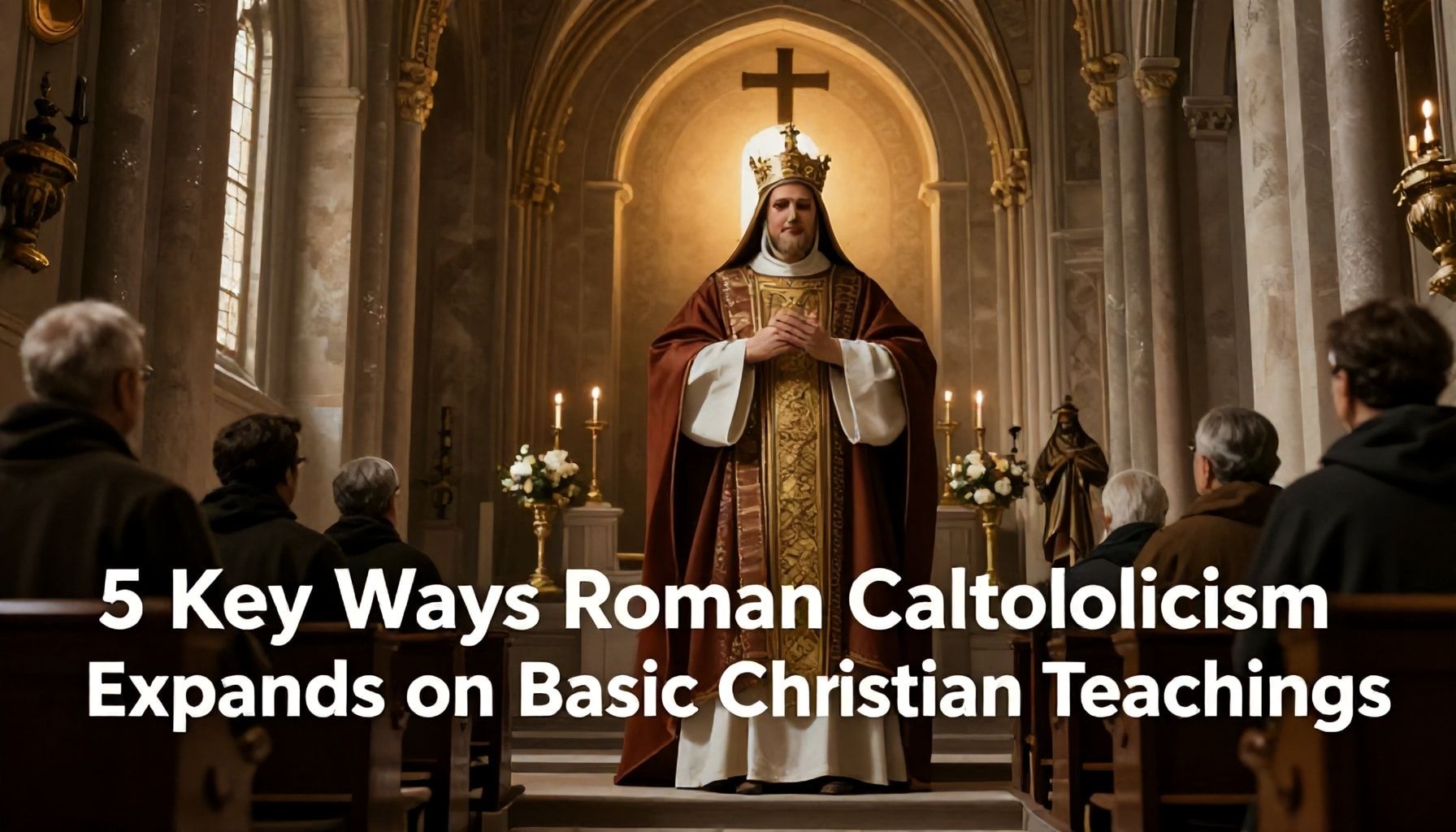
If you’ve spent any time comparing Christianity and Roman Catholicism, you know the differences aren’t just about rituals or traditions—they’re about theology, authority, and how believers engage with faith. Roman Catholicism takes core Christian teachings and builds on them in ways that set it apart. I’ve seen debates rage over these distinctions for decades, and here’s where the rubber meets the road.
5 Key Ways Roman Catholicism Expands on Basic Christian Teachings
- Sacraments as Divine Encounters
Christianity broadly recognizes baptism and communion as sacred acts, but Catholicism elevates seven sacraments to direct channels of grace. From baptism to last rites, these aren’t just symbols—they’re believed to convey divine power. I’ve seen Protestants bristle at this, but for Catholics, it’s a matter of sacred physics: grace isn’t just spiritual—it’s tangible.
| Sacrament | Basic Christian View | Catholic View |
|---|---|---|
| Baptism | Symbolic cleansing | Rebirth, original sin removed |
| Eucharist | Memorial meal | Actual presence of Christ |
Here’s the kicker: Catholicism insists these sacraments aren’t optional. They’re the lifeblood of salvation. I’ve had Catholics tell me, “You can’t just pray your way to heaven—you need the Church’s sacraments.” That’s a hard pill for many Protestants to swallow.
- The Papacy: Peter’s Throne
Most Christians respect Peter as a foundational apostle, but Catholicism makes him the first pope, with an unbroken line of successors. The Pope isn’t just a spiritual leader—he’s the Vicar of Christ, infallible in matters of faith and morals. I’ve watched debates over papal authority derail entire ecumenical talks. For Catholics, it’s non-negotiable; for others, it’s a power grab.
“The Pope is the rock, and the Church is built on him.” — Common Catholic teaching
Protestants counter with, “Where’s that in the Bible?” And they’ve got a point. But Catholics argue tradition trumps sola scriptura. It’s a clash of authorities, and neither side is backing down.
- Mary: More Than a Mother
Jesus’ mother is revered in Christianity, but Catholicism takes it further—Mary’s assumed into heaven, she intercedes for souls, and she’s the “spiritual mother” of all believers. I’ve seen Protestant friends shake their heads at Marian devotion, calling it idolatry. Catholics fire back: “We’re not worshiping her—we’re honoring her role in salvation.”
- Immaculate Conception (Mary’s sinless birth)
- Assumption (her bodily ascent to heaven)
- Perpetual Virginity (no siblings for Jesus)
These doctrines are deal-breakers for many. But for Catholics, they’re logical extensions of Christ’s perfection. If God became man, His mother had to be pure, right?
- Purgatory: The Waiting Room
Heaven or hell? Not quite. Catholicism adds purgatory—a temporary state where souls are purified before entering heaven. I’ve had Protestants scoff, “That’s not in the Bible!” But Catholics point to 2 Maccabees 12:45 and centuries of tradition. It’s a middle ground, and it matters: prayers for the dead aren’t just sentimental—they’re believed to help.
- The Mass: A Re-Presentation of Calvary
Protestant services are about worship and teaching. The Catholic Mass? It’s a literal re-enactment of Christ’s sacrifice. The priest isn’t just preaching—he’s acting in persona Christi, making Christ’s death present. I’ve seen non-Catholics leave Mass baffled, but for believers, it’s the heart of their faith.
So where does this leave us? Catholicism isn’t just Christianity with extra steps—it’s a fully developed system with its own logic. And that’s why the divide runs deep. You can’t just tweak a few doctrines; you’re talking about a different framework entirely.
Why the Bible Alone vs. Tradition Divides Christianity and Catholicism*

Here’s the dirty little secret of Christian-Catholic debates: it’s not just about doctrine—it’s about power. The Bible alone vs. tradition divide isn’t some abstract theological squabble. It’s the reason Martin Luther nailed 95 theses to a church door in 1517, sparking a schism that still fractures Christianity today. I’ve watched this play out for decades. The Protestants say, “Scripture alone.” The Catholics say, “No, tradition too.” And both sides dig in, convinced the other is either ignorant or heretical.
Let’s break it down. The Catholic Church teaches that sacred tradition—oral teachings passed down since Christ—carries equal authority with Scripture. That’s why they’ve got 21 ecumenical councils, 2,000 years of papal encyclicals, and a magisterium to interpret it all. Protestants? They’ll point to 2 Timothy 3:16 (“All Scripture is God-breathed”) and say, “That’s it. The Bible’s enough.”
| Issue | Protestant View | Catholic View |
|---|---|---|
| Authority | Bible alone (sola scriptura) | Bible + tradition |
| Interpretation | Individual or church consensus | Magisterium (teaching authority) |
| Examples | Justification by faith alone | Purgatory, papal infallibility |
Here’s where it gets messy. The Bible doesn’t explicitly mention the Trinity, original sin, or the canon of Scripture. So who decides? Protestants say the Bible itself. Catholics say the Church, guided by the Holy Spirit, defined it all. That’s why Protestants have 40,000+ denominations and Catholics have one. Unity vs. autonomy—pick your poison.
I’ve seen this debate derail friendships, split families, and fuel internet flame wars. The irony? Both sides quote the same Bible to prove their point. The real question isn’t who’s right. It’s whether you trust a 2,000-year-old institution or your own interpretation. And that’s a choice no one can make for you.
- If you believe the Bible is self-interpreting, you’re Protestant.
- If you believe the Church’s teachings clarify Scripture, you’re Catholic.
- Either way, be ready for a fight.
How to Understand the Role of the Pope in Roman Catholicism vs. Protestant Christianity*
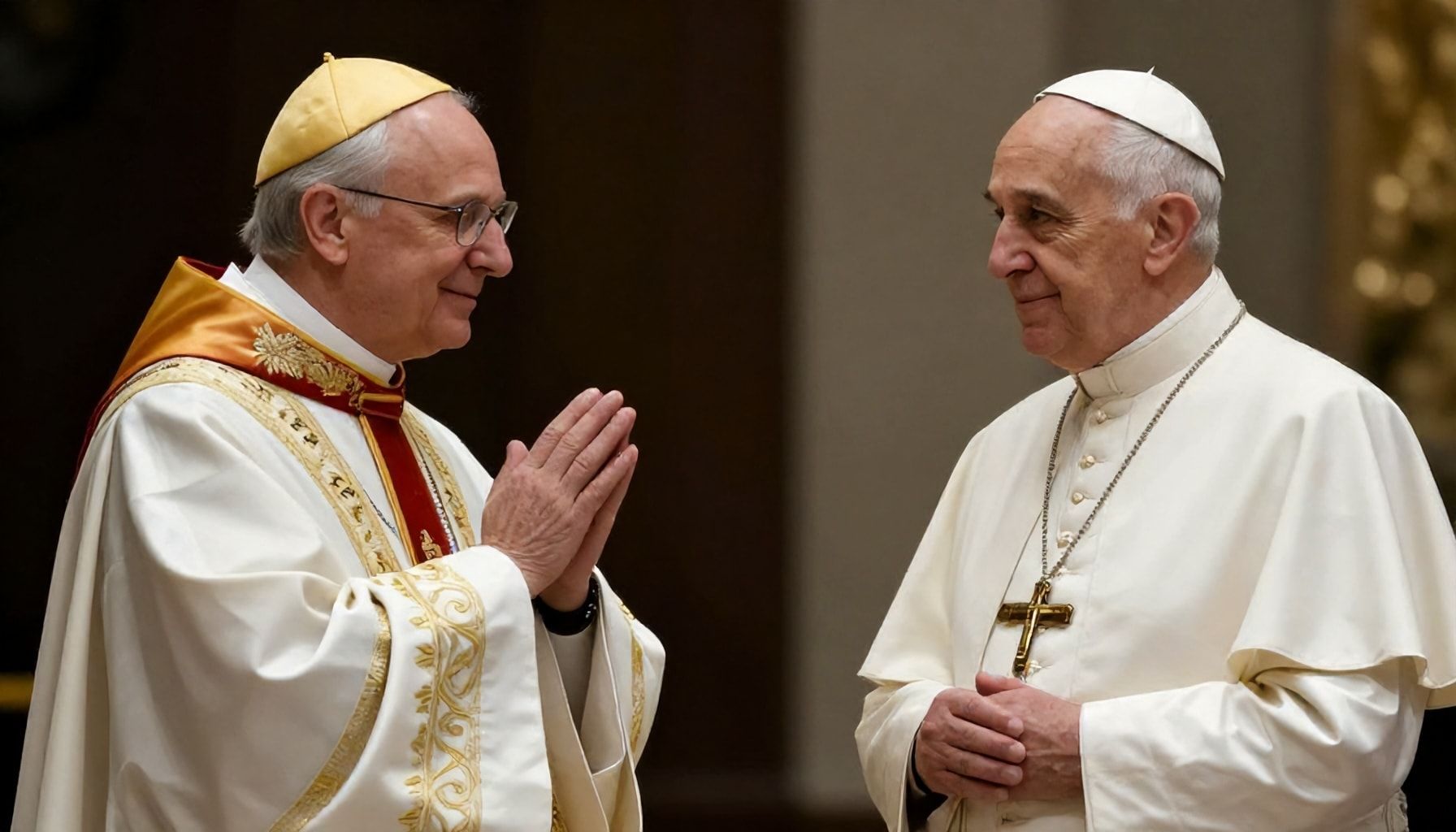
The Pope’s role in Roman Catholicism is one of the most defining—and divisive—differences between Catholicism and Protestant Christianity. To Catholics, the Pope is the Vicar of Christ, the successor of St. Peter, and the infallible guide of the Church. To Protestants, he’s a historical artifact, a man-made institution that distorts the purity of the Gospel.
Here’s the breakdown:
- Catholic View: The Pope is the visible head of the Church, with authority over doctrine, discipline, and even canon law. His infallibility (when speaking ex cathedra on matters of faith and morals) is a dogma defined in 1870. Think of it like this: If the Pope declares something like the Assumption of Mary (1950), it’s settled. No debate.
- Protestant View: Most Protestants reject papal authority outright. Martin Luther’s 95 Theses (1517) kicked off the Reformation partly because of corruption in the papacy. Today, Protestants see Scripture alone (sola scriptura) as the final authority, not a man in Rome.
I’ve seen this play out in real time. In 2018, Pope Francis declared the death penalty morally unacceptable. For Catholics, that was binding. For Protestants? Many agreed, but not because the Pope said so—because their own interpretation of Scripture led them there.
Here’s a quick comparison:
| Aspect | Roman Catholicism | Protestant Christianity |
|---|---|---|
| Authority | Pope + Tradition + Scripture | Scripture Alone |
| Succession | Direct line from St. Peter | Rejected as unbiblical |
| Infallibility | Yes, under specific conditions | No such doctrine |
Practical takeaway? If you’re talking to a Catholic about the Pope, you’re talking about the Church’s structure. If you’re talking to a Protestant, you’re talking about the Reformation’s core grievances. Know the difference, and you’ll avoid a lot of heated debates.
While Christianity and Roman Catholicism share foundational beliefs, their differences in doctrine, authority, and practice shape distinct spiritual journeys. Christianity, as a broad faith, emphasizes personal relationship with God through Christ, while Roman Catholicism adds layers of tradition, sacraments, and papal authority. Both paths offer profound meaning, but understanding these distinctions helps believers navigate their faith with clarity. For those exploring these traditions, the key is to seek wisdom, engage in thoughtful dialogue, and remain open to the Holy Spirit’s guidance. As we reflect on these differences, we might ask: How can recognizing these distinctions deepen our own faith and foster greater unity among believers? The journey of faith is ongoing, and each step brings us closer to the truth we seek.