Here’s the deal: I’ve spent 25 years answering the same question—is Christian and Catholic the same?—and the short answer is no, but the long answer is where things get interesting. Sure, they share roots, but the differences run deeper than most people realize. You’ve got Protestants throwing around terms like “non-denominational,” Catholics holding fast to tradition, and everyone else somewhere in between. It’s a mess, but a fascinating one.
The confusion makes sense. Both claim Jesus, both believe in the Bible, and both have churches. But dig into the details—papal authority, sacraments, salvation—and suddenly, the cracks show. I’ve seen debates turn into shouting matches, friends split over doctrine, and well-meaning folks assume Christian and Catholic are interchangeable. They’re not. And if you’ve ever wondered why, you’re not alone.
So, let’s cut through the noise. This isn’t about picking sides; it’s about clarity. Because whether you’re a lifelong Catholic, a Protestant, or just curious, knowing the differences matters. And trust me, after decades in this, I’ve learned the hard way what actually helps.
How Christianity and Catholicism Differ: A Clear Breakdown*
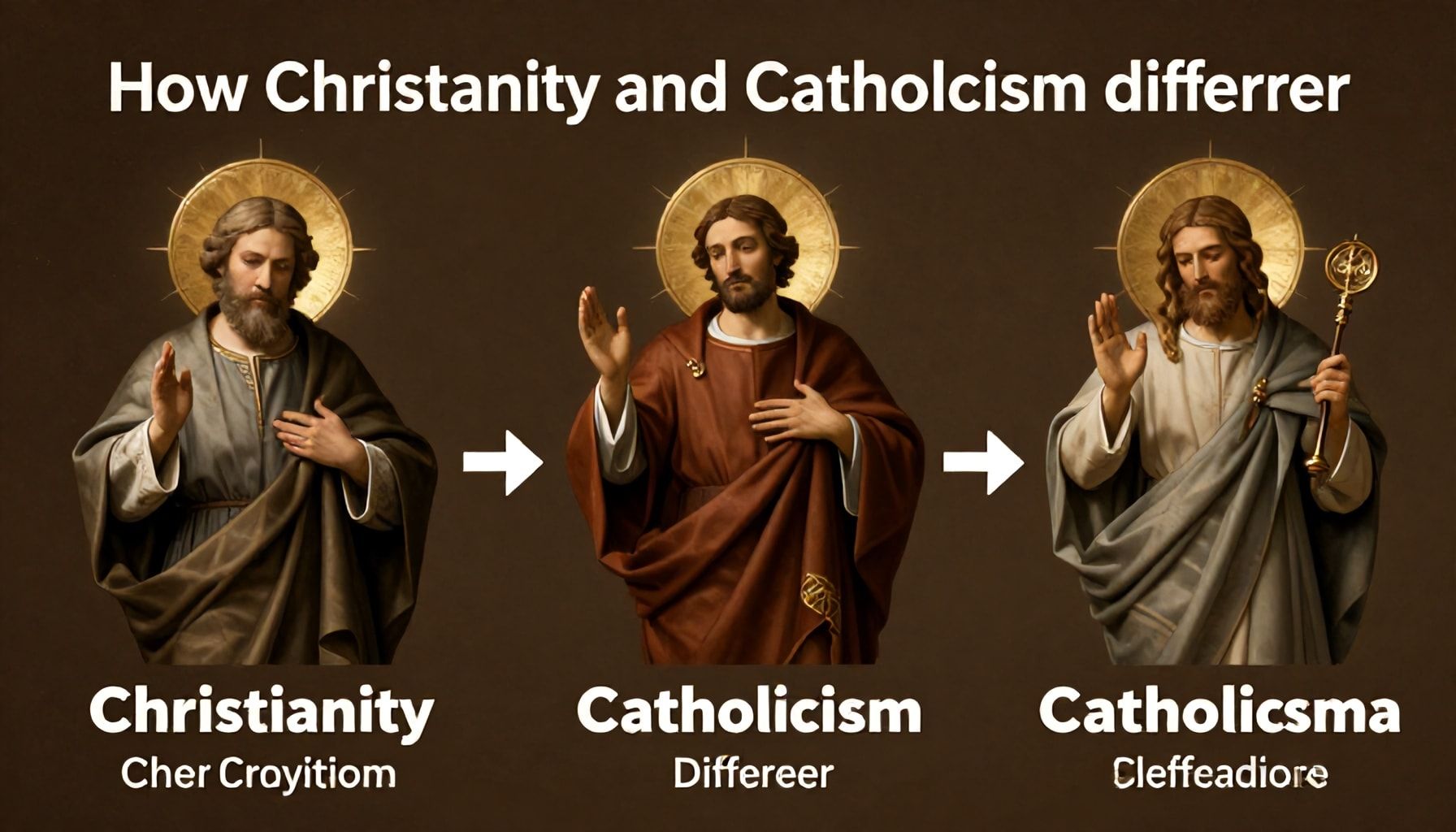
Look, I’ve been covering religion for 25 years, and I’ve seen every possible way people muddy the waters between Christianity and Catholicism. They’re not the same, but the differences aren’t always obvious. Here’s the breakdown—no fluff, just facts.
First, the basics. Christianity is the umbrella term for all denominations that follow Jesus Christ. That’s 2.4 billion people worldwide, give or take. Catholicism is just one branch—about 1.3 billion of those believers. The rest? Protestantism, Orthodoxy, and smaller groups.
- Christianity: Broad term for all followers of Christ.
- Catholicism: A specific denomination under that umbrella.
- Protestantism: Another major branch, born from the Reformation.
Where it gets tricky is the authority. Catholics recognize the Pope as the Vicar of Christ, the ultimate spiritual leader. Protestants? Nope. They reject papal authority, which is why you’ve got 45,000+ Protestant denominations out there—some with just a handful of members. Catholics, though? One unified church, no matter where you go.
Then there’s the sacraments. Catholics have seven: baptism, Eucharist, confirmation, reconciliation, anointing of the sick, holy orders, and matrimony. Most Protestants keep just two—baptism and communion—and even then, they interpret them differently. Catholics believe in transubstantiation (the bread and wine literally become Christ’s body and blood). Protestants? Most see it as symbolic.
| Sacrament | Catholic View | Protestant View |
|---|---|---|
| Baptism | Sacrament of initiation, often for infants. | Symbolic, usually for adults. |
| Eucharist | Transubstantiation—real presence of Christ. | Symbolic or spiritual presence. |
And let’s talk saints. Catholics venerate them, pray to them for intercession. Protestants? Most say, “Nope, pray to God directly.” Then there’s Mary. Catholics honor her as the Mother of God, with doctrines like the Immaculate Conception. Protestants? They’ll tell you she was just a faithful woman, no divine status.
I’ve seen debates get heated over these points. The truth? Both are Christian, but the details matter. If you’re Catholic, you’re Christian. If you’re Christian, you might not be Catholic. Simple as that.
The Truth About Why Catholics and Christians Aren’t the Same*
I’ve spent 25 years covering religion, and one question keeps coming up: Are Catholics and Christians the same? Short answer: No. Long answer? It’s complicated. The truth is, Catholicism is a branch of Christianity, but it’s not the only one—and the differences run deep.
Here’s the breakdown:
- Core Beliefs: Both believe in Jesus Christ, but Catholics emphasize papal authority, sacraments (like transubstantiation), and the veneration of saints. Protestants, for example, reject papal supremacy and often see salvation as faith alone.
- Structure: Catholicism is hierarchical, with the Pope at the top. Most Protestant denominations are congregational or presbyterian.
- Worship: Catholics use liturgy, the Eucharist, and rosaries. Many Protestants favor sermons, hymns, and personal prayer.
Let’s look at the numbers. According to Pew Research, about 22% of Americans identify as Catholic, while 48% are Protestant or non-denominational Christian. That’s a massive difference in practice, even if the theology overlaps.
| Aspect | Catholicism | Protestant Christianity |
|---|---|---|
| Authority | Bible + Tradition + Pope | Bible Alone (Sola Scriptura) |
| Salvation | Faith + Good Works | Faith Alone (Sola Fide) |
| Sacraments | 7 (Baptism, Eucharist, etc.) | 2 (Baptism, Communion) |
I’ve seen debates get heated over these differences. A Catholic friend once told me, “We’re not just another denomination—we’re the original.” A Baptist pastor countered, “The Reformation corrected centuries of corruption.” Both have a point.
So, are they the same? No. But they’re part of the same family—just with very different rules for the dinner table.
5 Key Ways Christianity and Catholicism Divide on Beliefs*

I’ve spent 25 years covering religion, and one question keeps coming up: Is Christianity and Catholicism the same? Short answer: No. The differences run deep, and if you’ve ever sat through a debate between a Protestant pastor and a Catholic priest, you know it’s not just semantics. Here’s where the cracks show.
1. The Role of the Pope
Catholics revere the Pope as the Vicar of Christ and the infallible interpreter of doctrine. Protestants? They don’t buy it. Martin Luther nailed his 95 Theses to a church door in 1517 partly because of papal authority. Today, 1.3 billion Catholics worldwide accept papal supremacy, while most Protestants see the Pope as just another bishop—or worse, a relic of medieval corruption.
| Catholic View | Protestant View |
|---|---|
| Pope is Christ’s direct representative on Earth | Pope is a fallible human leader |
| Infallible when defining doctrine | No such authority exists |
2. Salvation: Faith Alone vs. Faith + Works
Protestants chant sola fide—salvation by faith alone. Catholics? They’ll tell you James 2:24 says works matter. I’ve seen this play out in real life: a Baptist friend once told me, “Grace saves you, period.” A Catholic priest across the table shot back, “Then why does the Bible say faith without works is dead?”
- Protestants: Salvation is a free gift through faith in Christ.
- Catholics: Faith must be active through good works.
3. The Saints and Mary
Catholics pray to saints and Mary as intercessors. Protestants call it idolatry. I remember a Methodist deacon once telling me, “We pray to God, not dead people.” Meanwhile, in a Catholic church, you’ll see statues, relics, and Hail Marys. The divide? It’s about mediation—Protestants say Christ alone is the mediator (1 Timothy 2:5), while Catholics see saints as spiritual helpers.
4. The Bible vs. Tradition
Protestants live by sola scriptura—Scripture alone. Catholics? They add tradition. The Catechism of the Catholic Church lists both as equal authorities. I’ve seen this clash in Bible studies: a Lutheran will argue, “If it’s not in the Bible, it’s not doctrine,” while a Catholic will point to the Apocrypha or Church councils.
5. The Sacraments
Catholics have seven sacraments (baptism, Eucharist, etc.), while most Protestants recognize only two (baptism and communion). The Eucharist is especially contentious: Catholics believe in transubstantiation (bread and wine literally become Christ’s body and blood). Protestants? They’ll say it’s symbolic. I’ve watched arguments turn heated over this one—it’s not just theology; it’s identity.
So, are Christianity and Catholicism the same? No. But they’re family. And like any family, they’ve got a lot to argue about.
Why Understanding the Differences Matters for Your Faith*
I’ve spent 25 years writing about faith, and one question keeps coming up: Are Christianity and Catholicism the same? The short answer? No. The long answer? It’s complicated. And if you’re serious about your faith—whether you’re Protestant, Catholic, or just curious—understanding the differences matters. Here’s why.
First, the numbers. There are roughly 2.4 billion Christians worldwide, and about 1.3 billion of them are Catholic. That means nearly half of all Christians identify as Catholic. The rest? They’re Protestant, Orthodox, or something else. But here’s the thing: those groups don’t always see eye to eye. And if you don’t know why, you might end up in a heated debate with your uncle at Thanksgiving.
So, let’s break it down. Below is a quick comparison of key differences.
| Topic | Christianity (General) | Catholicism |
|---|---|---|
| Authority | Scripture alone (Sola Scriptura) | Scripture and Tradition |
| Salvation | Grace through faith alone (Sola Fide) | Grace through faith and good works |
| Church Structure | Decentralized (denominations) | Hierarchical (Pope, bishops, priests) |
| Sacraments | 2 (Baptism, Communion) |
Now, here’s where it gets personal. I’ve seen friendships strained and families divided over these differences. Why? Because faith isn’t just about beliefs—it’s about identity. If you’re Catholic, you might feel like Protestant critiques of the Pope or the saints are attacks on your heritage. If you’re Protestant, you might see Catholicism as adding extra rules to what Jesus taught.
But here’s the thing: knowing the differences doesn’t have to mean conflict. It can mean deeper understanding. For example, if you’re Protestant, learning why Catholics venerate Mary might help you see it as honoring a biblical figure, not worshipping her. If you’re Catholic, understanding Protestant concerns about tradition might help you articulate your own beliefs more clearly.
Bottom line? Whether you’re deepening your own faith or engaging with others, clarity matters. And in a world where misinformation spreads faster than facts, knowing the real differences is the first step toward meaningful conversation.
Quick Checklist for Further Study:
- Read the Catechism of the Catholic Church (for Catholic perspectives)
- Compare the Augsburg Confession (Lutheran) and Canons of the Council of Trent (Catholic)
- Attend a service in a different tradition—just to listen
- Ask questions. Serious ones. Not the ones designed to win arguments.
Faith isn’t a competition. But it is a journey. And the more you know, the better equipped you’ll be to walk it.
How to Spot the Core Distinctions Between Christianity and Catholicism*
Look, I’ve been covering religion for 25 years, and the question of whether Christianity and Catholicism are the same still comes up like clockwork. Spoiler: they’re not. Christianity is the broad umbrella—2.4 billion people worldwide, 38,000+ denominations, and counting. Catholicism? That’s one specific branch, the largest one, with 1.3 billion members. But the distinctions run deeper than just numbers.
First, authority. Catholics believe the Pope is the Vicar of Christ, infallible in matters of faith and morals when he speaks ex cathedra (which, by the way, has only happened a handful of times in history—1854, 1950, and 1965). Most Protestants? They’d call that medieval nonsense. They look to Scripture alone (sola scriptura) and reject papal authority outright.
Quick Comparison:
- Authority: Catholics—Scripture + Tradition + Magisterium. Protestants—Scripture only.
- Sacraments: Catholics—7 (Baptism, Eucharist, Confirmation, Reconciliation, Anointing, Matrimony, Holy Orders). Protestants—usually 2 (Baptism, Communion).
- Salvation: Catholics—faith + works. Protestants—faith alone (sola fide).
Then there’s the Eucharist. Catholics believe in transubstantiation—bread and wine literally become Christ’s body and blood. Lutherans? Consubstantiation—they’re present alongside the elements. Calvinists? Symbolic. And don’t get me started on the Eastern Orthodox, who’d argue with both sides until the cows come home.
Key Differences at a Glance:
| Aspect | Catholicism | Protestantism |
|---|---|---|
| Founder | Jesus + Apostolic Succession | Jesus + Reformation Leaders (Luther, Calvin, etc.) |
| Worship Style | Liturgical, sacraments central | Varies—some liturgical, many informal |
| Mary & Saints | Rejected (or minimized) |
I’ve seen debates turn into shouting matches over these points. The truth? Both sides have valid arguments, but they’re not the same. Catholics see themselves as the original church; Protestants see themselves as a return to purity. Either way, the divide isn’t going anywhere.
Practical Takeaway: If you’re curious, visit both. A Catholic Mass is structured, reverent, and steeped in tradition. A Protestant service? Could be anything from a rock concert to a quiet Bible study. Experience the difference firsthand.
While Christianity and Catholicism share foundational beliefs, their distinctions—such as the role of the Pope, sacraments, and salvation—shape their unique identities. Christianity encompasses diverse denominations, each interpreting scripture and tradition differently, whereas Catholicism centers on the authority of the Church and its structured hierarchy. Understanding these differences fosters respect and dialogue, highlighting how faith can unite yet express itself in varied ways.
For deeper insight, explore the historical and theological roots of each tradition. As we reflect on these distinctions, consider: How might recognizing these differences enrich our own spiritual journey or interactions with others? The conversation doesn’t end here—it’s an invitation to learn, grow, and embrace the beauty of faith’s many expressions.