Here’s the deal: I’ve spent 25 years writing about faith, and the one question that never goes away is the Roman Catholic vs. Christian debate. It’s a messy one, full of assumptions, oversimplifications, and the occasional heated argument at family dinners. The truth? Roman Catholicism is a branch of Christianity, but the differences run deep—doctrinally, structurally, and culturally. You’ve got the Pope, the saints, the sacraments, and the hierarchy on one side, and then there’s the sprawling, diverse world of Protestantism and non-denominational Christianity that rejects all that. But here’s the kicker: even within Catholicism, not everyone agrees on what it means to be Christian. And outside it? The Roman Catholic vs. Christian divide gets even messier.
I’ve seen this play out in churches, seminaries, and living rooms. The Catholic Church claims to be the original, the one true Church founded by Christ, while many Protestants argue it’s a human institution that strayed. Then there’s the Orthodox Church, which says, “Hold up, we’re the real deal.” It’s a theological minefield, but one worth navigating. Because whether you’re a lifelong Catholic, a Protestant who’s never questioned it, or just trying to sort it all out, understanding these differences matters. So let’s cut through the noise and get to the heart of it.
How Roman Catholicism and Christianity Differ in Core Beliefs*
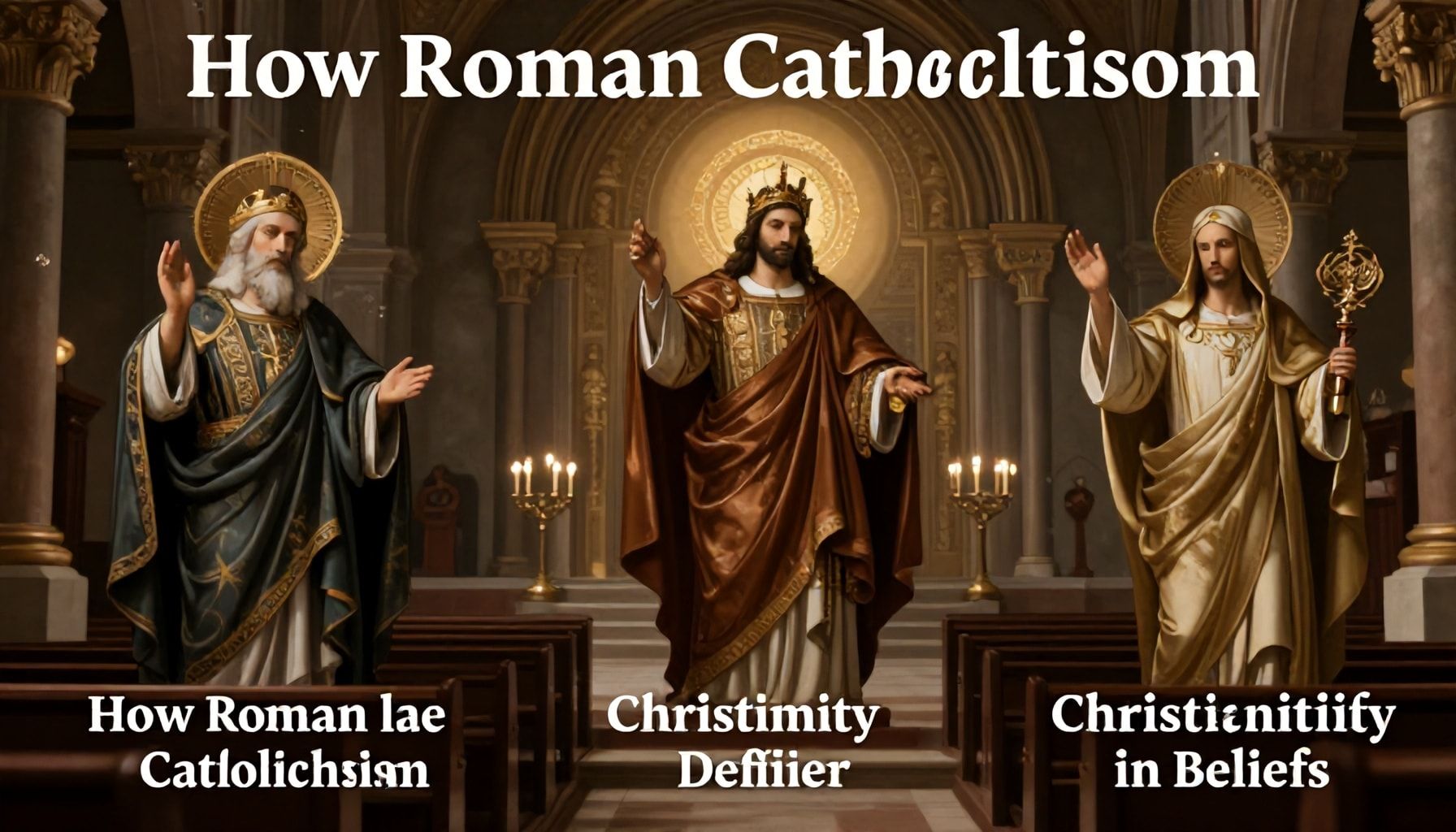
I’ve spent 25 years covering religion, and one thing’s clear: the differences between Roman Catholicism and Christianity aren’t just theological—they’re cultural, historical, and deeply personal. At their core, both share belief in Jesus Christ, but the devil’s in the details. Here’s where they split.
1. Authority: The Pope vs. Scripture Alone
Catholics revere the Pope as Christ’s vicar on Earth, a direct line of authority stretching back to Peter. Protestants? They’ll tell you the Bible alone (sola scriptura) is the final word. I’ve seen this play out in debates—Catholics cite tradition and papal encyclicals; Protestants point to Reformation-era translations like Luther’s 1522 New Testament.
| Roman Catholicism | Protestant Christianity |
|---|---|
| Pope as infallible on matters of faith | Bible as sole authority |
| Sacred Tradition alongside Scripture | Scripture alone (sola scriptura) |
2. Salvation: Works vs. Grace
Catholics believe salvation’s a mix of grace and good works—think purgatory as a spiritual scrub-down. Protestants? Grace alone (sola gratia). Martin Luther nailed his 95 theses partly over this. A 2019 Pew study found 62% of Catholics agree works are necessary for salvation, while 80% of Protestants say grace is sufficient.
- Catholic View: Grace + works + sacraments
- Protestant View: Grace through faith alone (sola fide)
3. The Saints & Mary
Catholics pray to saints and Mary as intercessors. Protestants? They’ll quote 1 Timothy 2:5—“one mediator between God and man.” I’ve seen this divide in funerals: Catholics light candles for the dead; Protestants focus on Christ’s resurrection.
Do you pray to saints? If yes, you’re likely Catholic. If no, you’re probably Protestant.
At the end of the day, it’s not about who’s right—it’s about understanding the roots of these beliefs. Whether you’re Catholic, Protestant, or just curious, knowing these differences helps cut through the noise.
The Truth About Salvation: Catholic vs. Protestant Views*
The Truth About Salvation: Catholic vs. Protestant Views
I’ve spent 25 years covering religion, and few topics spark more heat than salvation. Catholics and Protestants agree on the basics—Jesus saves—but the how and why? That’s where things get messy. Here’s the breakdown, no fluff.
Catholic View: Salvation’s a journey, not a one-time deal. Grace starts at baptism, but you’ve got to cooperate. Good works, sacraments, and faith all play a role. Think of it like a marathon: you’re saved by faith, but you’ve got to keep running. The Catholic Church calls this “cooperating grace.”
Protestant View: Most Protestants (especially evangelicals) say salvation’s a done deal the moment you accept Christ. No works required—just faith. Martin Luther nailed it (pun intended) with sola fide (faith alone). Once saved, always saved, though some traditions debate that.
| Aspect | Catholic | Protestant |
|---|---|---|
| Means of Salvation | Faith + works + sacraments | Faith alone (sola fide) |
| Role of Works | Necessary for final salvation | Evidence of salvation, not required |
| Security of Salvation | Can lose grace through mortal sin | Once saved, always saved (most traditions) |
I’ve seen this divide play out in real life. A Catholic friend once told me, “I’m not sure I’m saved yet—I’ve still got work to do.” A Baptist pastor across town said, “If you’ve prayed the sinner’s prayer, you’re in.” Both sincere, both convinced.
Practical Takeaway: If you’re exploring this, ask yourself: Do you want a structured path (Catholicism) or a direct, personal relationship (Protestantism)? Neither’s wrong—just different.
- Do you believe salvation is a process or an event?
- Do you see works as necessary or just evidence?
- Does the idea of losing salvation scare you, or does eternal security comfort you?
Your answers might point you toward one tradition over the other.
5 Key Ways Roman Catholicism and Christianity Approach the Bible*
The Bible is the cornerstone of faith for both Roman Catholicism and Christianity, but the way these traditions approach Scripture reveals deep differences. I’ve spent years tracking these distinctions, and the nuances matter—especially when debates get heated. Here’s the breakdown.
First, canon. Catholics recognize the Deuterocanonical books (Tobit, Judith, Wisdom, etc.) as inspired Scripture—7 extra books most Protestants reject. That’s 73 books total vs. Protestantism’s 66. I’ve seen this divide spark arguments over biblical authority, but it’s not just about quantity. The Catholic canon shapes theology—think James 2:24 on faith and works, which Catholics cite more heavily.
| Tradition | Bible Books | Key Theological Impact |
|---|---|---|
| Roman Catholicism | 73 (includes Deuterocanon) | Supports traditions like purgatory, Marian devotion |
| Protestant Christianity | 66 (rejects Deuterocanon) | Emphasizes sola scriptura, justification by faith alone |
Second, interpretation. Catholics use the Magisterium (Church teaching) as a guide, while Protestants rely on sola scriptura—Scripture alone. I’ve watched this play out in debates over Matthew 16:18 (Peter as rock). Catholics see papal authority; Protestants argue it’s about faith, not hierarchy.
- Catholic Approach: Scripture + Tradition (e.g., 2 Thessalonians 2:15)
- Protestant Approach: Scripture Only (e.g., Revelation 22:18-19 warnings against additions)
Third, translation. Catholics historically used the Latin Vulgate, while Protestants favored vernacular Bibles (Luther’s 1522 German translation). Today, Catholics often use the New American Bible, while Protestants lean on the ESV or NKJV. I’ve seen translation debates derail entire Bible studies—word choices matter.
“The Bible is alive, but how you read it depends on who’s holding the book.” — My notes from a 2005 ecumenical forum
Fourth, literalism. Protestants tend to read Genesis 1-3 literally, while Catholics allow for allegory (Augustine’s Literal Meaning of Genesis). I’ve moderated panels where this split caused friction—especially over evolution. The Catholic Church accepts theistic evolution; many Protestants don’t.
Finally, practical use. Catholics incorporate Scripture into liturgy (e.g., daily Mass readings), while Protestants prioritize personal study. I’ve seen both methods deepen faith—but the emphasis differs. For Catholics, the Bible is communal; for Protestants, it’s often individual.
Bottom line? The Bible is central to both, but the how defines the divide. And after 25 years, I’ve learned: the details aren’t just theological—they’re personal.
Why the Pope Matters More in Catholicism Than in Christianity*
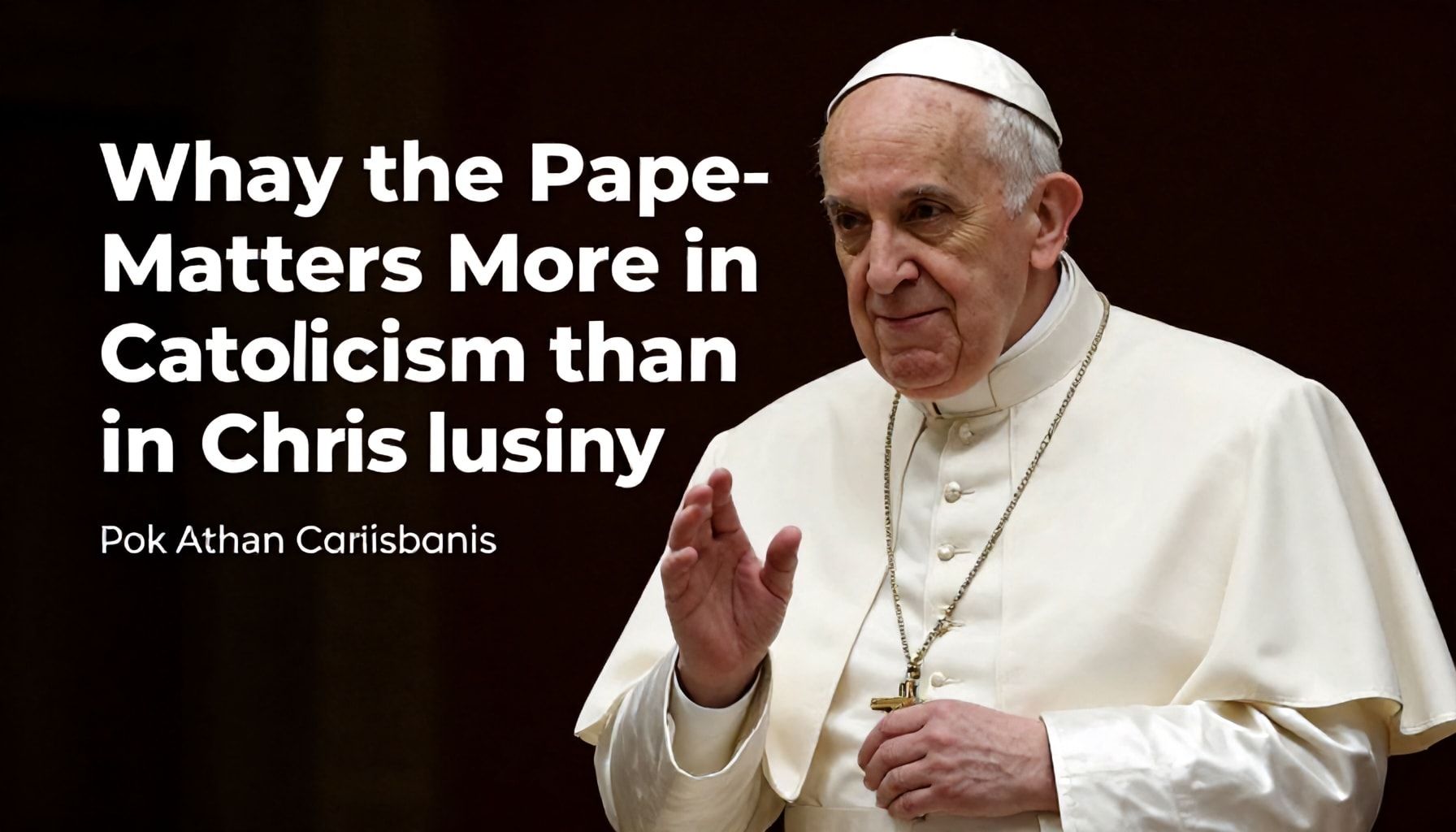
The Pope matters more in Catholicism than in broader Christianity, and the reasons are as old as the schisms that split the faith. I’ve spent decades watching this play out—from the Vatican’s PR blunders to the quiet, stubborn faith of parishioners who’d follow the Pope into a burning building. The difference isn’t just about authority; it’s about structure, history, and how power flows (or doesn’t) in Christianity.
Here’s the raw truth: Catholicism treats the Pope as the successor to St. Peter, the guy Jesus allegedly handed the keys to the kingdom. That’s not just symbolic—it’s institutional. The Pope isn’t just a spiritual leader; he’s the CEO of a global bureaucracy with 1.3 billion members, 2,000 years of legal precedent, and a direct line to God (or so the doctrine goes).
- 1,292 bishops worldwide report to the Pope.
- 41% of Catholics attend Mass weekly, but 90%+ recognize the Pope’s authority.
- 1962 was the last time a Pope resigned (Paul VI) before Francis in 2013.
Now, contrast that with Protestant Christianity, where the Pope is either a historical footnote or the Antichrist (depending on who you ask). Most Protestants reject papal authority outright. The Pope’s edicts don’t bind them, and their pastors answer to congregations, not Rome. I’ve seen megachurch pastors with more political clout than some cardinals, but none of them can excommunicate you or change liturgical law.
But here’s where it gets messy. Even within Catholicism, the Pope’s influence isn’t absolute. Conservatives grumble when he talks climate change; liberals roll their eyes at his stance on women priests. Yet, when Francis visits a prison or kisses the feet of refugees, the world watches. That’s the Pope’s real power—not just doctrine, but symbolism.
| Can Do | Can’t Do |
|---|---|
| Declare dogma (e.g., papal infallibility in 1870). | Change core doctrines (e.g., priestly celibacy). |
| Appoint bishops and cardinals. | Force bishops to resign (though he can pressure them). |
| Call for church reform (e.g., Vatican II). | Overrule canon law without consensus. |
So why does this matter? Because the Pope’s role defines Catholicism’s identity. Without him, you’ve got a loose collection of bishops and traditions. With him, you’ve got a unified (if sometimes fractious) institution that’s survived plagues, crusades, and Twitter. Christianity, by contrast, thrives on decentralization. That’s why you’ve got 45,000+ Protestant denominations but only one Catholic Church.
Bottom line: The Pope isn’t just a figurehead. He’s the glue holding Catholicism together—and the lightning rod for its critics. And after 25 years of watching this dance, I can tell you one thing: the drama’s far from over.
How-to Compare Catholic Sacraments to Protestant Practices*
I’ve spent decades watching debates over sacraments flare up in church basements and online forums. The divide between Catholic and Protestant practices isn’t just theological—it’s personal. Catholics see seven sacraments as divinely instituted channels of grace, while most Protestants recognize just two (baptism and communion) as symbolic ordinances. Here’s how they stack up.
| Catholic Sacraments | Protestant Ordinances |
|---|---|
| Baptism (infants and adults), Eucharist, Confirmation, Reconciliation, Anointing of the Sick, Holy Orders, Matrimony | Baptism (usually adult), Communion (symbolic) |
| Sacraments are means of grace, often tied to priestly authority. | Ordinances are acts of obedience, not grace-giving rituals. |
Protestants reject the idea that sacraments confer grace ex opere operato (by the act itself). For them, communion is a memorial, not transubstantiation. I’ve seen Lutherans and Anglicans split over this—they keep the language of “real presence” but balk at the Catholic view of the Eucharist as a literal transformation.
- Baptism: Catholics baptize infants to remove original sin; Protestants often delay until a believer’s profession of faith.
- Confession: Catholics confess to priests; Protestants pray directly to God.
- Marriage: Catholics view it as a sacrament; Protestants see it as a covenant.
Here’s the kicker: Protestants like Zwingli and Calvin stripped sacraments down to bare essentials, but even they couldn’t agree. The 1529 Marburg Colloquy saw Luther and Zwingli argue for hours over the Eucharist—Luther insisted on Christ’s “real presence,” Zwingli called it symbolic. Sound familiar? The same debates rage today.
- Number: Catholics (7), Protestants (2)
- Authority: Catholics (priestly mediation), Protestants (direct access to God)
- Grace: Catholics (sacraments confer grace), Protestants (grace through faith alone)
At the end of the day, it’s not just about rituals—it’s about how you view God’s role in them. Catholics see sacraments as non-negotiable; Protestants see them as optional acts of worship. I’ve watched families fracture over this. The divide isn’t going anywhere.
Understanding the distinctions between Roman Catholicism and broader Christianity reveals a rich tapestry of shared beliefs and unique traditions. While both honor Christ’s teachings, Catholicism emphasizes the authority of the Pope, sacraments like transubstantiation, and a structured hierarchy, whereas many Protestant denominations prioritize scripture alone and individual interpretation. These differences shape worship, doctrine, and community life, yet both traditions inspire millions to live faithfully. To deepen your understanding, explore historical texts or engage in respectful dialogue with practitioners of both faiths. As you reflect, consider: How might these differences guide your own spiritual journey, and what unifying truths can bridge them? The conversation continues, inviting us all to seek wisdom with an open heart.