
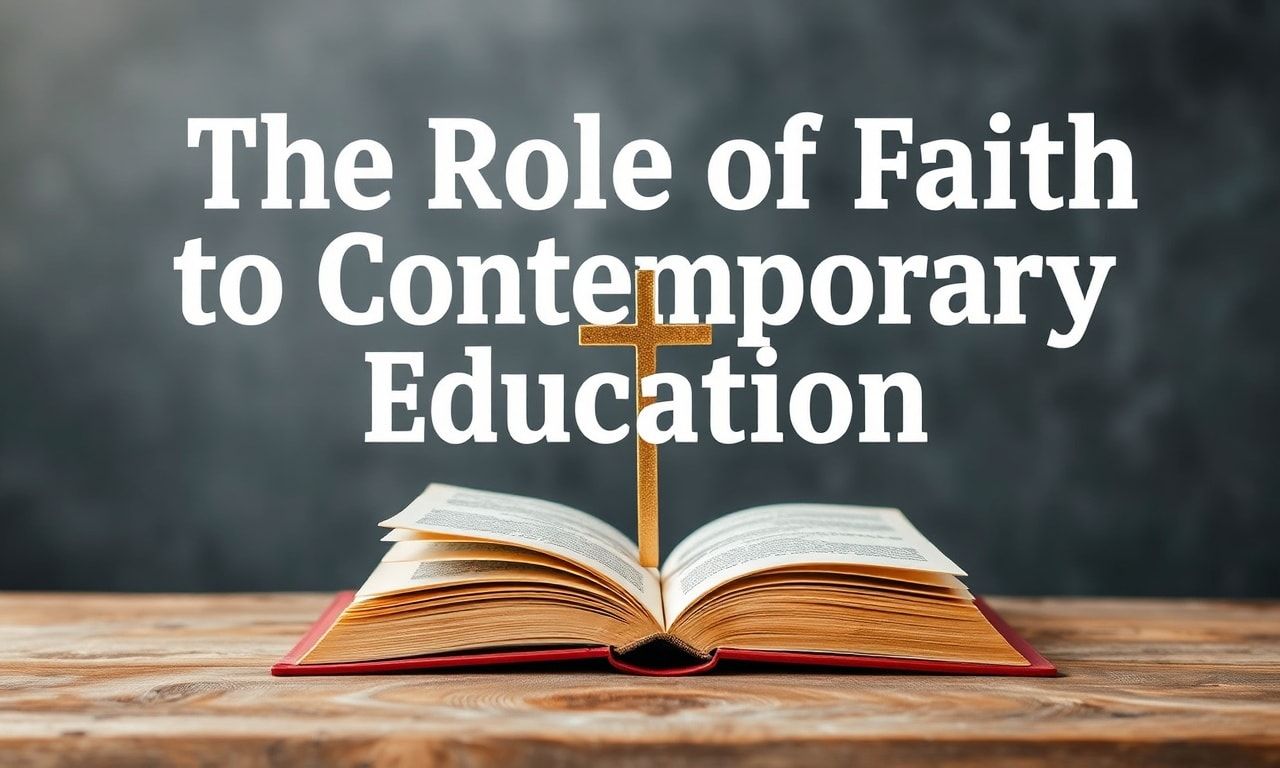
The Intersection of Faith and Education
In an increasingly secular world, the role of faith in education often becomes a topic of debate. For Catholics, the integration of faith and education is not just a matter of personal belief but a fundamental aspect of forming well-rounded individuals. Education, from a Catholic perspective, is seen as a holistic process that nurtures the intellectual, spiritual, and moral dimensions of a person. This article explores the significance of faith in modern education and how it can be effectively integrated into the learning environment.
The Importance of Spiritual Formation
Spiritual formation is a cornerstone of Catholic education. It goes beyond mere religious instruction to encompass the development of a personal relationship with God. This formation is crucial in helping students understand their purpose and place in the world. It provides a moral compass that guides their actions and decisions, fostering a sense of responsibility and empathy towards others. In a world where ethical dilemmas are increasingly complex, spiritual formation equips students with the tools to navigate these challenges with integrity and compassion.
Integrating Faith into the Curriculum
Integrating faith into the curriculum is not about imposing religious beliefs but about creating a learning environment where faith and reason coexist harmoniously. This can be achieved through various means, such as incorporating religious studies into the academic program, organizing faith-based community service projects, and encouraging students to reflect on the spiritual dimensions of their studies. For example, a science class might explore the ethical implications of genetic engineering, while a literature class could discuss the moral themes in classic works. By doing so, students are encouraged to think critically about the intersection of faith and knowledge.
The Role of Educators
Educators play a pivotal role in fostering a faith-based learning environment. They are not only responsible for imparting knowledge but also for modeling the values and behaviors they wish to instill in their students. This requires a deep commitment to their own spiritual growth and a willingness to integrate their faith into their teaching practices. Educators can achieve this by incorporating prayer and reflection into the classroom, creating opportunities for students to engage in meaningful discussions about faith, and demonstrating the practical application of Catholic teachings in their daily lives. Additionally, educators can benefit from resources such as career guidance for Nevada education graduates, which can provide valuable insights into best practices for integrating faith into education.
Building a Faith Community
Creating a strong faith community within the school is essential for supporting the spiritual growth of students. This can be achieved through various initiatives, such as organizing regular prayer sessions, hosting retreats, and encouraging students to participate in service projects. A faith community provides a supportive environment where students can explore their beliefs, ask questions, and share their experiences with peers who share similar values. It also fosters a sense of belonging and unity, which is crucial for the overall well-being of students. By building a faith community, schools can create a nurturing environment that supports the spiritual, emotional, and social development of students.
The Benefits of Faith-Based Education
Faith-based education offers numerous benefits that extend beyond academic achievement. Research has shown that students who receive a faith-based education are more likely to develop strong moral values, exhibit higher levels of empathy, and demonstrate a greater sense of purpose in life. They are also more likely to engage in community service and contribute positively to society. Furthermore, faith-based education provides a solid foundation for lifelong learning, as it encourages students to seek knowledge with a sense of curiosity and wonder, guided by their faith. This holistic approach to education prepares students to face the challenges of the modern world with confidence and resilience.
Addressing Challenges and Misconceptions
Despite the benefits of faith-based education, there are challenges and misconceptions that need to be addressed. One common misconception is that faith-based education is exclusionary and does not respect diverse beliefs. However, Catholic education, in particular, emphasizes the importance of respecting and valuing all individuals, regardless of their religious background. It encourages open dialogue and mutual understanding, fostering an inclusive environment where all students can thrive. Another challenge is the perception that faith-based education is outdated and irrelevant in a secular society. On the contrary, faith-based education provides a unique perspective that can enrich the learning experience and prepare students to navigate the complexities of the modern world with wisdom and compassion.
To effectively spread your spiritual message and connect with a wider audience, consider exploring digital marketing and SEO strategies that can enhance your online presence.
Discover how the spirit of sports mirrors our shared human journey, fostering unity and resilience, in the insightful piece exploring sports’ deeper connections.
