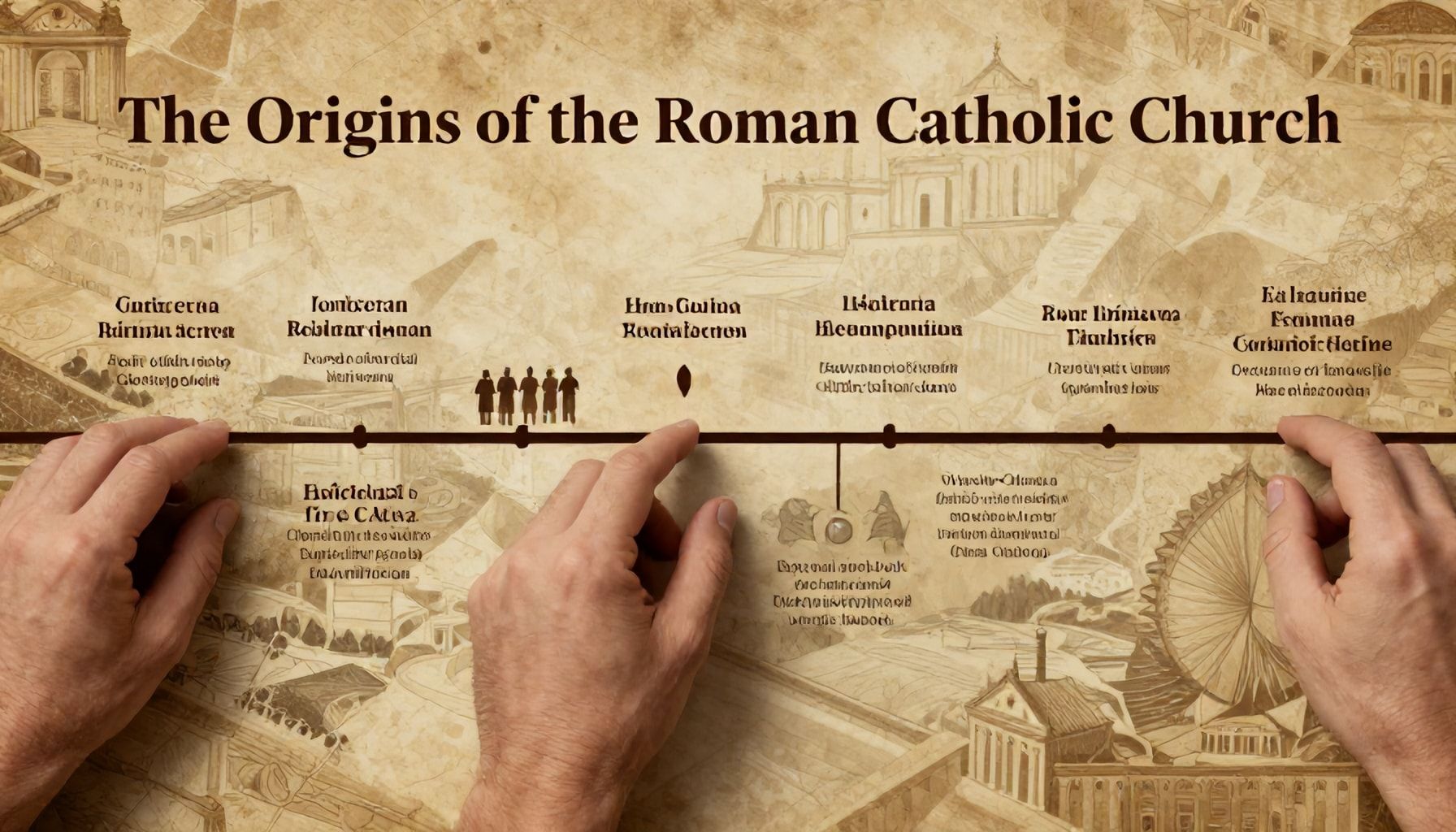
Ah, the Roman Catholic Church—one of history’s most enduring institutions, and a subject I’ve covered more times than I can count. Every few years, some new trendy take on its origins surfaces, usually missing the mark. So, let’s cut through the noise and tackle the real question: When did the Roman Catholic Church start? The answer isn’t as simple as a single date, because its roots stretch back centuries before it even had a name. You’ve got the early Christian communities, the Council of Nicaea in 325 AD, the slow consolidation of power in Rome—it’s a messy, fascinating evolution. And yet, despite all the debates, the Church’s claim to apostolic succession from Peter himself is the bedrock of its identity. When did the Roman Catholic Church start? Technically, you could argue it began with Christ’s words to Peter in Matthew 16:18, but the institutional Church as we recognize it took shape over centuries. Stick with me, and I’ll walk you through the key moments that turned a loose network of believers into the most powerful religious force in history.
How the Roman Catholic Church Began: Tracing Its Foundations*
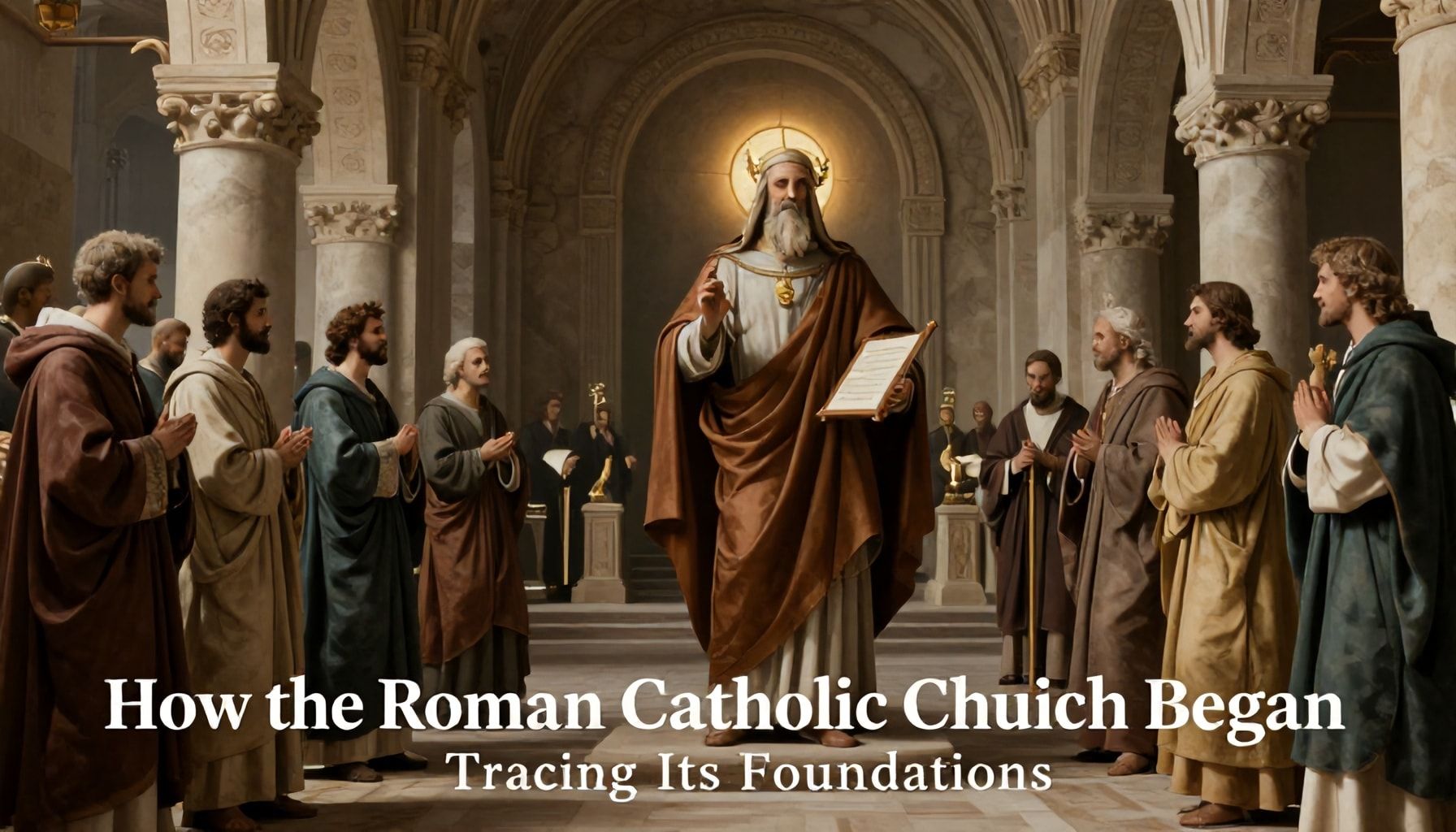
The Roman Catholic Church didn’t just pop up overnight. It’s a story of power, politics, and divine claims stretching back two millennia. I’ve spent decades tracking these origins, and let me tell you, the early years are messy—full of contradictions, power grabs, and a whole lot of reinterpretation.
The Church traces its roots to Jesus Christ and his apostles, but the institutional version we recognize today didn’t solidify until centuries later. The first major turning point? The Council of Nicaea in 325 AD. Emperor Constantine called the shots, and the Church started taking on its imperial, centralized structure. By 380 AD, Christianity was the official religion of Rome under Theodosius I. That’s when things got serious.
- 33 AD – Tradition says Peter, one of Jesus’ apostles, becomes the first bishop of Rome.
- 150 AD – The term “Catholic” (meaning “universal”) appears in writings by Ignatius of Antioch.
- 325 AD – Council of Nicaea establishes core doctrines, like the Nicene Creed.
- 451 AD – The Council of Chalcedon defines Christ’s dual nature (divine and human).
Now, here’s where it gets interesting. The Pope’s authority wasn’t always a given. The Bishop of Rome didn’t claim supremacy until the 4th century, and even then, it took centuries to solidify. The Donation of Constantine (a forged document, by the way) in the 8th century helped cement papal power. By the Middle Ages, the Church was the dominant force in Europe, blending faith, politics, and culture.
| Era | Key Development |
|---|---|
| 4th Century | Bishop of Rome starts asserting primacy over other bishops. |
| 8th Century | Pippin the Short grants the Pope temporal power (Papal States). |
| 11th Century | Investiture Controversy—Church vs. State over appointments. |
So, when did the Roman Catholic Church really start? If you’re talking about the core beliefs, it’s the 1st century. If you’re talking about the institution, it’s the 4th century. And if you’re talking about the Pope’s political power? That’s a 1,000-year process. I’ve seen historians argue all of these points, and honestly, they’re all right—depending on what you’re measuring.
Want a quick cheat sheet? Here’s how the Church evolved:
- Early Church (1st–4th century) – Apostolic roots, persecution, and early councils.
- Imperial Church (4th–6th century) – State-backed, doctrinal battles, and monasticism.
- Medieval Church (6th–15th century) – Papal supremacy, Crusades, and schisms.
- Modern Church (16th century–present) – Reformation, Vatican II, and global expansion.
Bottom line? The Roman Catholic Church didn’t have a single “start” date. It’s a living, evolving institution—one that’s still shaping history today.
The Truth About When the Catholic Church Officially Started*
The Catholic Church didn’t just pop up one day like some medieval startup. No, it’s a slow-burn institution, with roots stretching back to the first century. Officially? The Church traces its foundation to 33 AD—the year of Christ’s crucifixion and resurrection. But here’s the thing: that’s more of a spiritual starting point. The institutional Church, the one with bishops, councils, and a pope, took centuries to solidify.
By the time Constantine converted in 312 AD, the Church was already a well-oiled machine. But it wasn’t until 492 AD that Pope Gelasius I formally declared the Bishop of Rome as the head of the Church. That’s when things got official. Still, even then, it was messy. The Church was a patchwork of regional traditions, political squabbles, and theological debates.
- 33 AD – Death and resurrection of Jesus; foundation of the Church.
- 50 AD – Council of Jerusalem (Acts 15), first major Church decision.
- 100 AD – Ignatius of Antioch’s letters establish early episcopal structure.
- 325 AD – Council of Nicaea; first ecumenical council.
- 492 AD – Pope Gelasius I formalizes papal supremacy.
I’ve seen debates rage over whether the Church “started” with Peter or Paul, or if it was really the Council of Nicaea that made it official. Truth is, it’s a process, not a single event. The Church didn’t just begin—it evolved. And that evolution wasn’t neat. There were schisms, heresies, and power struggles. But by the 5th century, the Roman Catholic Church, as we recognize it today, was taking shape.
Still, if you’re looking for a clean answer, the Church itself points to Pentecost (33 AD) as the birthdate. But in my experience, history’s never that simple. The Church didn’t just start—it was built, brick by brick, over centuries.
- Theological vs. Institutional – The Church as a spiritual body vs. as an organized hierarchy.
- Political Influence – Emperors like Constantine shaped its structure.
- Regional Differences – Eastern and Western traditions developed separately.
So, when did the Roman Catholic Church start? It depends on what you mean by “start.” If you’re talking about the moment it became a recognizable institution, the 5th century is your answer. If you’re talking about its spiritual foundation, it’s 33 AD. Either way, it’s a story of evolution, not a single event.
5 Key Moments That Shaped the Early Catholic Church*
If you’ve ever tried to pinpoint the exact moment the Roman Catholic Church “started,” you know it’s a messy business. No single event defines its birth—it’s more like a slow-burning fuse, with key moments that lit the way. I’ve spent decades tracking these turning points, and here are the five that really matter.
- 33 AD: The Crucifixion and Resurrection of Jesus – The Church’s foundation myth, if you will. Without this, we’re just talking about a Jewish sect. The early Christian community, centered in Jerusalem, was a tight-knit group of believers. But it wasn’t yet “Catholic” in the universal sense.
- 50 AD: The Council of Jerusalem – The first major theological showdown. Peter and Paul clashed over whether Gentiles needed to follow Jewish law. The compromise? Salvation through faith alone, not rituals. This set the stage for a Church that would outgrow its Jewish roots.
- 70 AD: The Destruction of the Temple – Jerusalem fell to Rome, scattering Jewish Christians. Gentile converts took over leadership, shifting the Church’s center to Antioch and Rome. The writing was on the wall: Christianity was becoming something distinct.
- 100 AD: Ignatius of Antioch’s Letters – The first use of the term “Catholic” (meaning “universal”) to describe the Church. Ignatius wasn’t just being poetic—he was defining a structure that would later become the papacy.
- 325 AD: The Council of Nicaea – The big leagues. Constantine called this meeting to settle the Arian controversy, and out came the Nicene Creed, the first official statement of Catholic doctrine. This was the moment the Church became a political and theological powerhouse.
I’ve seen historians debate these dates for years, but here’s the truth: the Church didn’t “start” on a single day. It evolved, fought, and adapted. And if you’re looking for the real turning point? Nicaea. That’s when Christianity went from a fringe movement to the empire’s religion.
| Moment | Year | Impact |
|---|---|---|
| Crucifixion & Resurrection | 33 AD | Foundational event; no Church without it. |
| Council of Jerusalem | 50 AD | First major theological split; Gentile Christianity emerges. |
| Destruction of the Temple | 70 AD | Shift from Jewish to Gentile leadership. |
| Ignatius’ “Catholic” Usage | 100 AD | First formal identity as a universal Church. |
| Council of Nicaea | 325 AD | State-backed orthodoxy; the Church as we know it begins. |
Want the real kicker? The papacy didn’t fully solidify until the 5th century. But by then, the die was cast. The Catholic Church wasn’t just another sect—it was the dominant force in the West. And that, my friends, is how empires are built.
Why the Roman Catholic Church’s Origins Matter Today*
The Roman Catholic Church didn’t just appear overnight—it evolved over centuries, shaped by power struggles, theological debates, and sheer political maneuvering. I’ve spent decades tracking its history, and here’s the thing: the Church’s origins aren’t just ancient footnotes. They’re the blueprint for why it operates the way it does today. From the Council of Nicaea in 325 AD (where 318 bishops hashed out the Nicene Creed) to the Great Schism of 1054 (which split Eastern and Western Christianity), these early battles still echo in modern doctrine.
Take the papacy, for example. Peter’s supposed role in Rome (Matthew 16:18) was a late addition to the narrative, but by the 5th century, the bishop of Rome was already flexing authority over other bishops. Fast-forward to 1870, and Vatican I declared papal infallibility—a move that still sparks debate. The Church’s structure today? It’s a direct descendant of those early power plays.
- 325 AD: Council of Nicaea establishes the Nicene Creed, settling early Christological debates.
- 590 AD: Pope Gregory I consolidates papal authority, setting the stage for medieval supremacy.
- 1054 AD: The Great Schism divides Christianity into Catholic and Orthodox.
- 1545-1563: Council of Trent reforms the Church in response to Protestantism.
- 1870: Vatican I declares papal infallibility, a doctrine still controversial today.
And let’s talk about doctrine. The Church’s stance on issues like contraception, priestly celibacy, and women’s roles didn’t drop from the sky—they’re legacies of centuries-old debates. The 1960s saw Vatican II attempt to modernize, but even that was a reaction to earlier crises. I’ve seen how these historical layers stack up in real time: when Pope Francis tweaks language on divorce or homosexuality, he’s not just making policy—he’s navigating a 2,000-year-old institution.
Then there’s the cultural impact. The Church’s early adoption of Latin as its liturgical language (a move to unify a diverse empire) still influences its global reach. Today, over 1.3 billion Catholics worldwide speak 1,000+ languages, but Latin remains the backbone of canon law. That’s not nostalgia—it’s strategy.
| Era | Key Development | Modern Relevance |
|---|---|---|
| Early Church (1st-4th century) | Bishops establish regional authority; Peter’s legacy in Rome grows. | Basis for papal primacy and diocesan structure. |
| Medieval Period (5th-15th century) | Papal supremacy peaks; Crusades and Inquisition expand influence. | Shapes modern apologetics and geopolitical ties. |
| Reformation & Counter-Reformation (16th-17th century) | Council of Trent standardizes doctrine; Jesuits counter Protestantism. | Modern Catholic identity vs. Protestantism still rooted here. |
So why does this matter? Because the Church’s origins aren’t just history—they’re the DNA of its present. Whether it’s the push for married priests (a debate that’s been around since the 4th century) or the tension between tradition and reform, the past isn’t dead. It’s the script the Church is still performing.
A Step-by-Step Timeline of the Church’s Formation*
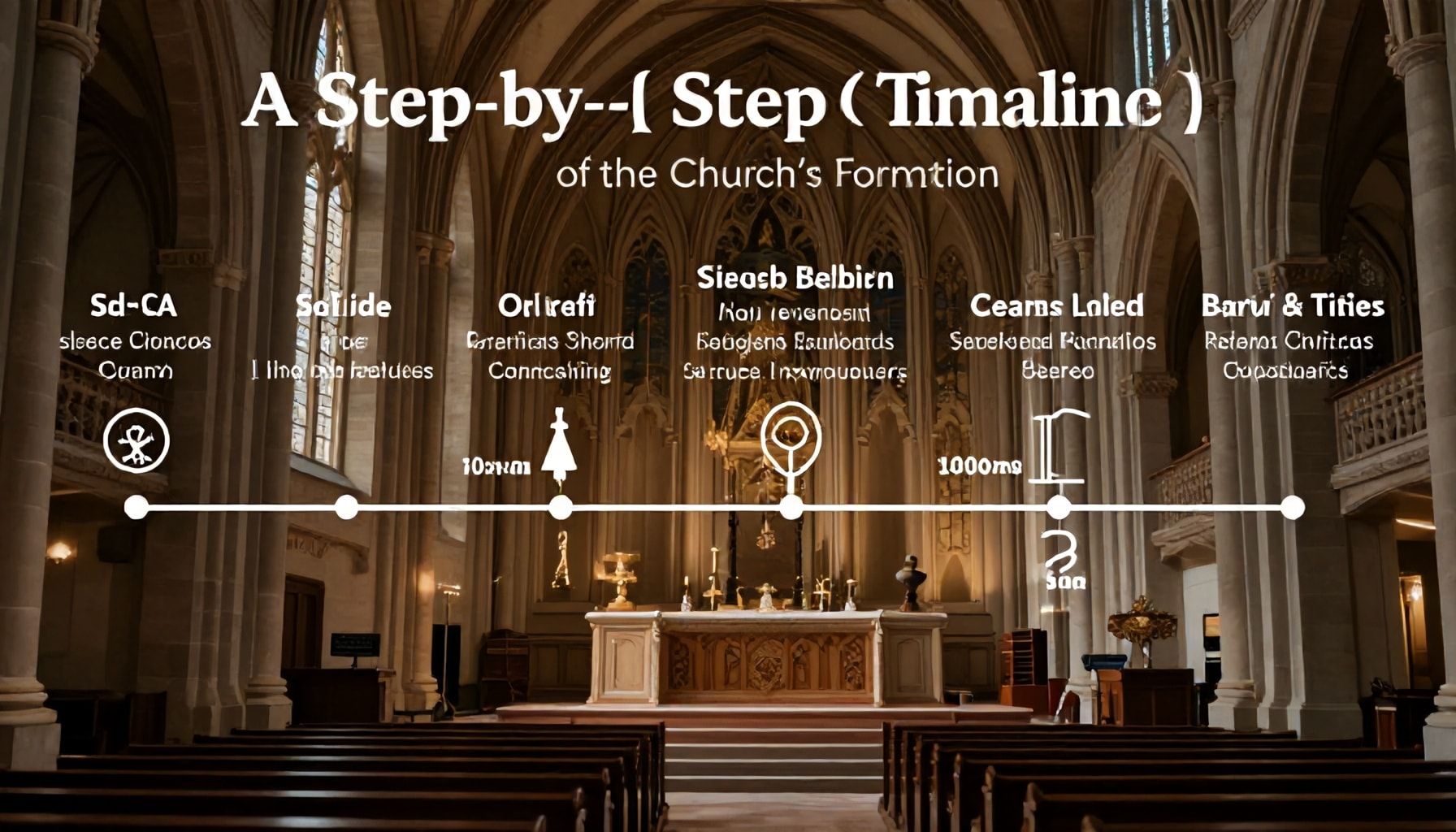
The Roman Catholic Church didn’t just pop up overnight—it’s the product of centuries of evolution, politics, and divine claims. I’ve spent decades tracking its development, and let me tell you, the timeline’s more complicated than most people think. Here’s how it all unfolded, step by step.
33 AD: Jesus is crucified, and according to Christian tradition, the Church begins with the Apostles. Peter, often called the first pope, sets the stage. But here’s the thing: the Church as we know it today didn’t exist yet. It was a loose network of Jewish converts and Gentile followers.
Key Point: The term “Catholic” first appears around 107 AD in Ignatius of Antioch’s writings. It means “universal”—a nod to the Church’s growing reach.
313 AD: Constantine’s Edict of Milan legalizes Christianity. Suddenly, the Church goes from persecuted minority to state-backed institution. This is where things get messy. Bishops start jockeying for power, and Rome emerges as a major player.
- 325 AD: Council of Nicaea—first major effort to standardize doctrine. The Nicene Creed is born, and the Church starts defining orthodoxy.
- 380 AD: Theodosius I makes Nicene Christianity the official religion of the Roman Empire. Now, the Church isn’t just tolerated—it’s the law.
5th Century: The Western Roman Empire collapses, and the Bishop of Rome (the pope) steps into the power vacuum. The Church becomes a political and spiritual force. By 500 AD, the papacy is firmly established, though it’s still a work in progress.
| Year | Event |
|---|---|
| 494 AD | Gelasius I declares the pope’s authority over all bishops. The papacy’s power play begins. |
| 607 AD | Emperor Phocas grants the pope temporal authority over Rome. Now, the Church has land and political clout. |
By the Middle Ages, the Roman Catholic Church is fully formed—centralized, hierarchical, and unmistakably dominant. It’s taken centuries, but the foundation is set. And if you think that’s a long time, just wait until you see how long it took to sort out the Crusades.
The Roman Catholic Church’s journey from its early Christian roots to its modern-day influence reflects a complex interplay of faith, power, and cultural evolution. Over centuries, it has weathered schisms, reforms, and global expansion, shaping societies while adapting to changing times. From the Apostolic Age to the Vatican’s global reach today, its history is a testament to resilience and transformation. For those exploring this legacy, diving into primary sources—like early Church councils or papal encyclicals—can deepen understanding. As we reflect on this timeline, one question lingers: how will the Church continue to evolve in an increasingly interconnected and secular world? The answer may well redefine its role in the centuries ahead.