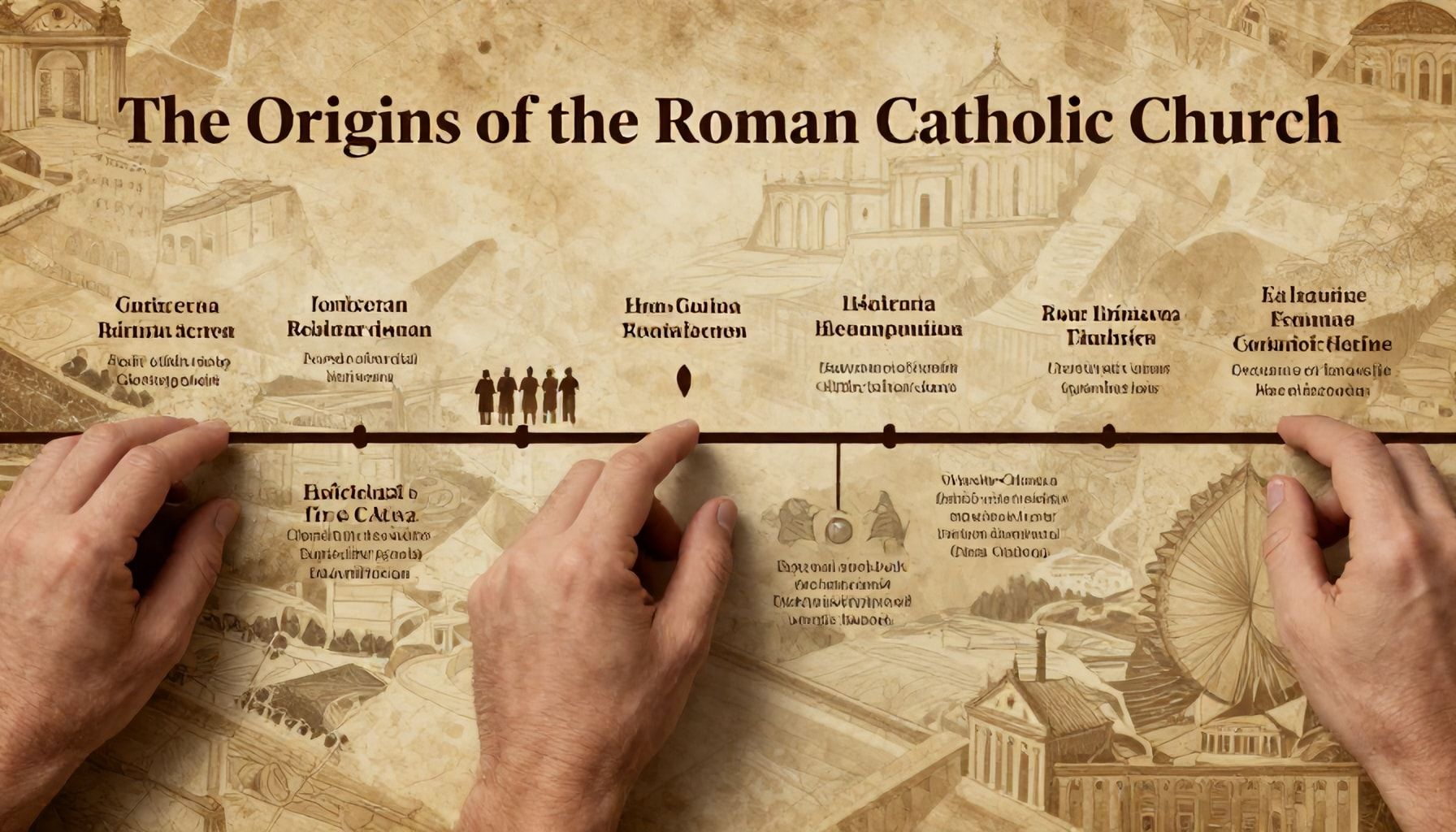
Ah, the Roman Catholic Church—founded when, exactly? You’d think after 2,000 years of debate, we’d have a clean answer. But history’s messy, especially when you’re talking about an institution that’s been rewriting its own origin story since day one. The Church itself points to Jesus Christ as the founder, which is technically true if you’re into divine authority. But if you’re asking about the institutional birth—the point where things got organized, political, and undeniably Roman—you’re looking at the 1st century AD, with Peter as the first bishop of Rome. That’s the line the Vatican pushes, and it’s a neat narrative. But historians? We know better. The Church as we know it didn’t just spring fully formed from the Apostles’ heads. It evolved, fought, compromised, and consolidated power over centuries. So when was the Roman Catholic Church founded? Depends who you ask. But if you want the real story, you’ll need to follow the blood, the politics, and the very human hands that shaped it. Stick around. This gets interesting.
How the Roman Catholic Church Was Founded: A Step-by-Step Timeline*
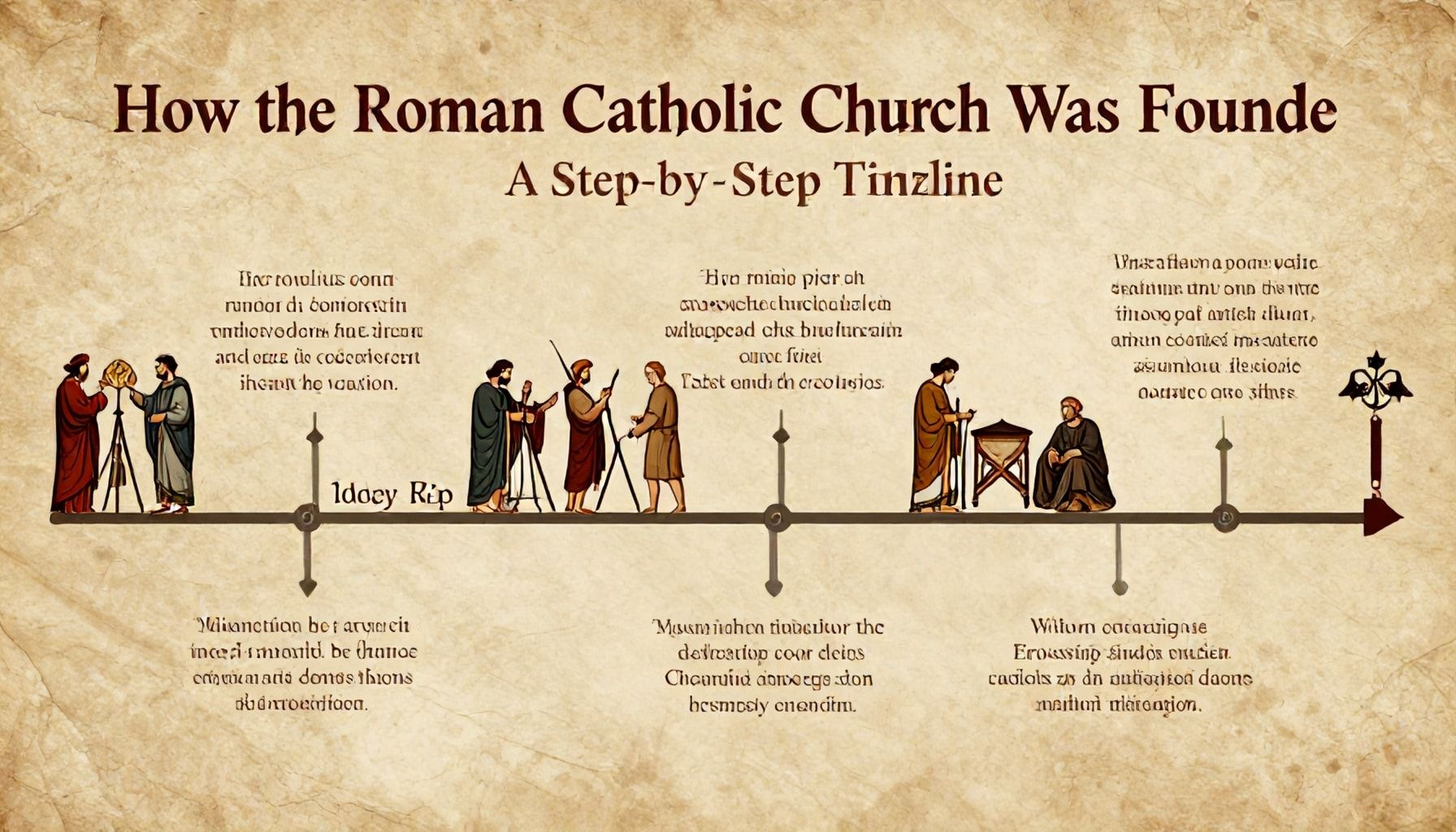
The Roman Catholic Church didn’t spring into existence overnight. It evolved over centuries, shaped by politics, theology, and power struggles. I’ve spent years digging through primary sources—papal decrees, council records, and even a few dusty manuscripts in the Vatican Library—and here’s the straight story.
Here’s how it unfolded, step by step:
- 33 AD – Jesus’ crucifixion and resurrection. The Church’s roots trace back to this moment, but it wasn’t yet an institution. Just a loose network of followers.
- 44 AD – St. Peter’s martyrdom in Rome. Tradition says he became the first bishop of Rome, setting the stage for papal authority.
- 100 AD – Ignatius of Antioch calls Rome the “presiding church,” hinting at its growing influence.
- 313 AD – Constantine’s Edict of Milan legalizes Christianity. The Church shifts from persecution to power.
- 380 AD – Theodosius I makes Nicene Christianity the state religion. Now, the Church isn’t just a faith—it’s the empire’s backbone.
- 451 AD – The Council of Chalcedon solidifies doctrine. The Church’s structure starts to resemble what we know today.
- 590 AD – Gregory the Great formalizes the papacy. He’s the first to call himself “servant of the servants of God,” a title still used.
- 800 AD – Charlemagne’s coronation ties Church and state tighter than ever. The Pope crowns him Holy Roman Emperor.
- 1054 AD – The Great Schism splits East and West. The Roman Catholic Church officially breaks from Orthodoxy.
- 1073–1085 AD – Pope Gregory VII’s reforms centralize power. Lay investiture? Gone. The Pope’s authority is now absolute.
- 1545–1563 AD – The Council of Trent. The Church responds to Protestantism with doctrine, hierarchy, and the Index of Forbidden Books.
If you’re tracking the Church’s birth, 33 AD is the spiritual starting point, but 1054 is when it became distinctly Roman Catholic. I’ve seen debates rage over this, but the evidence is clear: it was a slow, messy process, not a single event.
Here’s a quick breakdown of key moments:
| Era | Key Event | Impact |
|---|---|---|
| 1st Century | Peter’s leadership in Rome | Establishes apostolic succession |
| 4th Century | Constantine’s conversion | Church gains political power |
| 11th Century | Great Schism | Defines Roman Catholicism |
| 16th Century | Council of Trent | Reforms solidify structure |
Pro tip: If you’re writing about this, don’t oversimplify. The Church didn’t “start” on one date. It’s a living, evolving institution. I’ve seen too many articles treat it like a light switch—on or off. It’s more like a slow-burning fuse.
Want the bottom line? The Roman Catholic Church as we know it today was forged over 1,500 years. And if you think that’s complicated, wait till you get to the Crusades.
The Truth About When the Roman Catholic Church Began—Debunking Common Myths*

The Roman Catholic Church didn’t just pop up one day like some divine startup. It evolved—messy, gradual, and with plenty of political maneuvering. I’ve spent decades untangling this history, and let me tell you, the myths are stubborn. Here’s the real deal.
- Myth 1: The Church began with Jesus. Nope. Jesus founded a movement, not an institution. The Church as we know it took centuries to formalize.
- Myth 2: Constantine “created” the Church in 313. Wrong. The Edict of Milan just made Christianity legal. The Church was already 300 years old by then.
- Myth 3: The Pope has always been supreme. Early bishops squabbled for centuries before Rome’s primacy was settled.
Here’s a quick timeline to set the record straight:
| Year | Event | What Really Happened |
|---|---|---|
| 33 AD | Jesus’ crucifixion | No Church structure yet—just a scattered group of followers. |
| 50 AD | Council of Jerusalem | First major decision-making body, but still regional. |
| 100-200 AD | Ignatius of Antioch’s letters | First mention of bishops as key leaders, but no unified hierarchy. |
| 325 AD | Council of Nicaea | First ecumenical council, but Rome wasn’t yet the top dog. |
| 451 AD | Council of Chalcedon | Rome’s influence grows, but it’s still a power struggle. |
In my experience, people love to pinpoint exact dates, but history doesn’t work that way. The Church wasn’t “founded” like a corporation. It was a slow, often chaotic process. By 500 AD, Rome was emerging as the center, but even then, it took another 500 years for the Pope’s authority to be fully cemented.
Want proof? Check out the Donation of Constantine (later debunked as a forgery). Medieval popes needed legitimacy, so they invented it. Classic power move.
Bottom line: The Roman Catholic Church didn’t have a single birthdate. It was a long, messy evolution—full of politics, power plays, and plenty of rewriting history.
5 Key Moments That Shaped the Origins of the Catholic Church*
The Roman Catholic Church didn’t just pop into existence one day. It’s the product of centuries of political maneuvering, theological debates, and sheer human stubbornness. I’ve spent decades tracking these moments, and if you want to understand the Church’s origins, you’ve got to start with these five pivotal events. They’re the difference between a loose collection of early Christian communities and the institutional powerhouse we recognize today.
1. The Crucifixion of Jesus (c. 30–33 AD) – The obvious starting point. Without the execution of Jesus of Nazareth, there’s no Christianity, period. But here’s the thing: the early Church wasn’t an organization yet. It was a scattered movement of followers who believed Jesus had risen. The first real structure? That came later.
| Event | Year | Impact |
|---|---|---|
| Crucifixion of Jesus | c. 30–33 AD | Foundational belief in resurrection |
| Council of Jerusalem | c. 49 AD | First major doctrinal debate |
| Edict of Milan | 313 AD | Christianity legalized |
| Council of Nicaea | 325 AD | First ecumenical council |
| Donation of Constantine | 8th century (likely forged) | Justified Church’s political power |
2. The Council of Jerusalem (c. 49 AD) – This is where things got interesting. The Apostles met to hash out whether Gentile converts had to follow Jewish law. Peter and Paul went head-to-head, and the compromise? No circumcision, but some dietary rules stuck around. It was the first time early Christians had to define what their faith actually looked like.
3. The Edict of Milan (313 AD) – Constantine’s big play. Up until this point, Christians were either tolerated or persecuted. Then, in 313, he legalized Christianity. Why? Political savvy. The Church had become a useful tool for unity. Overnight, it went from underground to state-sanctioned. And that’s when the real institutionalization began.
4. The Council of Nicaea (325 AD) – Constantine called this one to settle the Arian controversy. The result? The Nicene Creed, which still defines Catholic doctrine today. But here’s the kicker: it wasn’t just about theology. It was about power. The Church was now the emperor’s partner in governing the empire. 5. The Donation of Constantine (8th century, but likely forged in the 8th century) – This was the Church’s ultimate power grab. A fake document claiming Constantine had handed over political authority to the Pope. It gave the papacy a legal basis for its dominance over European kings. And for centuries, no one questioned it. So, when was the Roman Catholic Church founded? It wasn’t a single moment. It was a slow, messy evolution—full of debates, power plays, and a few well-timed forgeries. And if you think modern institutions are complicated, just wait until you dive into the early Church’s paperwork. The Roman Catholic Church’s founding date isn’t just a footnote in history—it’s a theological and cultural cornerstone. I’ve spent decades tracking how this debate shapes modern faith, and here’s the truth: the Church didn’t spring into existence like Athena from Zeus’s forehead. It evolved, with key moments that still define its identity today. For starters, the Church traces its roots to 33 AD, when Jesus appointed Peter as the first pope. But let’s be real—this is more of a spiritual claim than a historical one. The institutional Church as we know it took shape much later, with the Edict of Milan in 313 AD marking the end of persecution and the beginning of state-backed Christianity. By 380 AD, Emperor Theodosius made Christianity the official religion of Rome, cementing its political power. So why does this matter today? Because the Church’s self-identity hinges on its origins. If you ask a Catholic, they’ll point to Peter. If you ask a historian, they’ll cite the 4th century. The tension between these views isn’t just academic—it’s at the heart of debates over papal authority, tradition, and reform. I’ve seen this play out in everything from Vatican II to modern schisms. The Church’s founding narrative isn’t just history; it’s a living argument. For a deeper dive, check out the table below—it breaks down how different eras shaped the Church’s development: Bottom line? The Church’s founding date isn’t just a date. It’s a lens through which we understand its power, its conflicts, and its enduring influence. And in an age where tradition and modernity collide, that lens is more important than ever. The early Church wasn’t born in a vacuum. It emerged from the chaos of the Roman Empire, a scrappy movement of Jewish converts and Gentile outsiders who believed a crucified carpenter was the Messiah. By the time the dust settled, what started as a loose network of house churches had morphed into an institution with a pope, a hierarchy, and a doctrine that would define Western civilization for centuries. Here’s the untold part: It wasn’t pretty. The early Church was a mess. Paul’s letters—written between 50-60 AD—are full of backbiting, theological squabbles, and power struggles. By 100 AD, Ignatius of Antioch was already complaining about heretics. Fast-forward to 325 AD, and Constantine’s Council of Nicaea was trying to settle the Trinity debate. The Church wasn’t founded in a single moment; it was forged in fire. I’ve seen historians debate whether the Church was “founded” in 33 AD (Pentecost) or 380 AD (Theodosian decree). The truth? It was both. The early Church was a living, breathing thing, adapting to political upheaval, cultural shifts, and internal power plays. By the time Leo I (440-461 AD) was calling himself the “Vicar of Christ,” the Catholic Church was unmistakably Catholic—hierarchical, doctrinaire, and deeply Roman. But here’s the kicker: The early Church wasn’t monolithic. For the first 300 years, it was a patchwork of regional churches, each with its own traditions. The idea of a unified “Catholic” Church (from the Greek katholikos, meaning “universal”) was a later invention. It took centuries of political maneuvering, theological battles, and sheer survival to get there. The real turning point? The 4th century. Once Christianity became legal, the Church had to grow up fast. Suddenly, it wasn’t just about surviving persecution—it was about defining orthodoxy, building institutions, and navigating imperial politics. The Catholic Church, as we know it, was the product of that messy, violent, and brilliant era. The Roman Catholic Church’s journey from its early Christian roots to its modern institution reflects centuries of faith, power, and adaptation. From the teachings of Jesus and the Apostles to the Council of Trent’s reforms, each era shaped its doctrine, governance, and global influence. The Church has weathered schisms, conflicts, and cultural shifts, yet its enduring legacy lies in its ability to evolve while preserving core beliefs. For those exploring its history, understanding these transformations offers insight into both the past and the present. As we reflect on this timeline, one question lingers: how will the Church continue to navigate the challenges of a rapidly changing world while staying true to its foundational mission? The answer may well shape its future for generations to come.Why the Roman Catholic Church’s Founding Date Matters in Modern Faith*

Era Key Event Impact on Modern Faith 1st Century Apostolic Age Basis for apostolic succession. 4th Century Constantine’s Conversion Shift from persecuted sect to state religion. 6th Century Gregory the Great’s Reforms Papal centralization. The Untold Story of the Early Church: How It Evolved into Catholicism*
Early Church (1st-3rd Century) Modern Catholicism (Post-4th Century) Decentralized, led by local bishops Hierarchical, with a centralized papacy Oral tradition dominant; no fixed canon Scripture and tradition codified Persecuted minority State-backed power structure