
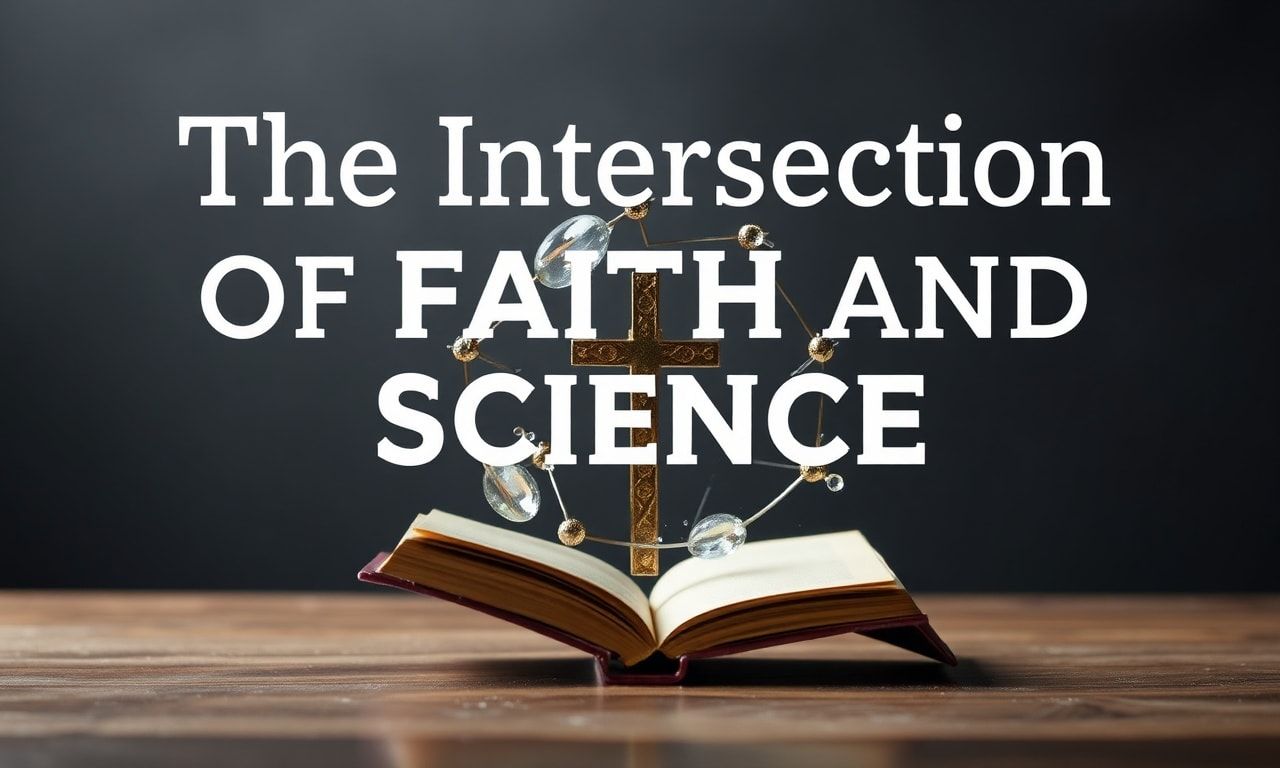
The Harmony of Faith and Science
The relationship between faith and science has been a topic of profound discussion and debate for centuries. In the Catholic tradition, there is a rich history of dialogue between these two realms of human understanding. The Church has long recognized that faith and reason are not mutually exclusive but rather complementary ways of understanding the world and our place in it. This article explores the Catholic perspective on the intersection of faith and science, highlighting key figures, teachings, and contemporary issues.
Historical Context and Key Figures
The Catholic Church has a long history of contributing to the scientific community. From the medieval scholars of the monastic tradition to the modern-day scientists who are also people of faith, the Church has always valued the pursuit of knowledge. Key figures such as St. Albert the Great, a Dominican friar and bishop, made significant contributions to the fields of biology, physics, and logic. His student, St. Thomas Aquinas, further developed the relationship between faith and reason, emphasizing that both are necessary for a complete understanding of truth.
In more recent times, figures like Fr. Georges Lemaître, a Belgian priest and physicist, made groundbreaking contributions to the field of cosmology. He is best known for proposing the theory of the expanding universe, which laid the foundation for the Big Bang theory. His work exemplifies the harmonious relationship between faith and science, demonstrating that one can be a person of deep religious conviction and a pioneering scientist.
The Catholic Church’s Stance on Science
The Catholic Church has consistently supported scientific inquiry, recognizing its potential to uncover the wonders of God’s creation. The Church’s official stance is that faith and reason are complementary, and both are necessary for a complete understanding of the world. This perspective is rooted in the teachings of St. Augustine and St. Thomas Aquinas, who argued that God is the source of all truth, whether it is revealed through faith or discovered through reason.
Pope John Paul II, in his 1992 address to the Pontifical Academy of Sciences, reiterated this view, stating that faith and reason are like two wings on which the human spirit rises to the contemplation of truth. He emphasized that the Church has no fear of scientific discovery and encourages the pursuit of knowledge as a means of understanding God’s creation more deeply.
Contemporary Issues and Challenges
In today’s world, the intersection of faith and science is more relevant than ever. Issues such as climate change, genetic engineering, and artificial intelligence present both opportunities and challenges for people of faith. The Catholic Church has been actively engaged in these discussions, offering guidance and ethical frameworks for navigating these complex topics.
For example, the Church has been a vocal advocate for environmental stewardship, recognizing the moral responsibility to care for God’s creation. Pope Francis’s encyclical Laudato Si’ is a comprehensive call to action on climate change, emphasizing the need for integral ecology, which integrates environmental, economic, and social concerns. This document highlights the Church’s commitment to using scientific knowledge to address global challenges and promote the common good.
In the realm of bioethics, the Church has provided ethical guidelines for issues such as stem cell research, euthanasia, and genetic modification. These guidelines are based on the principles of human dignity, the sanctity of life, and the common good. The Church’s teachings in this area demonstrate a deep respect for scientific advancement while also emphasizing the need for ethical considerations and moral responsibility.
The Role of Education
Education plays a crucial role in fostering a harmonious relationship between faith and science. Catholic schools and universities have a long tradition of integrating faith and reason into their curricula. Institutions like the University of Notre Dame, Boston College, and Georgetown University are known for their commitment to both academic excellence and the Catholic intellectual tradition.
These institutions provide students with a holistic education that encourages critical thinking, scientific inquiry, and spiritual growth. By integrating faith and reason, they prepare students to engage with the world in a way that is both intellectually rigorous and morally grounded. This approach not only enriches the educational experience but also equips students to address the complex challenges of the modern world.
For those interested in staying updated on the latest scientific developments, resources like भारत में विज्ञान समाचार आज provide valuable insights and information. These platforms can help individuals stay informed about the latest discoveries and advancements in the scientific community, fostering a deeper appreciation for the wonders of God’s creation.
Conclusion
The Catholic perspective on the intersection of faith and science is one of harmony and complementarity. The Church recognizes that both faith and reason are necessary for a complete understanding of truth and encourages the pursuit of knowledge as a means of deepening our appreciation for God’s creation. From historical figures like St. Albert the Great and Fr. Georges Lemaître to contemporary issues like climate change and bioethics, the Catholic tradition offers a rich and nuanced approach to the relationship between faith and science. By embracing both faith and reason, we can engage with the world in a way that is both intellectually rigorous and spiritually fulfilling.
In our journey of faith and spirituality, it’s essential to understand the impact of modern advancements on our well-being; consider exploring technology’s role in healthcare.
For faith-based entrepreneurs looking to make a difference, explore healthcare entrepreneurship offers a thorough guide to navigating this impactful field.
