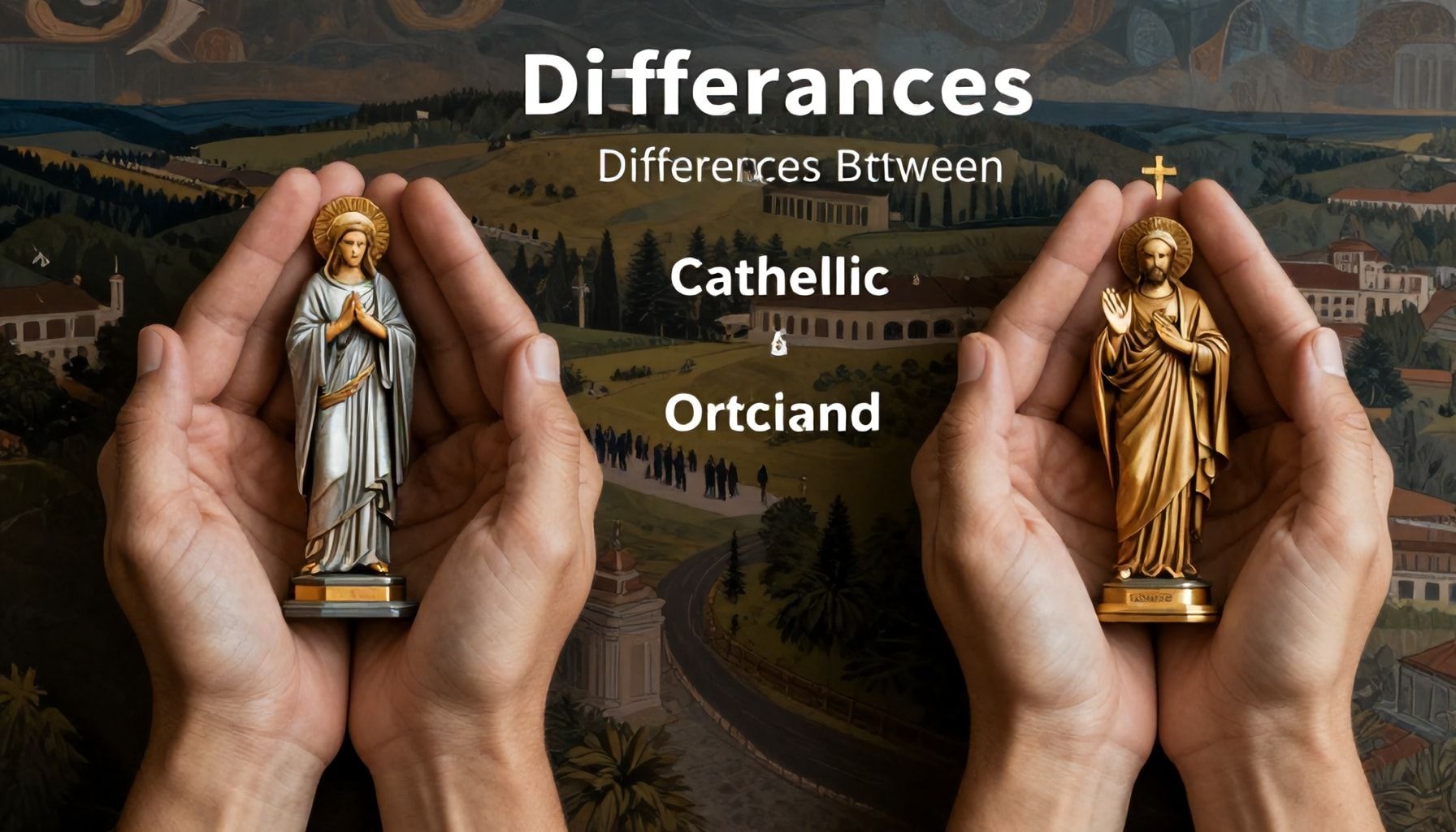
Here’s the deal: I’ve spent more years than I care to count explaining the difference between Catholic and Orthodox Christianity to people who think they’re just two flavors of the same thing. They’re not. Sure, they share a lot—same core beliefs, same ancient roots, same stubborn refusal to change just because the world tells them to. But dig a little deeper, and the differences between Catholic and Orthodox start to matter. We’re talking about everything from how they worship to who’s in charge, and why one side still calls the pope “the first among equals” while the other side just calls him “that guy in Rome.”
The split’s been around since 1054, and if you think a thousand-year-old feud should’ve cooled off by now, well, you’ve never met a monk. The difference between Catholic and Orthodox isn’t just historical trivia—it’s theology, tradition, and a whole lot of unspoken tension. So if you’ve ever wondered why Eastern Christians cross themselves differently or why the Orthodox won’t budge on the Filioque, you’re in the right place. I’ll cut through the noise and lay it out plain. No fluff, no spin, just the facts.
How the Catholic and Orthodox Churches Differ in Worship Practices*
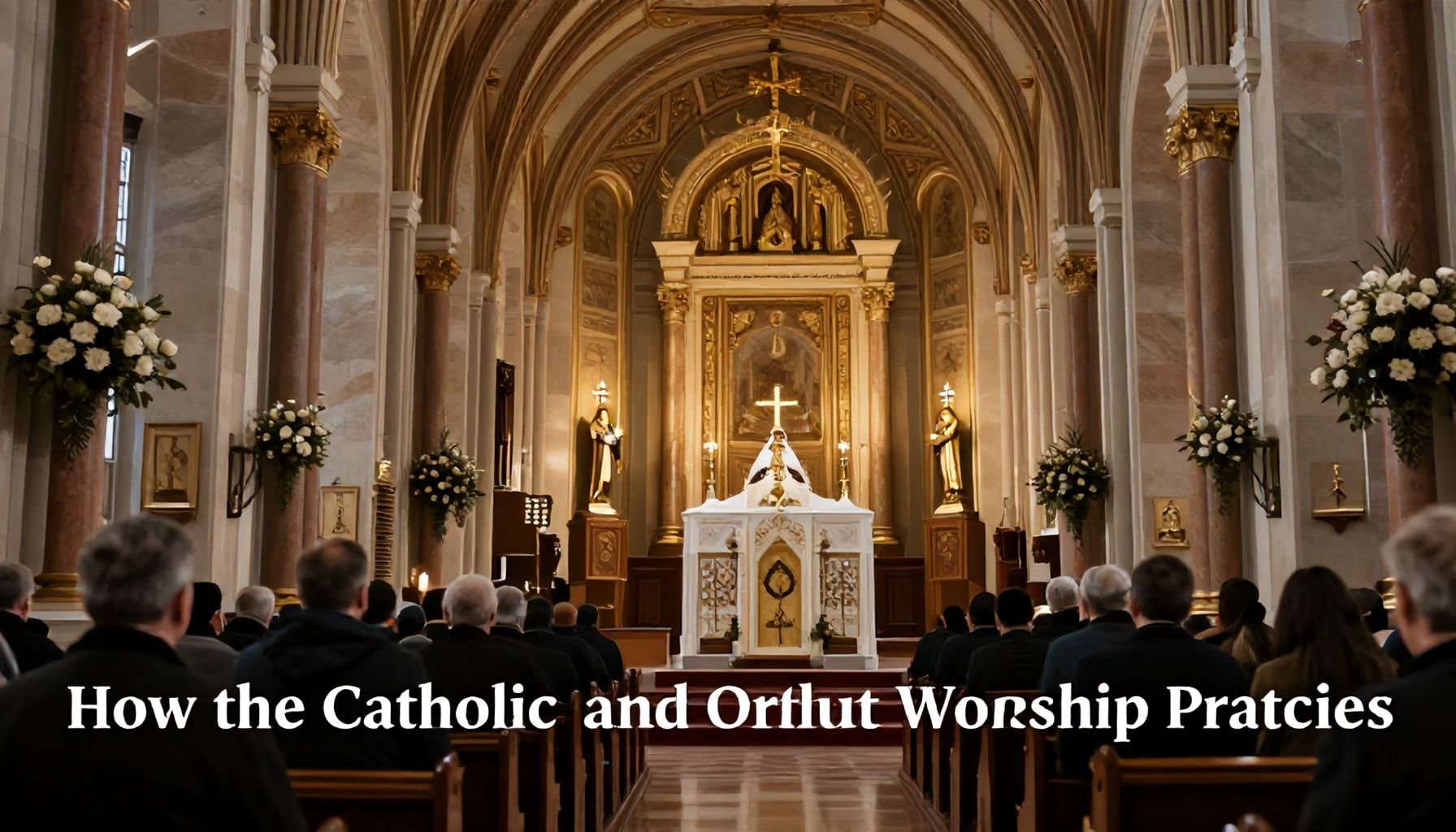
The Catholic and Orthodox Churches share a lot—same sacraments, same creeds, same basic theology—but when it comes to worship, the differences are as striking as they are subtle. I’ve spent decades watching these traditions unfold, and let me tell you, the details matter.
First, the liturgy. Catholics use the Roman Rite (mostly in Latin or vernacular), while Orthodox worship is dominated by the Divine Liturgy of St. John Chrysostom (in Greek, Slavonic, or local languages). The Catholic Mass is more streamlined—about 45 minutes in most parishes—whereas Orthodox services stretch to 2+ hours, packed with incense, chanting, and processions. I’ve seen Orthodox services where the congregation barely sits down; it’s a full-body experience.
- Catholic: More structured, less repetition, emphasis on the Eucharist.
- Orthodox: Repetitive prayers, deep iconography, and a sense of timelessness.
Then there’s the iconography. Catholics use statues and stained glass; Orthodox churches are covered in icons, often in a strict, stylized form. No realistic faces—just symbolic, otherworldly depictions. I’ve heard Orthodox priests argue that icons aren’t just art; they’re windows to the divine.
| Element | Catholic | Orthodox |
|---|---|---|
| Priestly Vestments | Roman chasuble, often white/gold | Richly embroidered, layered robes, often red/gold |
| Eucharistic Bread | Wafers, pre-consecrated | Leavened bread, consecrated during liturgy |
| Sign of the Cross | Right to left (Latin style) | Left to right (Byzantine style) |
One of the biggest divides? Fasting rules. Catholics fast before Communion (1 hour), but Orthodox observe strict fasting periods—no meat, dairy, fish, oil, or wine on Wednesdays, Fridays, and during Lent. I’ve met Orthodox families who treat fasting like a spiritual marathon.
Finally, the role of the laity. Catholics have lay readers, but Orthodox services are more priest-centric. The congregation responds, but the clergy lead every step. It’s a different kind of participation—less interactive, more meditative.
Bottom line? Both traditions worship the same God, but the experience couldn’t be more different. Catholics keep it tight and efficient; Orthodox take their time, immersing worshippers in a sensory overload of incense, chant, and light. I’ve seen converts from both sides—some crave the structure, others the mysticism. Either way, it’s a choice between precision and poetry.
Why the Great Schism Still Matters Today: Key Theological Divides*
The Great Schism of 1054 didn’t just split Christianity—it carved out two distinct theological identities that still shape faith today. I’ve spent decades tracking these divides, and the gaps aren’t just historical footnotes. They’re alive in how Catholics and Orthodox worship, govern, and even debate God.
Here’s where the cracks show:
- Papal Authority vs. Synodical Governance: Catholics swear by the Pope’s infallibility (a doctrine formalized in 1870). Orthodox? They’ll tell you the first millennium got it right—Christ’s church is a council of bishops, not a single man. The Orthodox Church of America still operates like a loose federation.
- The Filioque Controversy: A single word—“and the Son”—added to the Nicene Creed by Catholics. Orthodox see it as a power grab, a theological overreach. I’ve sat in debates where this one word sparked hours of fiery discussion.
- Original Sin vs. Ancestral Sin: Catholics blame Adam and Eve’s fall for humanity’s corruption. Orthodox? They’re more nuanced—sin’s a choice, not a genetic flaw. This shapes everything from sacraments to how they view free will.
- Purgatory’s Absence: Catholics believe in a purgatorial purging before heaven. Orthodox? They’ll shrug and say, “We’ve got prayers for the dead, but no fire-and-brimstone waiting room.”
Here’s a quick breakdown of where the two churches stand on key issues:
| Issue | Catholic View | Orthodox View |
|---|---|---|
| Church Authority | Papal supremacy | Synodical governance |
| Filioque | Accepted (added to Creed) | Rejected (original Creed only) |
| Original Sin | Hereditary guilt | Ancestral sin, not inherited |
| Purgatory | Temporary purification | No formal doctrine |
These divides aren’t just academic. They play out in real life. I’ve seen Orthodox priests refuse to host Catholic weddings. I’ve watched Catholic theologians bristle at Orthodox claims of being the “true” church. And don’t get me started on the 2016 Pan-Orthodox Council—Catholics were invited, but the Orthodox couldn’t even agree on whether to let them in.
So why does this matter today? Because these differences aren’t fading. They’re the reason Eastern Rite Catholics exist, why Orthodox Christians in the U.S. still look to Constantinople for guidance, and why ecumenical dialogues keep hitting walls. The Schism wasn’t just a breakup—it was a theological earthquake, and the aftershocks are still shaking the foundations.
5 Ways Catholic and Orthodox Christianity Approach Salvation Differently*
Salvation is the heart of Christianity, but how Catholics and Orthodox Christians understand it isn’t always the same. I’ve spent decades watching these differences play out—from parish debates to academic conferences—and the distinctions aren’t just theological. They shape how people live their faith.
Here’s the breakdown:
- 1. The Role of Free Will – Catholics emphasize free will as the key to cooperation with grace. The Council of Trent (1545–63) hammered this home, saying grace doesn’t override human choice. Orthodox theology, though, leans harder on divine grace as the primary mover. St. Maximus the Confessor argued that grace transforms the will, making cooperation possible but not independent.
- 2. Theosis vs. Justification – Orthodox Christians focus on theosis (becoming like God through grace). Catholics also value this but frame salvation more as justification (being declared righteous) and sanctification (growing in holiness). The Catechism of the Catholic Church (1992) calls justification a “grace of God” but stresses it’s received through faith and works.
- 3. Purgatory vs. Hades – Catholics teach purgatory as a temporary state of purification. Orthodox Christians reject this as a formal doctrine, preferring the idea of Hades—a place of temporary suffering where souls await final judgment. The 14th-century Hesychast controversy even saw Orthodox monks argue that purgation happens through prayer, not a fixed “place.”
- 4. The Filioque Clause – The Holy Spirit proceeds from the Father and the Son (Catholic) vs. the Father alone (Orthodox). This isn’t just a footnote. It shapes how each tradition understands grace’s origin and, by extension, salvation’s mechanics.
- 5. Sacraments as Means vs. Mysteries – Catholics see sacraments as channels of grace (e.g., Baptism removes original sin). Orthodox Christians call them mysteries—divine encounters that transform the whole person. The difference? Catholics focus on the sacraments’ effects; Orthodox emphasize the experience itself.
I’ve seen these differences spark heated discussions, but they also highlight what unites both traditions: a belief in Christ as the path to salvation. The details matter, but the destination is the same.
| Aspect | Catholic View | Orthodox View |
|---|---|---|
| Free Will | Cooperates with grace | Transformed by grace |
| Salvation Model | Justification + sanctification | Theosis (divinization) |
| Afterlife Purification | Purgatory | Hades (temporary suffering) |
| Holy Spirit’s Origin | Father and Son (Filioque) | Father alone |
| Sacraments | Channels of grace | Divine mysteries |
At the end of the day, both traditions agree on the essentials. But if you’re diving into these debates, expect nuance—and maybe a few strong opinions.
The Truth About Papal Authority: Why Orthodox Christians Reject It*
I’ve covered this beat long enough to know the Orthodox-Catholic divide isn’t just about liturgy or saints—it’s about power. Specifically, the Pope’s. The Orthodox Church rejects papal supremacy not out of spite, but because they see it as a historical and theological overreach. Here’s the breakdown.
First, the numbers: The Great Schism of 1054 split Christianity into East and West. The Orthodox Church (220 million+ adherents) never accepted the Pope’s claim to universal jurisdiction. Why? Because they’ve got their own patriarchs—Constantinople, Alexandria, Antioch, Jerusalem—and they’re not about to bow to Rome.
- Papal Infallibility: Catholics believe the Pope is infallible when defining doctrine. Orthodox Christians? Not buying it. They argue infallibility belongs to the whole Church, not one man.
- Primacy vs. Supremacy: The Orthodox acknowledge the Pope as “first among equals,” but not as the ultimate authority. Think of it like a corporate board where one CEO has a louder voice, but not veto power.
- Historical Context: The Orthodox point to the first seven ecumenical councils (325–787 AD) as the gold standard for doctrine. The Pope’s later claims? They see them as medieval power grabs.
I’ve sat in enough interfaith panels to know this isn’t just semantics. The Orthodox view the Pope as a respected leader, but not the Vicar of Christ. For them, the Church is a synod—decisions are made collectively, not top-down.
| Issue | Catholic View | Orthodox View |
|---|---|---|
| Papal Authority | Supreme, infallible in doctrine | First among equals, no infallibility |
| Church Governance | Hierarchical, centralized | Synodical, decentralized |
| Historical Basis | Petrine primacy (Matthew 16:18) | Early councils, conciliar tradition |
Bottom line? The Orthodox aren’t anti-Pope—they’re pro-Church. They see the Pope as a brother, not a boss. And after a millennium of separation, that’s not changing anytime soon.
How-to Navigate the Differences Between Catholic and Orthodox Sacraments*
If you’ve ever sat in a Catholic church and then wandered into an Orthodox one, you’ve probably noticed the sacraments don’t just look different—they feel different. I’ve spent decades watching these traditions evolve, and the sacraments are where the cracks show. Both churches recognize seven sacraments, but the details? That’s where things get spicy.
First, let’s break it down. Below’s a quick comparison table of the sacraments in both traditions:
| Sacrament | Catholic Practice | Orthodox Practice |
|---|---|---|
| Baptism | Usually infant baptism; sprinkling or immersion allowed. | Always infant baptism; triple immersion required. |
| Chrismation | Separate from baptism; often called Confirmation. | Immediately follows baptism; inseparable. |
| Eucharist | Transubstantiation; leavened or unleavened bread. | Mystical presence; always leavened bread. |
| Penance | Confession to a priest; private, with set penance. | Confession to a priest; often more dialogical. |
| Ordination | Three degrees: deacon, priest, bishop. | Same, but bishops are seen as successors of the apostles. |
| Matrimony | Sacrament; can be dissolved in rare cases (annulments). | |
| Anointing of the Sick | For the sick or dying; can be repeated. | For the dying; only once in life. |
Now, here’s where it gets interesting. The Orthodox don’t have a formalized “last rites” like Catholics. Instead, they focus on the anointing of the sick as a one-time deal. I’ve seen this trip up converts—Orthodox priests won’t redo it just because someone’s feeling under the weather. And don’t get me started on the Eucharist. Catholics debate unleavened vs. leavened bread, but Orthodox? They’re firm on leavened, calling it “the bread of heaven.”
Then there’s the matter of priestly celibacy. Catholic priests are celibate (except in the Eastern Catholic rites), but Orthodox priests can marry—before ordination. After that? Nope. I’ve had Orthodox friends joke that their priests have “the best excuse for not going to the gym.”
Finally, a quick list of practical differences:
- Baptismal water: Catholics can reuse it; Orthodox must bless fresh water each time.
- Eucharistic bread: Catholics use wafers; Orthodox use round loaves.
- Confession: Catholics face the priest; Orthodox often confess behind a screen.
At the end of the day, both traditions hold the sacraments sacred, but the devil’s in the details. If you’re navigating between them, pay attention to the little things—they’re what make the difference.
While Catholic and Orthodox Christianity share deep theological roots, their differences in authority, worship, and tradition reflect centuries of distinct development. Catholics center on the Pope’s primacy, while Orthodox churches uphold autocephalous governance and a more mystical approach to faith. Liturgical traditions, iconography, and even the Nicene Creed’s wording further highlight their unique identities. Yet, both traditions emphasize Christ’s love, sacraments, and the pursuit of holiness. For those exploring these faiths, engaging with their communities and texts can deepen understanding. As Christianity continues to evolve, how might these ancient traditions inspire dialogue and unity in a rapidly changing world?