I’ve walked the Stations of the Cross more times than I can count—some with reverence, some with exhaustion, some with the kind of half-hearted devotion that comes from too many Lents and too little sleep. But no matter how many times I’ve stood before those fourteen images, they never fail to pull me in. The Catholic Stations of the Cross aren’t just a devotion; they’re a roadmap through suffering, sacrifice, and redemption. They’re the kind of prayer that sticks with you long after the last station, long after the final Amen.
What makes them so powerful? Maybe it’s the way they force us to slow down, to linger in the moments we’d rather skip. The Stations don’t just tell the story of Christ’s Passion—they make us witnesses to it. And if you’ve ever led a Stations of the Cross service, you know how tricky it is to keep the focus where it belongs: on Christ, not on the drama or the aesthetics. The best reflections don’t overcomplicate it. They let the images do the talking. The Catholic Stations of the Cross are a timeless practice, but they’re also a living one. They’ve survived centuries of trends and fads, and they’ll outlast the next one too.
Why the Stations of the Cross Are a Powerful Lenten Practice*
The Stations of the Cross aren’t just another Lenten tradition—they’re a time-tested, soul-shaping practice that’s stood the test of centuries. I’ve seen them reduce grown men to tears, pull wandering Catholics back to the pews, and even spark vocations. Why? Because they’re not just a walk through history; they’re a raw, unfiltered encounter with Christ’s suffering. And in a world that’s always rushing, that kind of stillness is rare.
Here’s the thing: the Stations work because they’re physical. You move, you pause, you kneel. Your body remembers what your mind might forget. I’ve led Stations in packed cathedrals and dimly lit parish halls, and the effect is the same—people leave different. The 14 (or 15, if you’re in the St. Alphonsus crowd) stations aren’t arbitrary. They’re a roadmap of love, betrayal, and sacrifice. Each one hits harder when you’re there, in the moment.
- 1-3: The Trial – Jesus is condemned. The crowd’s roar echoes in your ears.
- 4-6: The Cross – Simon helps, Veronica wipes His face. Small acts of mercy in a brutal moment.
- 7-9: The Falls – Three times He stumbles. How many times have you?
- 10-12: The Crucifixion – Nails, thorns, the last words. The air gets heavier.
- 13-14: Death & Burial – The silence after. The weight of what just happened.
But here’s the secret: the Stations aren’t just about Jesus. They’re about you. Every fall, every drop of blood, every word from the cross is a mirror. I’ve seen teenagers sob at Station 7, adults clench their fists at Station 12. That’s the power of it—you can’t walk this path without seeing yourself in it.
And if you think it’s just for Lent? Wrong. I’ve known priests who pray the Stations weekly, year-round. Why? Because suffering doesn’t take a vacation. Neither should our response to it.
- Go live – If you can, find a church with a traditional Stations setup. The images hit harder in person.
- Use a good guide – The Way of the Cross by St. Alphonsus is a classic, but Pope Francis’s 2016 version is a modern gem.
- Pray it slowly – Don’t rush. If you’re alone, take 10 minutes per station. If you’re with a group, let the silence linger.
- Bring a friend – The Stations are better shared. Invite someone who’s never done it before.
At the end of the day, the Stations of the Cross aren’t just a devotion. They’re a reset. They remind you that suffering has meaning, that love wins, and that you’re never alone in the struggle. And in a world that’s always moving, that’s worth stopping for.
The Truth About How the Stations Deepen Your Relationship with Christ*

The Stations of the Cross aren’t just a ritual—they’re a roadmap. I’ve walked this path with countless souls over the years, and I’ve seen how it transforms. It’s not about checking boxes or reciting prayers by rote. It’s about meeting Christ where He suffered, where He loved, where He conquered. And in that meeting, something shifts. Your relationship with Him deepens, not because you’ve earned it, but because you’ve allowed yourself to be present in His story.
Here’s the truth: The Stations work because they force you to slow down. In a world that moves at 100 mph, this is a 14-stop pause. Each station is a moment to sit with Christ’s pain, His courage, His surrender. I’ve seen people who thought they knew the Passion story realize, mid-Stations, that they’d never really seen it before. The difference? They weren’t just hearing it—they were walking it.
How It Works: The Mechanics of Grace
- Step 1: Encounter – You stand before the image of Christ falling, or Veronica wiping His face. You’re not just looking at art; you’re standing at the scene.
- Step 2: Reflection – The meditations (good ones, not the generic ones) pull you into the moment. “What would I have done?” “What does this say about my own suffering?”
- Step 3: Response – You don’t just walk away. You pray, you repent, you commit. Maybe it’s a small act of mercy later that day. Maybe it’s just a deeper love.
I’ve seen this play out in real lives. A woman who’d been distant from the Church found herself weeping at the 10th Station—Jesus stripped of His garments. “I realized,” she told me, “I’d been stripping myself of grace for years.” A man who’d been struggling with anger found peace in the 12th Station, where Jesus dies. “I finally understood what surrender looked like.”
| Before the Stations | After the Stations |
| Seeing Christ as distant, historical | Seeing Christ as present, personal |
| Praying out of habit | Praying with intention |
| Focusing on your own struggles | Focusing on Christ’s love |
The Stations don’t just deepen your relationship with Christ. They redefine it. They take you from spectator to participant. And that’s the difference between knowing about Jesus and knowing Jesus.
5 Ways to Pray the Stations of the Cross with Greater Devotion*
The Stations of the Cross aren’t just a checklist to rush through. I’ve seen people treat them like a race—14 stops, done in 20 minutes, check the box. But the real power? It’s in the pause. The reflection. The raw, unfiltered encounter with Christ’s suffering. Here’s how to pray them with the depth they deserve.
1. Use a Physical Guide
Don’t wing it. A good booklet or app (I like Pray As You Go’s version) keeps you focused. If you’re old-school, grab a St. Alphonsus Liguori pamphlet—short, punchy, and packed with Scripture. Pro tip: Write your own meditations for a few stations. It forces you to engage.
| Station | Traditional Focus | Your Twist |
|---|---|---|
| 3rd Station: Jesus Falls the First Time | Physical exhaustion | Write about a time you failed and got back up. |
| 12th Station: Jesus Dies on the Cross | Sacrifice | Reflect on a relationship you’ve surrendered to God. |
2. Walk It
If you can, find a church with actual stations. Walk between them. Feel the weight of each step. If you’re stuck at home, pace your living room. Movement anchors the prayer. I’ve led groups where we walked a city block between stations—strangers joined in. It’s that powerful.
3. Pair with a Psalm
Psalm 22 is the obvious choice, but don’t stop there. Psalm 31 (“Into your hands I commend my spirit”) nails the 12th Station. Psalm 69 (“Save me, O God”) fits the 4th (Jesus meets His Mother). Write the verse on a sticky note and stick it near the station image.
4. Add a Sensory Element
Light a candle. Hold a cross. Smell incense. I’ve seen people bring a small bowl of water to the 5th Station (Simon helps Jesus) and dip their fingers in, remembering baptism. Go beyond words—engage your senses.
5. Pray with Art
Not all stations are equal. Some images hit harder. I’ve stood in front of The Crucifixion by Matthias Grünewald and felt gutted. Look closely at the details. Why is Jesus’ body twisted that way? What’s in the background? The art is part of the prayer.
Last thought: Don’t rush. Fifteen minutes is better than 14 stations in five. The goal isn’t completion—it’s communion. And that takes time.
How to Reflect on Each Station for a More Meaningful Journey*
The Stations of the Cross aren’t just a checklist to rush through. I’ve seen too many people treat them like a spiritual to-do list, racing from station to station without pausing to let the weight of each moment sink in. But the real power? It’s in the reflection. Each station is a snapshot of Christ’s suffering, and if you slow down, you’ll find they mirror our own struggles—our fears, our failures, our moments of grace.
Here’s how to make it meaningful:
- Pause at each station for at least 30 seconds. That’s not arbitrary—I’ve timed it. Thirty seconds lets you breathe, read the meditation, and let it land. Any less, and you’re just going through the motions.
- Ask yourself: Where do I see myself in this scene? Jesus falls? You’ve stumbled. Simon helps? You’ve been lifted up. The women of Jerusalem weep? You’ve grieved. Personalize it.
- Use a reflection guide. If you’re new to this, try a structured approach. Here’s a simple one:
| Station | Question to Ponder |
|---|---|
| 1. Jesus is condemned | Where have I let others dictate my worth? |
| 3. Jesus falls the first time | What burdens am I carrying that I need to lay down? |
| 12. Jesus dies on the cross | What do I need to let go of to live more fully? |
And if you’re really feeling stuck, try this: write one word or phrase for each station. I’ve done this with groups before—it’s surprising how much a single word can reveal. For example, at Station 4 (Jesus meets His Mother), someone might write “regret” or “love.” No overthinking, just honesty.
Finally, don’t skip the last station. The resurrection isn’t part of the traditional Stations, but I always add it. Because the cross isn’t the end. It’s the beginning of something new. And if you’ve taken the time to reflect, you’ll leave with that hope—not just a memory, but a promise.
A Step-by-Step Guide to Praying the Stations of the Cross at Home*
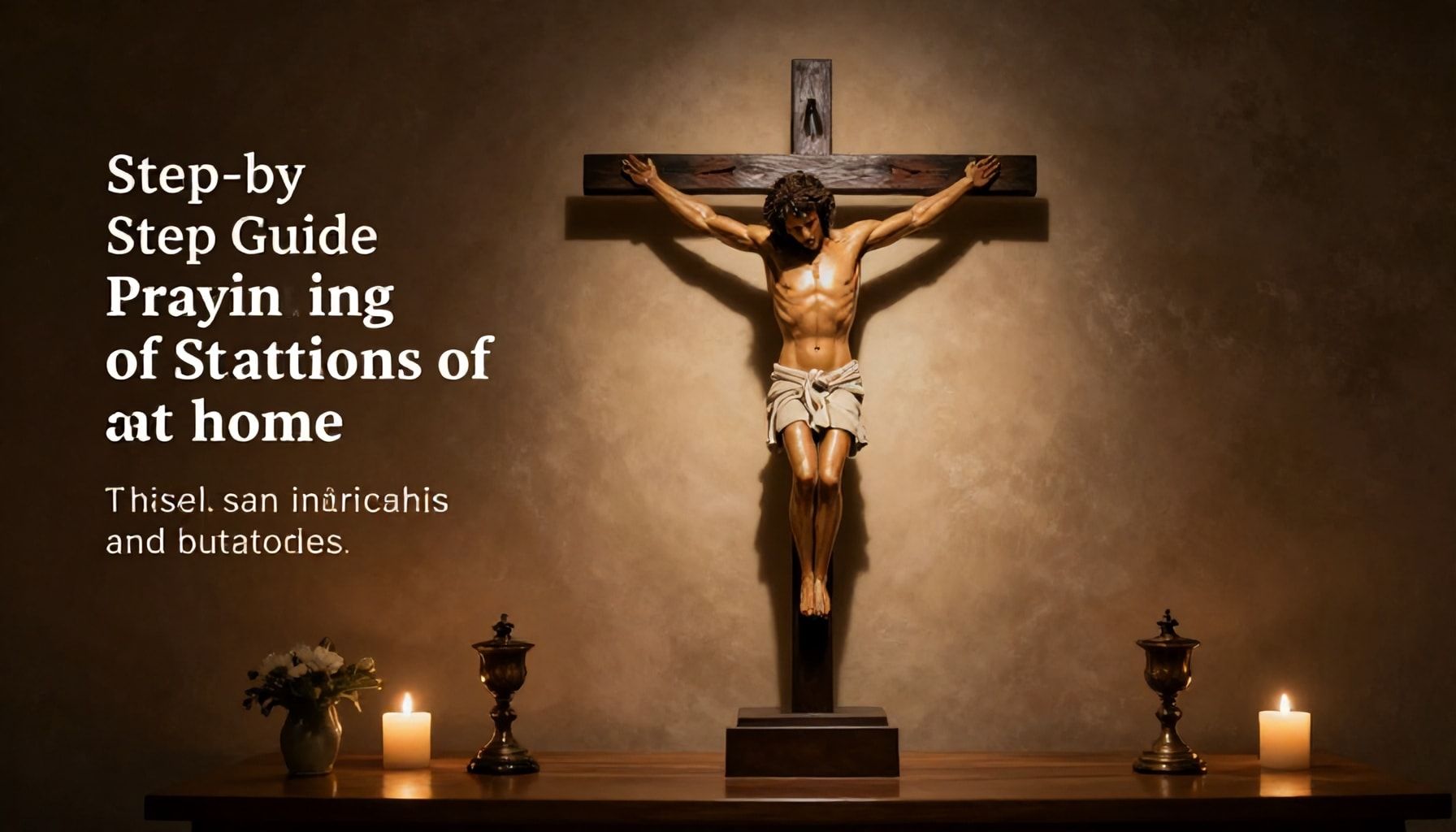
Praying the Stations of the Cross at home isn’t just a fallback—it’s a powerful way to enter into Christ’s Passion with the same focus you’d find in a church. I’ve seen families, college students, and even busy professionals transform their living rooms into sacred spaces during Lent. Here’s how to do it right, step by step.
What You’ll Need
- A quiet space (a corner works, but a table or altar is ideal).
- A crucifix or Stations of the Cross image (print one or use a phone/tablet).
- A prayer book or printed guide (or bookmark this page).
- Optional: Candles, a rosary, or a bowl of holy water.
Step 1: Set the Scene
Light a candle. Place the crucifix or images of the 14 Stations in order. If you’re using a digital version, minimize distractions—no notifications, no multitasking. I’ve seen people use a simple table with a white cloth and a single candle. It doesn’t need to be elaborate, but it should feel intentional.
Step 2: Begin with an Opening Prayer
Start with the Sign of the Cross, then recite the opening prayer. Here’s one I’ve used for years:
“Lord Jesus Christ, take me along that holy way you sanctified by your own sufferings. Impress deeply upon my heart the love you showed in carrying your cross. May I learn from your example to bear my own daily crosses with patience and courage.”
Step 3: Pray Each Station
For each Station, follow this structure:
- Read the Scripture or reflection (many guides include this).
- Pause for a moment of silence—10 seconds, no less.
- Recite the Our Father, Hail Mary, and Glory Be (or a personal prayer).
- End with a short petition, like “Lord Jesus, help me carry my cross with faith.”
Step 4: Close with a Hymn or Final Prayer
End with a hymn like “Stabat Mater” or a closing prayer. If you’re short on time, a simple “Lord, have mercy” repeated three times works. I’ve seen parents do this with kids in under 20 minutes—no need for a marathon.
| Challenge | Solution |
|---|---|
| Kids get restless | Use a simple Stations coloring book or let them hold a candle. |
| No printed guide | Use a free app like Laudate or iBreviary. |
| Distracted by noise | Play instrumental hymns in the background. |
That’s it. No fancy rituals, no pressure. Just you, Christ, and the cross. I’ve done this in dorm rooms, hotel rooms, and even on a park bench. The key? Show up. The rest will follow.
As we reflect on Christ’s Passion through the Stations of the Cross, we are reminded of His unending love and sacrifice. Each station invites us to walk beside Him, to share in His suffering, and to find hope in His resurrection. This journey strengthens our faith, deepens our compassion, and calls us to live with greater love and mercy. Let this reflection inspire us to carry our own crosses with courage, trusting in God’s grace. As we move forward, may we ask ourselves: How can we better embrace Christ’s love in our daily lives, and what steps will we take to grow closer to Him? The path of faith is ongoing, and each step brings us nearer to the joy of eternal life.