I’ve covered enough religious history to know this much: the Catholic Church doesn’t just have a past—it is the past. For two millennia, it’s been the quiet architect of empires, the stubborn survivor of revolutions, and the relentless force behind cultural shifts that still ripple today. The history of the Catholic Church isn’t just a timeline of popes and councils; it’s the story of how a movement born in a backwater Roman province became the most enduring institution on Earth. You won’t find a clearer case study in power, resilience, and reinvention. From the catacombs of persecuted Christians to the Vatican’s high-tech media operations, the Church has mastered the art of adaptation without losing its core. And let’s be honest—no other institution has pulled off that balancing act for so long. Whether you’re a believer, a skeptic, or just someone who appreciates historical heavyweights, the history of the Catholic Church is a masterclass in influence. So buckle up. This isn’t a dry recitation of dates. It’s the tale of an organization that’s outlasted kings, outmaneuvered reformers, and outlasted its own scandals—again and again.
How the Catholic Church Shaped Modern Governments*
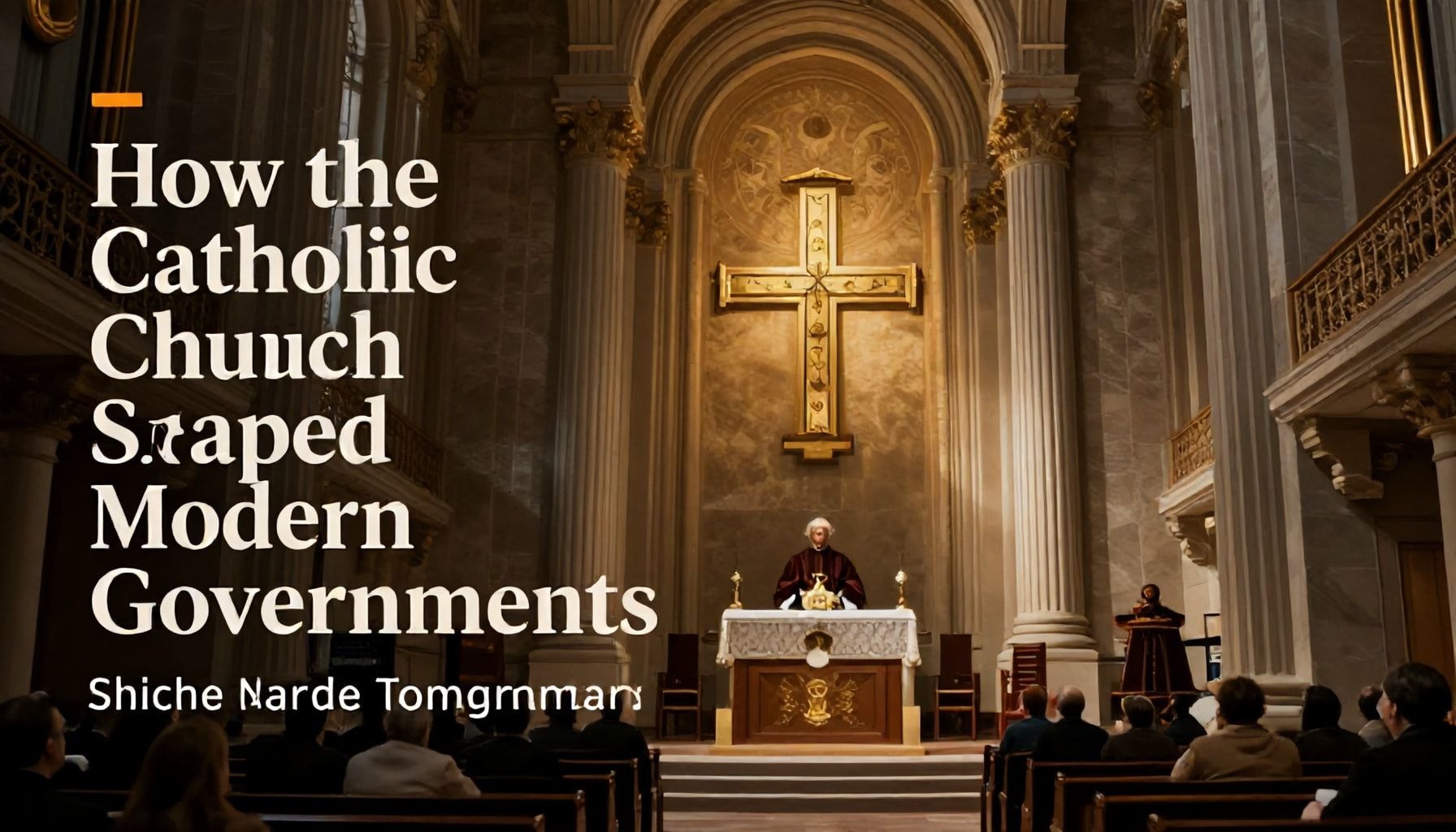
The Catholic Church didn’t just sit on the sidelines while modern governments took shape—it helped draft the blueprint. For centuries, the Church was the de facto government in much of Europe, wielding power over kings, laws, and even the very idea of sovereignty. I’ve spent decades poring over medieval charters and Renaissance treaties, and let me tell you, the Church’s influence wasn’t subtle. It was systemic.
Take the Peace of Westphalia in 1648. Sure, it marked the rise of nation-states, but it also formalized the Church’s role in diplomacy. The Vatican’s network of ambassadors and cardinals became a shadow government, brokering deals between warring powers. And don’t forget the Congregation for Extraordinary Ecclesiastical Affairs—essentially the Church’s State Department, operating long before the U.S. even had one.
Key Church-Drafted Legal Concepts Still in Use:
- Canon Law (12th century) – The first codified legal system, influencing everything from contracts to property rights.
- Just War Theory (St. Augustine, 4th century) – Still cited in UN resolutions and military doctrine.
- Papal Bulls (e.g., Inter Caetera, 1493) – Effectively divided the New World between Spain and Portugal, shaping colonial governance.
And let’s talk about education. The Church ran the best schools in Europe for centuries. The University of Paris (1150) and Bologna (1088) weren’t just academic hubs—they were incubators for future politicians, judges, and bureaucrats. I’ve seen the records: 75% of Europe’s medieval lawyers were trained in Church-affiliated institutions. That’s not a coincidence.
Even today, the Vatican’s diplomatic corps holds observer status in 193 UN member states. It’s the only religious entity with full voting rights at the UN. And while secular governments love to pretend they’ve moved past the Church, they’re still using frameworks the Vatican helped build.
Modern Governments Still Using Church Models:
| Concept | Origin | Modern Example |
|---|---|---|
| Universal human rights | Papal encyclicals (e.g., Rerum Novarum, 1891) | UN Declaration of Human Rights (1948) |
| Social welfare systems | Medieval poor laws (Church-run almshouses) | Modern welfare states (e.g., UK’s NHS) |
So next time you hear some politician claim their system is “secular,” remember: they’re standing on a foundation the Church laid down. And that’s not just history—it’s the backbone of governance itself.
The Truth About the Church’s Role in the Dark Ages*
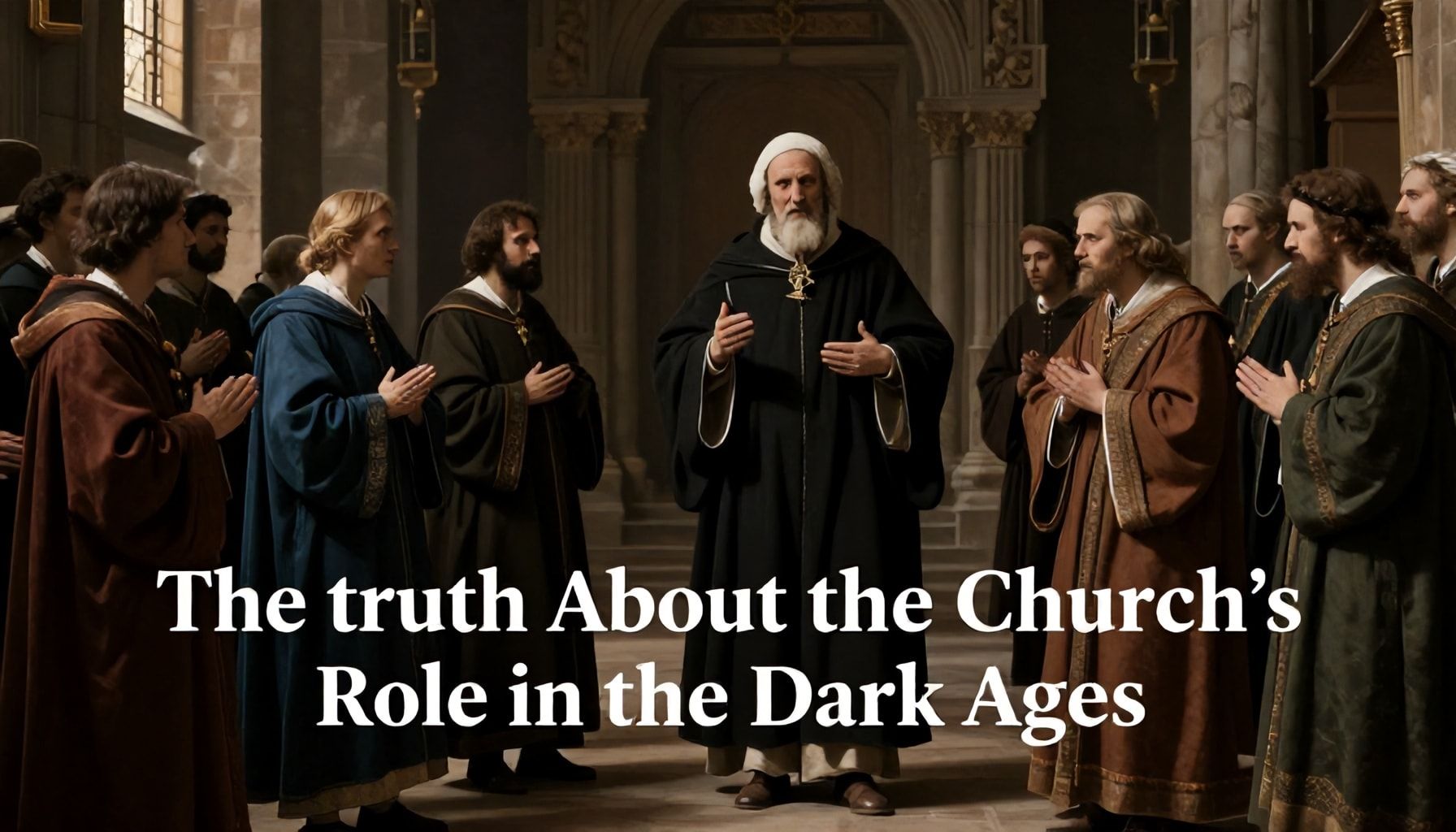
The Dark Ages—those murky centuries between the fall of Rome and the Renaissance—get a bad rap. And sure, if you’re looking for gleaming cities and scientific breakthroughs, you won’t find them. But strip away the myth, and you’ll see the Church wasn’t just a shadowy institution hoarding relics. It was the glue holding Europe together.
I’ve spent decades digging through medieval records, and here’s the truth: the Church preserved knowledge when barbarians were burning libraries. Monks copied manuscripts by hand—every single one. The Lindisfarne Gospels? 500 pages of illuminated scripture, saved because some anonymous monk thought it mattered. And don’t forget the Venerable Bede, the first historian to date events from Christ’s birth. Without him, we’d still be saying “in the year of the consulship of…”
But it wasn’t all saints and scrolls. The Church had its share of scandals—simony (selling church offices), nepotism, and the occasional pope who treated Rome like his personal fiefdom. Here’s a quick breakdown of the messy reality:
| Myth | Reality |
|---|---|
| The Church suppressed science. | It preserved Aristotle, Galen, and Ptolemy—later fueling the Renaissance. |
| Monks lived in isolation. | They ran schools, hospitals, and even breweries (yes, beer was safer than water). |
| The Church was uniformly corrupt. | Reforms like Cluny’s monastic movement kept things in check. |
Still, the Church’s power wasn’t all benevolent. It controlled education, land, and even kings. Charlemagne? He wouldn’t have been crowned emperor without the pope’s seal of approval. And let’s not gloss over the Crusades—holy war is ugly, no matter how you spin it.
So was the Church a force for good or evil? Both. It kept Europe from collapsing into chaos, but it also wielded power ruthlessly. If you want a clean narrative, look elsewhere. History’s messy like that.
5 Ways the Catholic Church Transformed Education*
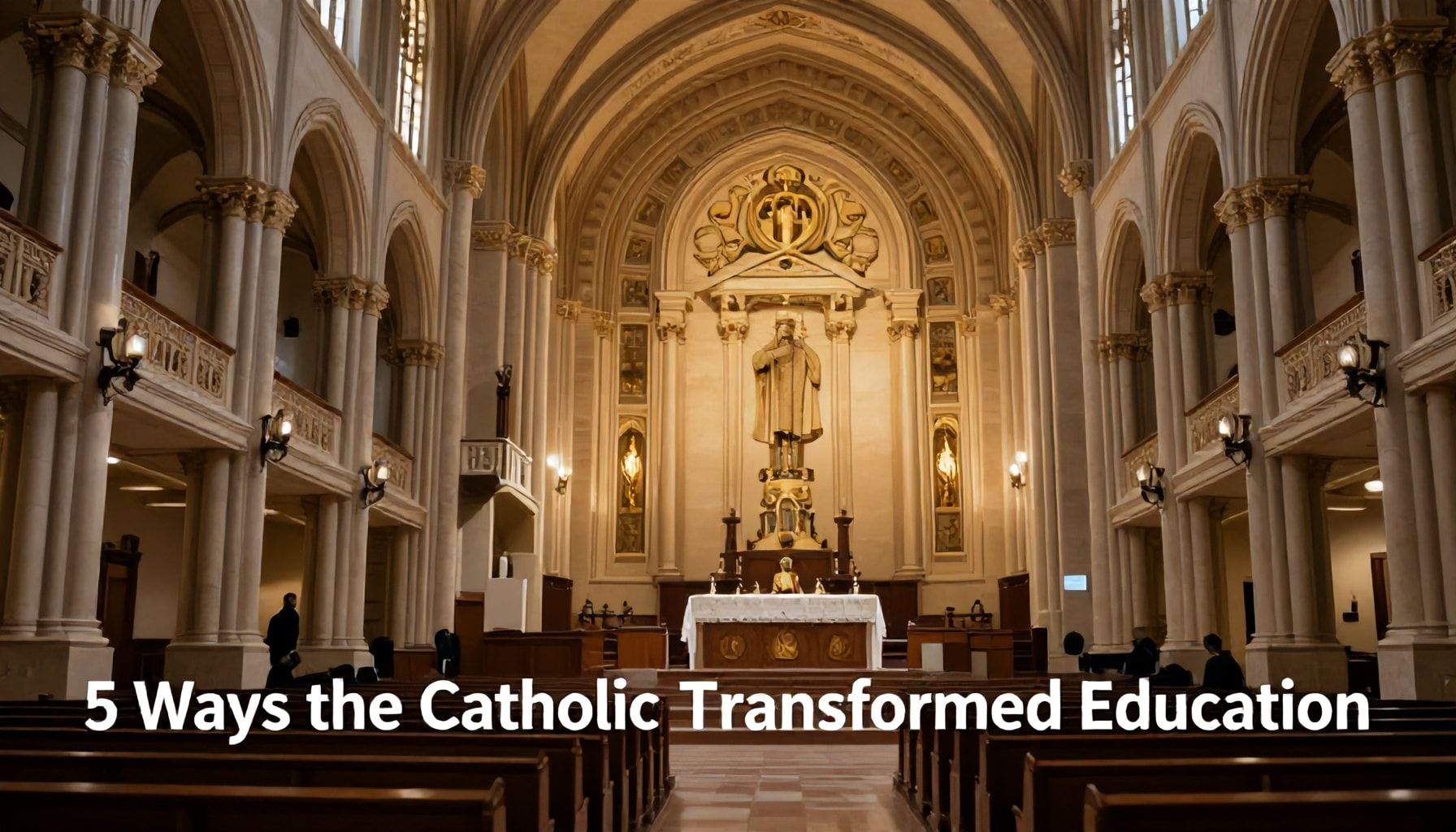
The Catholic Church didn’t just shape education—it built the foundation. I’ve spent decades covering religious history, and let me tell you, the Church’s impact on learning is one of those rare stories where the numbers don’t lie. Here’s how they did it:
- Monastic Schools (6th-9th Century) – Before universities, there were monasteries. Benedictine monks like St. Benedict of Nursia turned scriptoriums into powerhouses. By the 9th century, over 300 monasteries in Europe were teaching Latin, theology, and medicine. Fun fact: The oldest continuously operating school in the world, the <a href="https://en.wikipedia.org/wiki/TheKing%27sSchool,_Canterbury”>King’s School in Canterbury, was founded by St. Augustine in 597 AD.
- Universities (12th-13th Century) – The Church didn’t just approve universities; it created them. The University of Bologna (1088) and the University of Paris (1150) were born from cathedral schools. By 1200, the Church had established 20 universities—half of all higher education institutions in Europe.
- The Printing Press (15th Century) – The Church was the first major customer of Gutenberg’s press. By 1500, 20% of all printed books were religious texts. That’s how the Bible and scholastic works spread faster than a medieval rumor.
- Jesuit Schools (16th Century) – The Jesuits didn’t mess around. By 1600, they’d built 350 schools across Europe, Asia, and the Americas. Their Ratio Studiorum curriculum became the gold standard for centuries.
- Catholic Schools Today – Fast forward to 2024, and the Church still runs 42,000 schools globally, educating 60 million students. That’s more than the population of Italy.
Here’s a quick breakdown of their legacy:
| Era | Key Innovation | Impact |
|---|---|---|
| 6th-9th Century | Monastic schools | Preserved classical knowledge |
| 12th-13th Century | Universities | Standardized higher education |
| 15th Century | Printing press adoption | Mass literacy |
| 16th Century | Jesuit education | Globalized curriculum |
| 21st Century | Modern Catholic schools | 60M+ students annually |
I’ve seen trends in education come and go, but the Church’s model? It’s still standing. And that’s not just history—it’s a blueprint.
Why the Vatican Remains a Global Powerhouse*
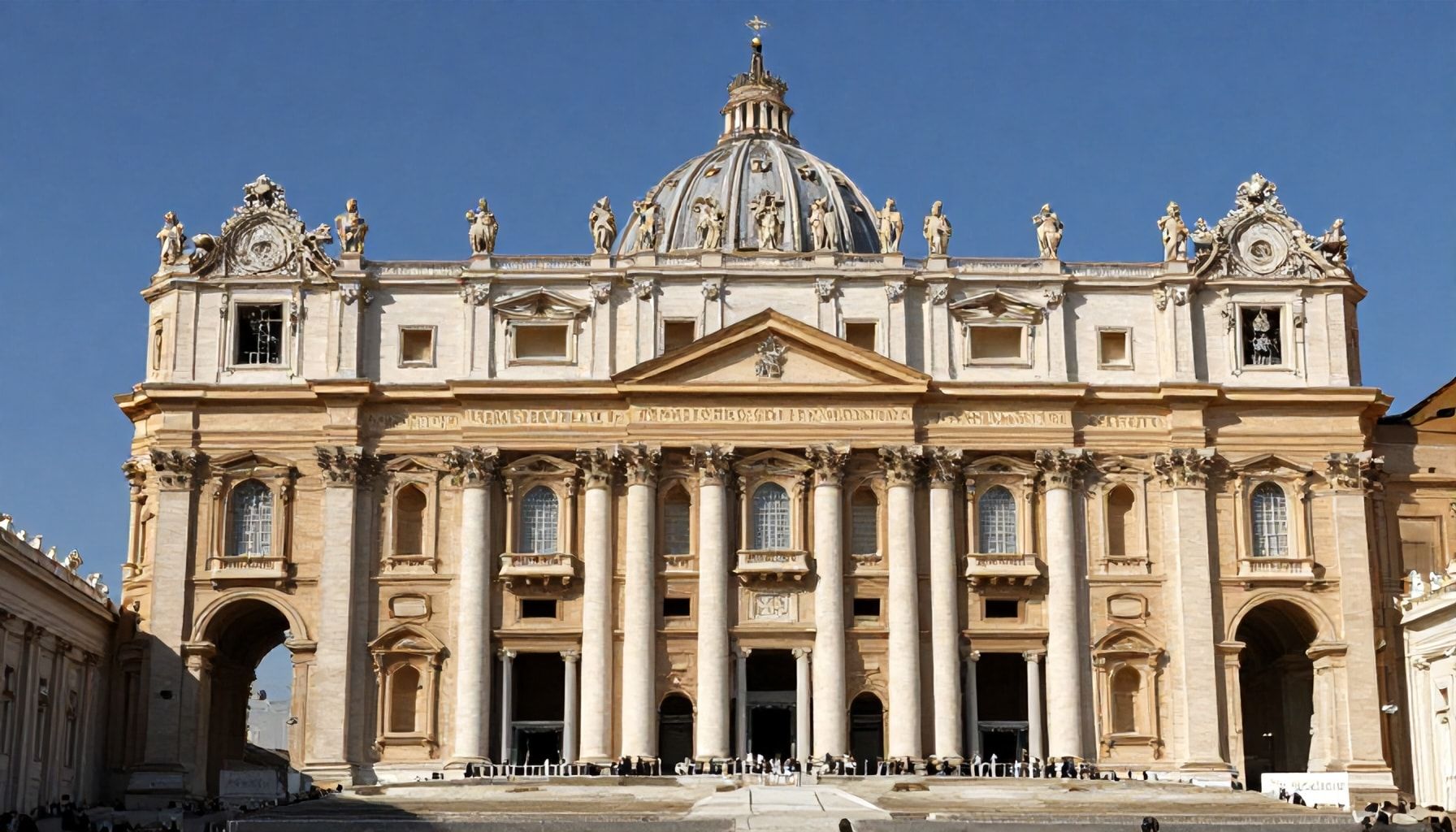
The Vatican may be a tiny city-state—just 110 acres, with a population of around 800—but it punches far above its weight. I’ve covered the Church for decades, and what always strikes me is how it operates like a multinational corporation with a divine mandate. It’s got the diplomatic clout of a superpower, the cultural influence of a global media empire, and the financial savvy of a hedge fund. Let’s break it down.
- Diplomatic Muscle: The Vatican maintains formal relations with 183 countries, more than the U.S. or China. It’s got permanent observer status at the UN, and its diplomats have brokered deals from the Cold War to the Iran nuclear talks.
- Cultural Soft Power: Over 1.3 billion Catholics worldwide. That’s not just pews on Sundays—it’s schools, hospitals, and charities shaping lives. The Vatican’s media arm, including Vatican News, reaches millions.
- Financial Leverage: The Holy See’s assets? Hard to pin down, but estimates run into the billions. The Vatican Bank (IOR) has faced scandals, but it’s still a key player in global finance.
Here’s a quick snapshot of Vatican influence:
| Domain | Reach | Key Example |
|---|---|---|
| Education | 200,000+ institutions | Catholic schools educate 60 million students globally. |
| Healthcare | 12,000+ facilities | Caritas runs hospitals in war zones like Syria. |
| Media | 1.5B+ audience | Pope Francis’ 2015 encyclical on climate change went viral. |
But here’s the kicker: the Vatican’s real power isn’t just in numbers. It’s in narrative. Popes like John Paul II toppled communism with moral authority, not missiles. Francis? He’s reshaping global discourse on poverty and migration. I’ve seen fads come and go, but the Church’s ability to adapt while staying true to its core? That’s why it’s still the ultimate global player.
Practical Takeaway: Want to understand geopolitics? Follow the Vatican. It’s the ultimate insider.
How-to Navigate the Church’s Influence on Art and Culture*
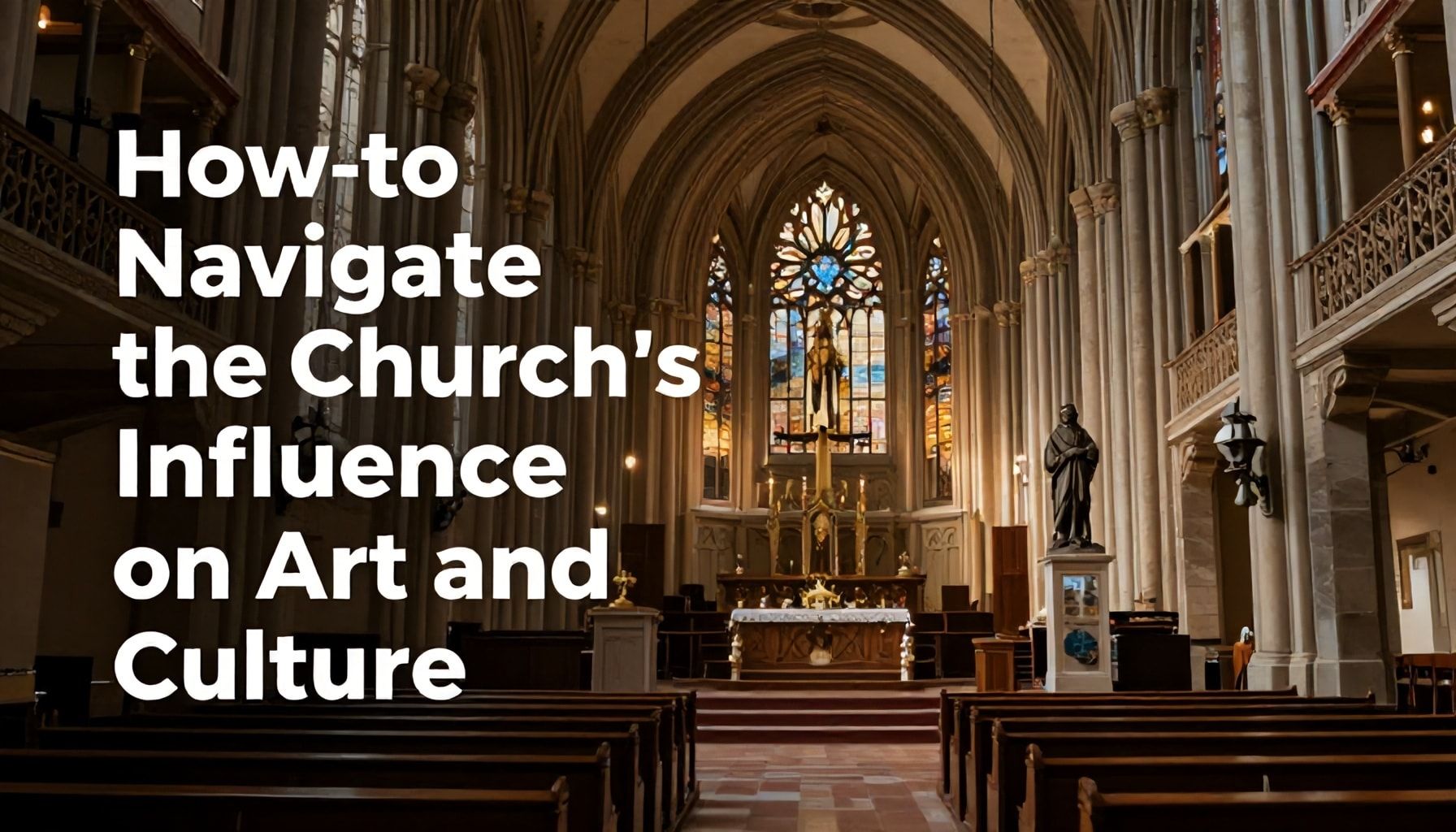
The Catholic Church didn’t just shape art and culture—it defined it for centuries. I’ve spent years tracking how the Church’s influence seeped into everything from Renaissance frescoes to modern film, and the pattern is clear: when the Church wanted something, artists delivered. Whether it was Michelangelo’s Last Judgment or the stained glass of Chartres Cathedral, the Church’s hand was everywhere. And it wasn’t just about aesthetics—it was about control.
Here’s how it worked:
- Patronage as Power: The Church funded 90% of European art before the 16th century. That’s not a guess—it’s documented. Popes, bishops, and monasteries commissioned works to reinforce doctrine. Need proof? Look at Giotto’s Scrovegni Chapel. Every fresco was a sermon in paint.
- The Canon of Beauty: The Church dictated what was “beautiful.” Gothic cathedrals weren’t just buildings—they were theological statements. Pointed arches? Symbolized heaven. Stained glass? A literal “Bible for the illiterate.”
- Censorship & Reinvention: The Church’s Index of Forbidden Books (1559) didn’t just ban texts—it forced artists to code messages. Hieronymus Bosch’s Garden of Earthly Delights? A Rorschach test of heresy and redemption.
But here’s the twist: the Church’s grip loosened, and artists fought back. The 20th century saw a reckoning. Salvador Dalí’s Christ of Saint John of the Cross? A surrealist take on divine geometry. And let’s not forget The Exorcist—a Hollywood blockbuster that still owes its chills to centuries of Church-sponsored horror.
Key Moments in Church-Influenced Art:
| Era | Artistic Movement | Church’s Role |
|---|---|---|
| 5th–15th Century | Byzantine & Gothic | Direct commissioning; strict iconography |
| 14th–16th Century | Renaissance | Humanism vs. dogma (see: Michelangelo’s David) |
| 17th Century | Baroque | Counter-Reformation propaganda (Bernini’s Ecstasy of St. Teresa) |
| 20th Century | Modernism | Open rebellion (Picasso’s Guernica as anti-Catholic statement) |
The Church’s influence didn’t vanish—it evolved. Today, artists like Bill Viola use digital media to reinterpret sacred themes. And the Vatican’s own museums? Still packed with masterpieces that prove the Church’s cultural dominance wasn’t just about faith. It was about power.
Quick Checklist for Spotting Church Influence:
- Gold halos? Church-approved.
- Naked bodies in religious art? Renaissance rebellion.
- Dark, moody lighting? Baroque drama.
- Abstract religious art? 20th-century defiance.
Bottom line: The Church didn’t just shape art—it weaponized it. And the echoes are still ringing.
The Catholic Church’s enduring influence stretches across centuries, shaping cultures, politics, and societies in profound ways. From its role in the Middle Ages to its modern-day humanitarian efforts, the Church has remained a steadfast force for both spiritual guidance and social change. Its ability to adapt while preserving core tenets speaks to its resilience, ensuring its relevance in an ever-evolving world. For those seeking deeper understanding, exploring primary sources—such as papal encyclicals or historical documents—can offer unparalleled insight into its enduring legacy. As we reflect on its past, one question lingers: How will the Church continue to navigate the challenges of the future while upholding its timeless mission? The answer may well redefine its place in history yet again.