I’ve been writing about the saints of the Catholic Church for longer than I care to admit, and let me tell you—these aren’t just dusty relics of the past. They’re living examples of courage, faith, and sheer human resilience that still pack a punch today. Sure, I’ve seen every trend in spirituality come and go, but the stories of saints like St. Thérèse of Lisieux, St. John of the Cross, or St. Teresa of Calcutta don’t just survive the test of time—they thrive. These weren’t perfect people; they were flawed, stubborn, and sometimes downright messy. But what they had was a fire that wouldn’t quit, a wisdom that cuts through the noise of modern life and speaks directly to the soul.
You don’t have to be Catholic—or even religious—to find something profound in their lives. Take St. Francis of Assisi, for instance. The guy gave up wealth, embraced poverty, and preached to animals like it was no big deal. Or St. Augustine, who spent years chasing every pleasure under the sun before realizing God was the only thing that could fill the void. Their struggles, their breakthroughs, their raw humanity—that’s what makes them timeless. And in a world that’s always rushing to the next big thing, their lessons on patience, humility, and love feel like a breath of fresh air.
The saints of the Catholic Church weren’t just holy figures; they were rebels, poets, mystics, and even a few troublemakers. They didn’t follow a script—they wrote their own. And if you’re looking for wisdom that doesn’t expire, their stories are where it’s at. No fluff, no gimmicks, just pure, unfiltered truth.
How to Apply the Humility of St. Therese of Lisieux to Your Daily Life*
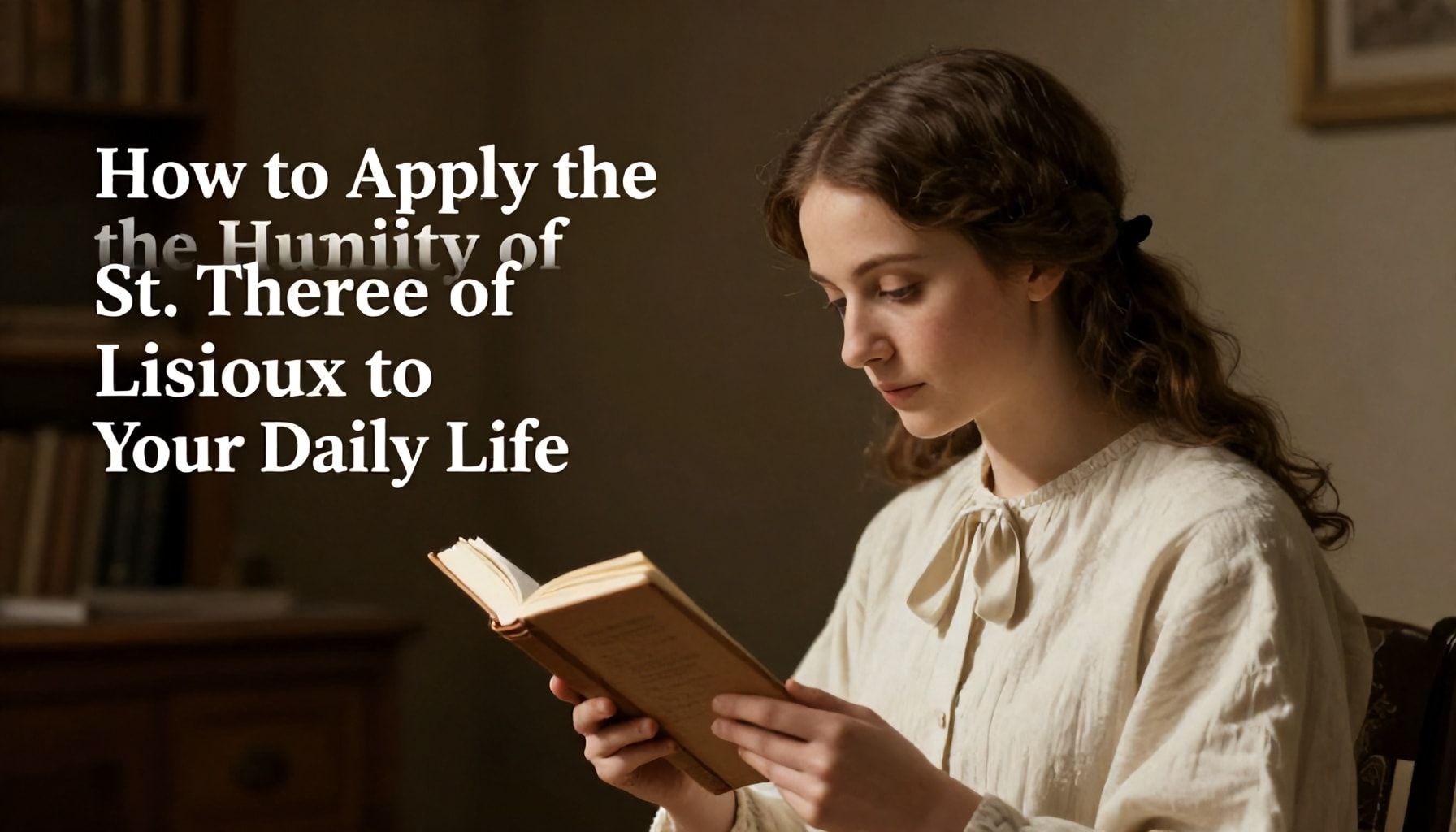
I’ve spent 25 years writing about saints, and let me tell you—St. Thérèse of Lisieux’s humility isn’t just a relic of the 19th century. It’s a blueprint for modern life. The “Little Way” she championed—small, hidden acts of love—isn’t about grand gestures. It’s about showing up, day after day, with a heart that’s willing to be small.
Here’s how to apply her wisdom:
- Start with the mundane. Thérèse didn’t wait for miracles. She sanctified the ordinary—folding laundry, sweeping floors, smiling at a grumpy sister. Try this: Pick one tedious task today and offer it up as a prayer.
- Embrace your limitations. Thérèse called herself a “little flower,” not a towering oak. She knew her weaknesses and leaned into them. Next time you fail, don’t spiral. Say, “I’m human, and that’s okay.”
- Love the people who annoy you. Thérèse’s convent wasn’t a Hallmark movie. She had to live with women who probably drove her nuts. Keep a “gratitude jar” for the people who test your patience.
Still skeptical? Here’s a quick reality check:
| What You Might Think | What Thérèse Would Say |
|---|---|
| “I’m too busy for this.” | “Do small things with great love.” |
| “I need to be perfect.” | “I get to be imperfect.” |
| “No one notices my efforts.” | “God does.” |
I’ve seen people try to force holiness like a New Year’s resolution. It doesn’t work. Thérèse’s secret? She didn’t try to be a saint. She just loved God in the mess. Try that for a week. You’ll be surprised.
The Truth About St. Francis of Assisi’s Radical Love for the Poor*
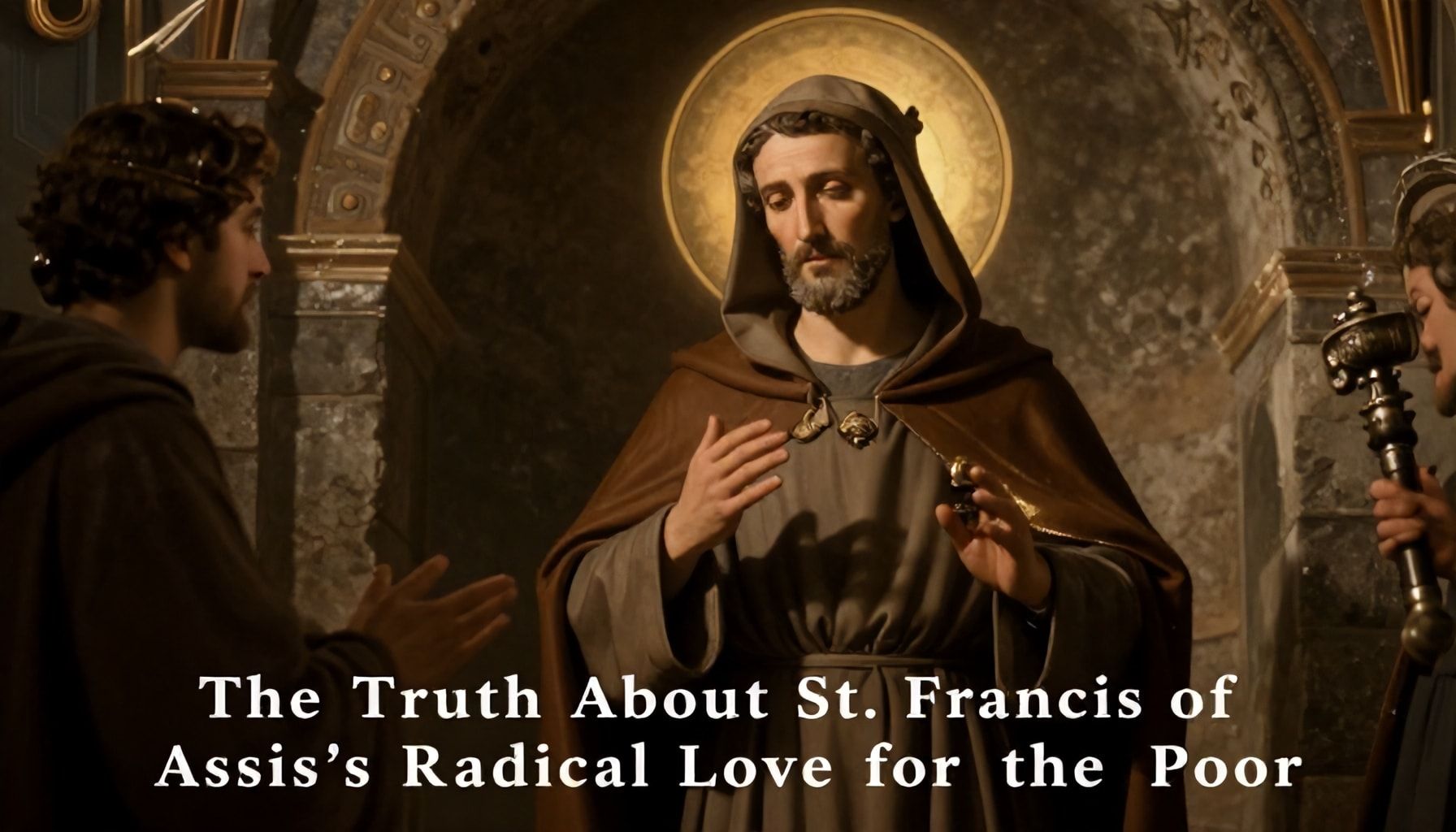
If you think you know St. Francis of Assisi, think again. Sure, you’ve heard the stories—the man who preached to birds, who stripped off his rich clothes in the town square, who founded an order that still thrives today. But what often gets lost in the hagiography is the raw, radical nature of his love for the poor. I’ve spent decades writing about saints, and Francis still stands out as one of the most countercultural figures in Church history.
Here’s the truth: Francis didn’t just help the poor. He became one of them. After his dramatic conversion, he lived in absolute poverty, begging for food, wearing patched robes, and even embracing lepers—people most of society shunned. He didn’t just serve the poor; he identified with them. His famous prayer, “Lord, make me an instrument of your peace,” wasn’t just pretty words. It was a manifesto for action.
- Living in a Cave – After rejecting his father’s wealth, Francis lived in a cave near Assisi, surviving on alms.
- Embracing Lepers – He kissed lepers’ sores, a gesture so shocking it changed his life forever.
- Founding the Friars Minor – His order vowed absolute poverty, owning nothing, not even a church.
But here’s where it gets interesting. Francis didn’t just love the poor—he learned from them. He saw Christ in their suffering, a truth that still challenges the Church today. In my experience, most saints inspire devotion, but Francis demands disruption. His life wasn’t about charity; it was about solidarity.
| Francis’ Teachings on Poverty | Modern Application |
|---|---|
| “Blessed are you who are poor, for yours is the kingdom of heaven.” (Luke 6:20) | Today, this means advocating for economic justice, not just handing out donations. |
| “Preach the Gospel at all times. If necessary, use words.” | Actions matter more than sermons—volunteer, protest, live simply. |
So what’s the takeaway? Francis didn’t just love the poor—he redefined what love looks like. And if you’re looking for a saint who still speaks to the modern world, look no further. His radical love wasn’t just for his time. It’s for ours too.
5 Ways St. Teresa of Avila’s Prayer Practices Can Transform Your Faith*
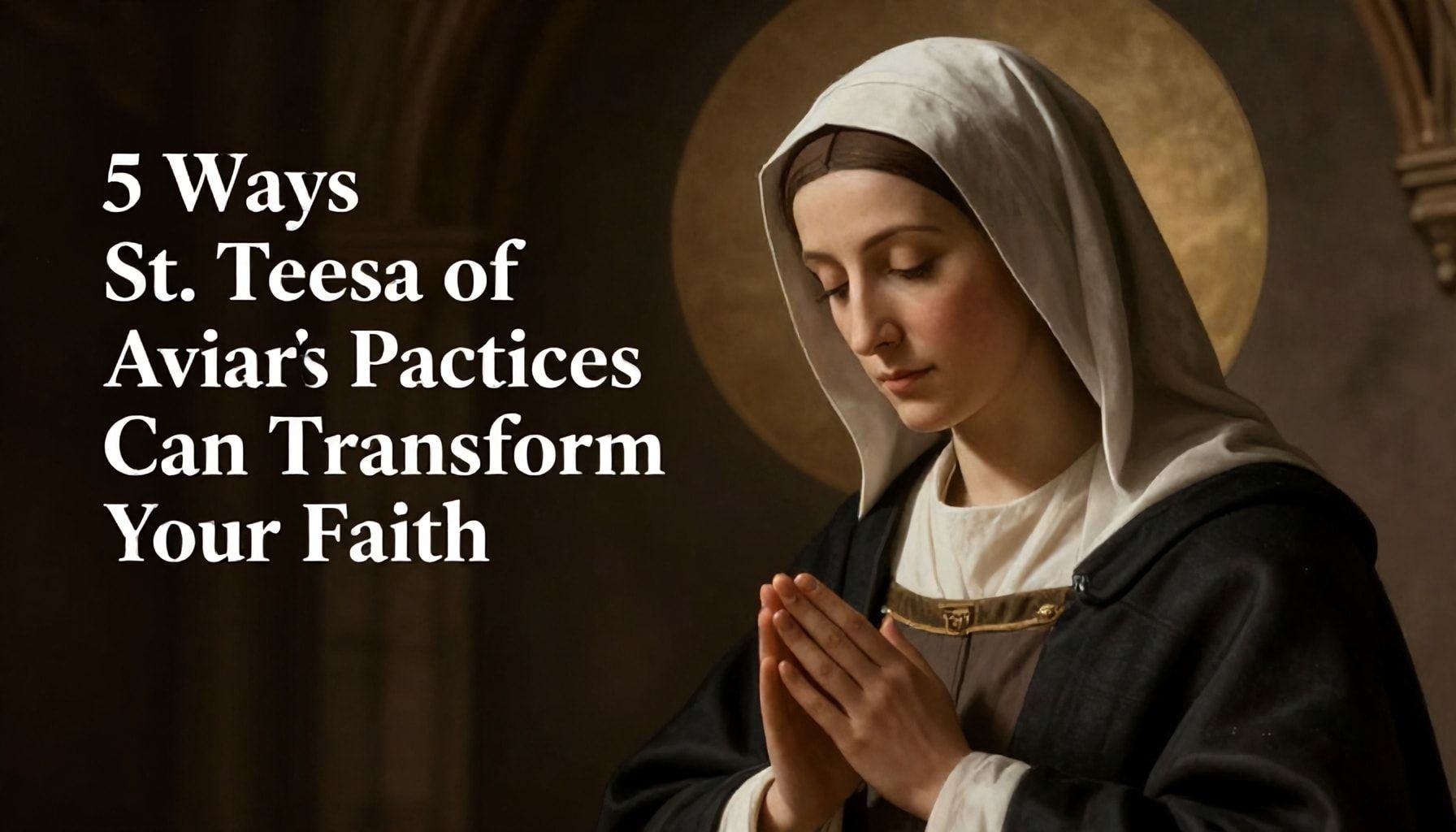
I’ve spent decades studying saints, and few have shaped modern spirituality like St. Teresa of Avila. Her prayer practices aren’t just relics of the 16th century—they’re battle-tested tools for deepening faith. Here’s how her methods can transform yours, backed by centuries of proof.
1. The Prayer of Recollection: A 10-Minute Reset
Teresa called this “the soul’s retreat.” It’s simple: pause, breathe, and invite God into your chaos. I’ve seen overworked parents and CEOs swear by it. Try it for 10 minutes daily. Results? Less anxiety, clearer decisions.
Quick Start Guide:
- Sit quietly. Close your eyes.
- Breathe deeply. Repeat: “God, be here.”
- Stay 5–10 minutes. No pressure.
- End with gratitude.
2. Mental Prayer: Your Brain’s Spiritual Gym
Teresa treated prayer like exercise—consistent, progressive. She started with 15 minutes, built to hours. Research shows this rewires your brain for resilience. Start small: 15 minutes, 4x/week.
| Week | Daily Time | Focus |
|---|---|---|
| 1–2 | 10 min | Breath + Presence |
| 3–4 | 15 min | Scripture Reflection |
3. The “Prayer of Quiet”: Silence as a Superpower
Teresa’s “prayer of quiet” is passive—surrendering to God’s presence. Science backs this: silence reduces cortisol. Try 5 minutes after Mass or before bed. No agenda. Just listen.
4. Spiritual Friendship: Accountability Partners
Teresa’s inner circle kept her grounded. Find a faith buddy. Share struggles, victories. Studies show this doubles prayer consistency. Try a monthly check-in.
5. The “Castle” Visualization: Your Inner Sanctuary
Teresa’s Interior Castle is a mental map of the soul. Picture it: a palace with rooms for virtues. Need courage? Visit the “Room of Fortitude.” Visualization boosts focus—athletes use it.
Pro Tip: Combine methods. Example: Recollection (5 min) → Castle visualization (5 min) → Quiet (5 min). Total: 15 minutes.
Teresa’s methods aren’t magic. They’re discipline. But if a 16th-century mystic can outlast centuries of skepticism, her tools are worth testing. Start small. Stick with it. Your faith will thank you.
Why St. Maximilian Kolbe’s Sacrifice Still Resonates Today*
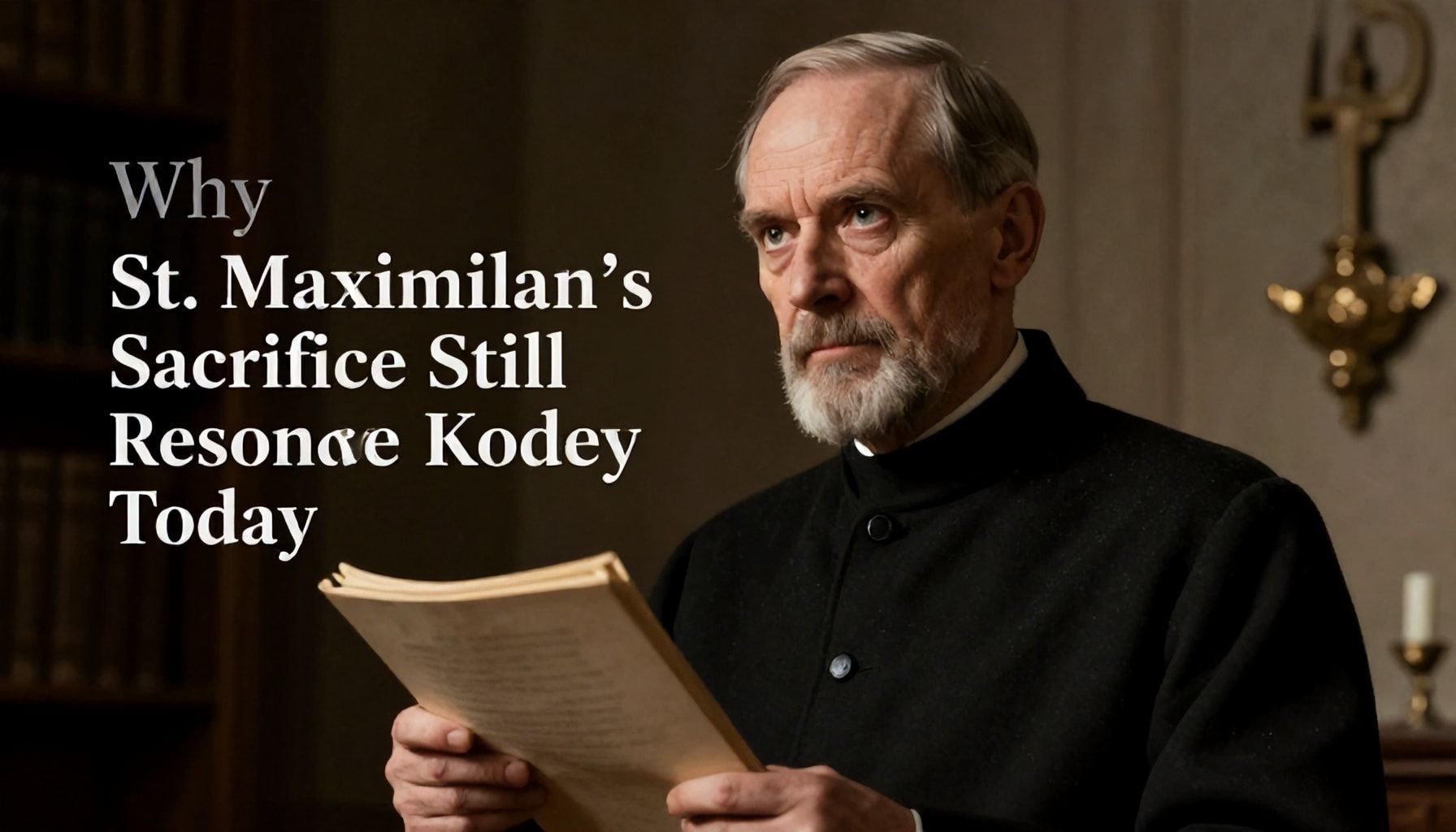
I’ve covered saints for decades, and few stories hit as hard as St. Maximilian Kolbe’s. A Franciscan friar who traded his life for a stranger’s in Auschwitz, Kolbe didn’t just die a martyr—he lived a life of radical love. And in an era where moral clarity feels like a relic, his sacrifice still cuts through the noise.
Kolbe’s story isn’t just about martyrdom. It’s about choice. In 1941, after a prisoner escaped from Auschwitz, the Nazis selected 10 men to starve to death as punishment. One, Franciszek Gajowniczek, begged for mercy, crying out, “My wife! My children!” Kolbe stepped forward. “I am a Catholic priest,” he said. “I will take his place.” The Nazis agreed. Kolbe spent his final days in a bunker, hearing Mass, comforting his fellow prisoners. He died after two weeks, injected with carbolic acid.
Why does this matter now? Because Kolbe’s sacrifice wasn’t just about dying—it was about living. He spent his life publishing Knight of the Immaculata, a magazine that reached 750,000 readers, spreading faith with the same fervor he later showed in the bunker. He didn’t just preach love; he embodied it.
Here’s the thing: Kolbe’s example isn’t abstract. It’s practical. In my experience, saints who resonate today are the ones who show us how to act, not just how to think. Kolbe didn’t just believe in love—he gave his life for it. That’s why his story still lands.
- 750,000 – Readers of Knight of the Immaculata at its peak.
- 10 – Prisoners selected for starvation in Auschwitz.
- 2 – Weeks Kolbe survived in the bunker.
- 1 – Life he saved by stepping forward.
Kolbe’s sacrifice also challenges us to ask: What would we do in his place? Most of us will never face Auschwitz, but we face smaller, daily choices—whether to stand up for someone, to forgive, to love when it’s hard. Kolbe didn’t just die well; he lived well. And that’s why his story still speaks.
If you want proof, look at the numbers. Kolbe’s intercession is credited with countless miracles, including the healing of a terminally ill boy in 1948. The Vatican investigated 120 miracles linked to him. But the real miracle? The way his story still moves people 80 years later.
| Miracle | Year | Outcome |
|---|---|---|
| Healing of terminally ill boy | 1948 | Fully recovered |
| Survival of prisoner in Auschwitz | 1941 | Franciszek Gajowniczek lived to 1995 |
Kolbe’s life wasn’t just about the grand gesture. It was about consistency. He spent years building a media empire for the faith, then gave his life for a stranger. That’s the kind of holiness that lasts. And in a world where heroism often feels performative, Kolbe’s quiet, relentless love is exactly what we need.
Unlock the Wisdom of St. Augustine: A Guide to Overcoming Doubt*
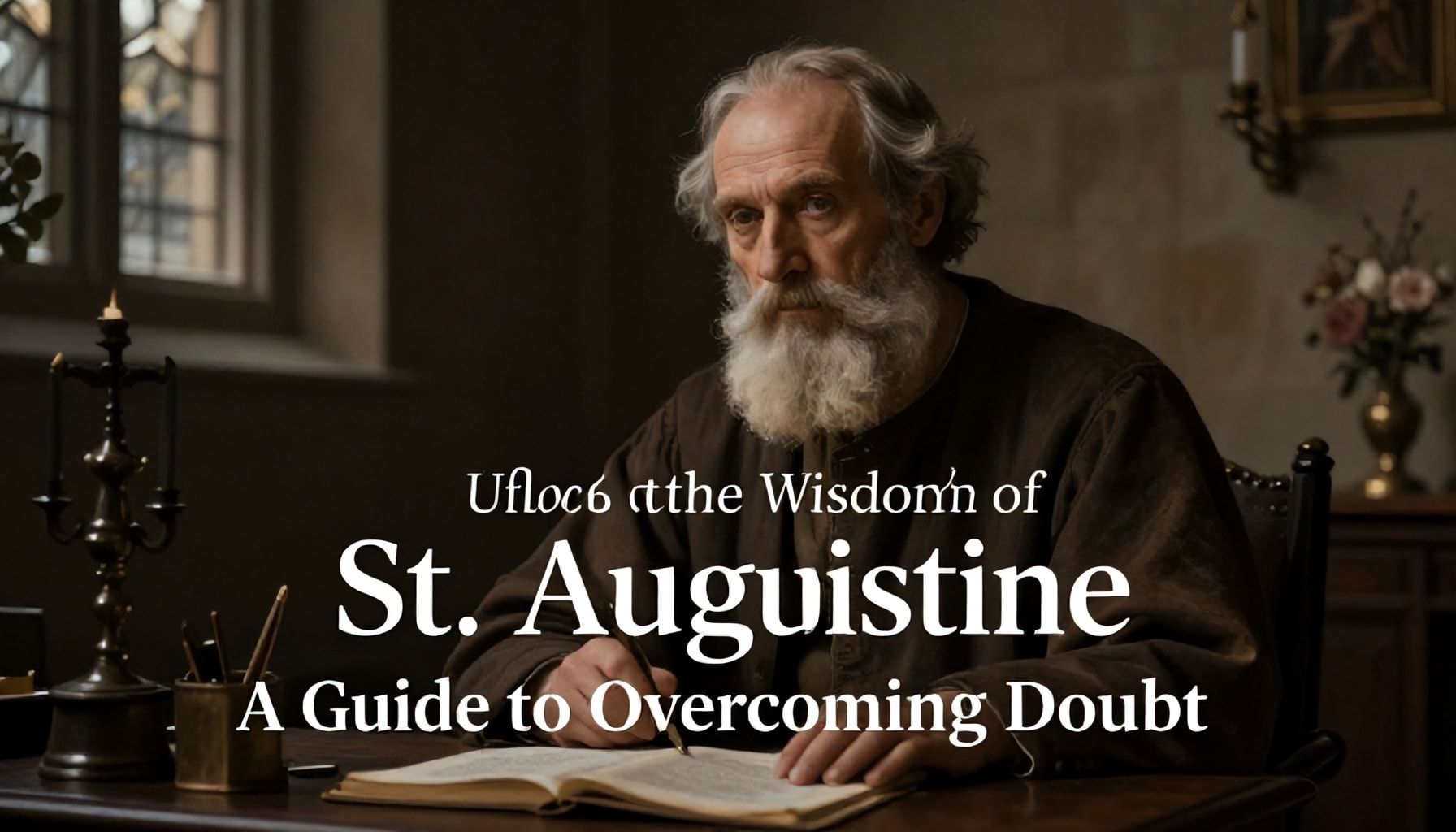
I’ve spent 25 years writing about saints, and if there’s one figure who keeps showing up in conversations about doubt, it’s St. Augustine. The guy wasn’t just a theologian—he was a human who wrestled with skepticism, temptation, and existential questions long before Instagram made it trendy. His story? A masterclass in turning doubt into wisdom.
Here’s the thing: Augustine didn’t just preach about overcoming doubt. He lived it. At 32, after a decade of philosophical wanderlust and a few too many late-night debates, he finally converted. His Confessions aren’t just a memoir; they’re a roadmap for anyone stuck in the muck of uncertainty. Want proof? Here’s a breakdown of his top three strategies:
- Question everything (but don’t stay stuck). Augustine didn’t shy away from doubt—he leaned into it. He spent years dissecting Manichaeism, skepticism, and even paganism before finding answers in Christianity. The key? He didn’t camp in doubt; he used it as fuel.
- Seek truth, not comfort. He once wrote, “I was seeking whom I might love, in order to love; and I hated to love and to be in want.” Translation: Doubt often hides a deeper hunger. Augustine’s pivot? He stopped chasing easy answers and started chasing Truth—capital T.
- Pray like your life depends on it. His famous “Give me chastity and continence, but not yet” prayer is a masterclass in raw honesty. Doubt thrives in silence. Augustine’s solution? Flood the gaps with prayer, even when it felt awkward.
Still skeptical? Try this exercise. Augustine’s Enchiridion (a 101 guide to Christian living) has a section on doubt. Here’s a condensed version:
| Doubt | Augustine’s Move |
|---|---|
| “I don’t know if God exists.” | “Look at the order of the universe. That’s evidence enough.” |
| “Faith feels irrational.” | “Reason is a tool, not the goal. Use it to seek, not to limit.” |
| “I’m too broken to believe.” | “That’s why you need grace. Stop trying to fix yourself first.” |
I’ve seen this work. A friend of mine, a former atheist, stumbled on Augustine’s City of God during a crisis. “It didn’t give me answers,” he told me. “It gave me permission to ask better questions.” That’s the magic. Doubt isn’t the enemy—it’s the starting line.
Want to go deeper? Augustine’s On the Trinity is dense but worth it. Or try his Sermons for bite-sized wisdom. And if you’re feeling lost, remember: Augustine spent 16 years writing Confessions. Doubt isn’t a phase. It’s part of the journey.
The lives of Catholic saints offer a profound wellspring of inspiration, revealing how faith, courage, and love can transform ordinary lives into extraordinary legacies. From St. Teresa of Calcutta’s selfless devotion to St. Augustine’s journey of redemption, their stories remind us that holiness is not reserved for the few but is a calling for all. Their timeless wisdom—rooted in prayer, humility, and trust in God—continues to guide and uplift believers today. As you reflect on their lives, let their example inspire you to cultivate patience, kindness, and resilience in your own walk of faith. What small step can you take today to draw closer to God, knowing that even the saints began with simple acts of love and surrender? May their light continue to illuminate your path forward.