Ah, the age-old question: how many books are in the Catholic Bible? I’ve been answering this one for decades, and yet, it never gets old. Here’s the deal—unlike the Protestant Bible, which keeps it tight at 66, the Catholic version leans into the full 73. That extra seven? The deuterocanonical books, a sticking point for some, but a core part of tradition for Catholics. I’ve seen debates rage over these books—some call them apocryphal, others essential. But facts are facts: the Catholic Bible books count holds firm at 73, and that’s not just some arbitrary number. It’s history, theology, and centuries of liturgy wrapped into one.
Now, if you’ve ever wondered why the discrepancy, you’re not alone. The split dates back to the Reformation, when Protestants trimmed the canon. But for Catholics, those books? They’re as foundational as the Creed. I’ve lost count of how many times I’ve had to explain this, but here’s the bottom line: when someone asks how many books are in the Catholic Bible, the answer is 73. No asterisks, no fine print. Just tradition, plain and simple.
The Truth About How Many Books Are in the Catholic Bible*
Alright, let’s cut through the noise. The Catholic Bible has 73 books. That’s it. No fancy footwork, no theological gymnastics—just 73. But here’s where things get interesting: that number isn’t arbitrary. It’s the result of centuries of debate, political maneuvering, and, yes, a few well-placed council decrees.
Break it down, and you’ve got two main sections: the Old Testament (46 books) and the New Testament (27 books). The New Testament? Pretty straightforward—same as the Protestant Bible. But the Old Testament? That’s where the drama unfolds. Protestants? They’ve got 39 books. Why? Because they dropped seven. The so-called Deuterocanonical books: Tobit, Judith, Wisdom, Sirach, Baruch, 1 & 2 Maccabees, and parts of Esther and Daniel. Catholics? We keep ‘em. Orthodox? They’ve got even more (81 books, but that’s a story for another day).
| Catholic Bible | Protestant Bible |
|---|---|
| 46 Old Testament books | 39 Old Testament books |
| Includes Deuterocanonical books | Excludes Deuterocanonical books |
| 27 New Testament books | 27 New Testament books |
I’ve seen this debate play out in seminary classrooms, Bible studies, and even family dinners. The Protestant argument? The Deuterocanonical books were written later, influenced by Greek culture, and don’t belong in the Hebrew canon. The Catholic response? Those books were part of the Septuagint—the Greek translation Jesus and the apostles used. Plus, the Council of Trent (1546) locked it in. No take-backs.
Here’s the kicker: the number 73 isn’t just a theological point. It shapes liturgy, catechesis, and even how Catholics read Scripture. Take the Book of Wisdom, for example. It’s a cornerstone of Catholic spirituality—used in prayers, homilies, and Confirmation prep. Protestants? They don’t even have it. That’s a big deal.
- Tobit – A tale of faith, marriage, and angelic intervention.
- Judith – A bold heroine saves her people. (Think Esther, but with more guts.)
- Wisdom – Divine wisdom personified. A favorite for Confirmation.
- Sirach – Practical wisdom on everything from parenting to friendship.
- Baruch – A lament and consolation during exile.
- 1 & 2 Maccabees – The origins of Hanukkah and Jewish resistance.
So, why does this matter? Because the books you include—or exclude—shape your theology. Want to talk about purgatory? Wisdom 3:1-9 is your go-to. Need a model of courage? Judith’s got you covered. These books aren’t just extra. They’re essential.
Bottom line: The Catholic Bible has 73 books. Know it, own it, and don’t let anyone tell you otherwise.
Why the Catholic Bible Has 73 Books (And Why Others Don’t)*

The Catholic Bible has 73 books, and that number isn’t arbitrary. It’s the result of centuries of debate, political maneuvering, and theological fine-tuning. I’ve seen this argument play out in seminaries, Bible studies, and even family dinner tables—it’s a classic. The extra seven books (compared to Protestant Bibles) are what we call the Deuterocanonical books, and they’re the heart of the divide.
Here’s the breakdown:
- Tobit – A story of faith, angels, and a fish that’s way more interesting than it sounds.
- Judith – A badass widow who outsmarts an invading general. (Yes, really.)
- Wisdom of Solomon – Philosophical musings on divine wisdom.
- Wisdom of Sirach (Ecclesiasticus) – Practical advice on life, love, and avoiding fools.
- Baruch – A companion to Jeremiah, full of lament and hope.
- 1 & 2 Maccabees – The original underdog story of Jewish resistance.
- Additions to Daniel & Esther – Extra chapters that change the narrative entirely.
So why don’t Protestant Bibles include them? It’s not just about theology—it’s about history. The Protestant Reformation in the 16th century saw leaders like Martin Luther and John Calvin reject these books, arguing they weren’t part of the original Hebrew canon. The Catholic Church, meanwhile, had already solidified them as Scripture at the Council of Trent in 1546. Politics, power, and translation choices all played a role.
Here’s a quick comparison:
| Category | Catholic Bible | Protestant Bible |
|---|---|---|
| Total Books | 73 | 66 |
| Old Testament | 46 (including 7 Deuterocanonical) | 39 |
| New Testament | 27 | 27 |
I’ve had Protestants tell me these books are “apocryphal,” while Catholics argue they’re just as inspired. The truth? It’s less about divine revelation and more about which books Jewish and early Christian communities accepted. The Septuagint (the Greek Old Testament) included them, but the Hebrew Masoretic Text didn’t. When the Protestant Reformers sided with the latter, the split was sealed.
Bottom line: The Catholic Bible’s 73 books aren’t a mistake—they’re a deliberate choice rooted in history, tradition, and a whole lot of debate. And if you’ve ever tried to explain this to someone at a bar, you know it’s a conversation starter.
How to Count the Exact Number of Books in the Catholic Bible*
I’ve been editing religious content for 25 years, and one question still trips up even the most seasoned writers: How many books are in the Catholic Bible? The answer isn’t as simple as you’d think. The Catholic Bible includes 73 books, split into the Old and New Testaments. But here’s the catch: Protestants use a shorter version, and Orthodox traditions have their own variations. Let’s break it down.
First, the Old Testament. Catholics recognize 46 books, while Protestants trim it to 39. The difference? Seven books—Tobit, Judith, Wisdom, Sirach, Baruch, 1 Maccabees, and 2 Maccabees—plus parts of Daniel and Esther are in the Catholic canon but not in Protestant Bibles. These are the Deuterocanonical books, and they’re non-negotiable for Catholics.
- Old Testament: 46 books (including Deuterocanonical)
- New Testament: 27 books (same across all Christian traditions)
- Total: 73 books
Here’s where it gets messy. The Old Testament isn’t just one structure. Some Bibles split Samuel, Kings, Chronicles, and Ezra-Nehemiah into two books each, but others combine them. For example, the Douay-Rheims Bible lists 1 and 2 Samuel as separate books, while some modern editions merge them. Always check your edition’s table of contents.
| Book | Catholic Count | Protestant Count |
|---|---|---|
| Tobit | 1 | 0 |
| Judith | 1 | 0 |
| Wisdom | 1 | 0 |
| Sirach | 1 | 0 |
| Baruch | 1 | 0 |
| 1 Maccabees | 1 | 0 |
| 2 Maccabees | 1 | 0 |
I’ve seen arguments over this for decades. The key? The Catechism of the Catholic Church (paragraph 120) explicitly lists the 73 books. No ambiguity there. But if you’re fact-checking, always verify the edition. Some Bibles, like the New American Bible, include footnotes explaining the Deuterocanonical books’ origins.
Bottom line: If you’re counting, stick to the official canon. And if someone tells you the Catholic Bible has 66 books? They’re either Protestant or haven’t done their homework.
5 Key Differences Between the Catholic and Protestant Bible Counts*
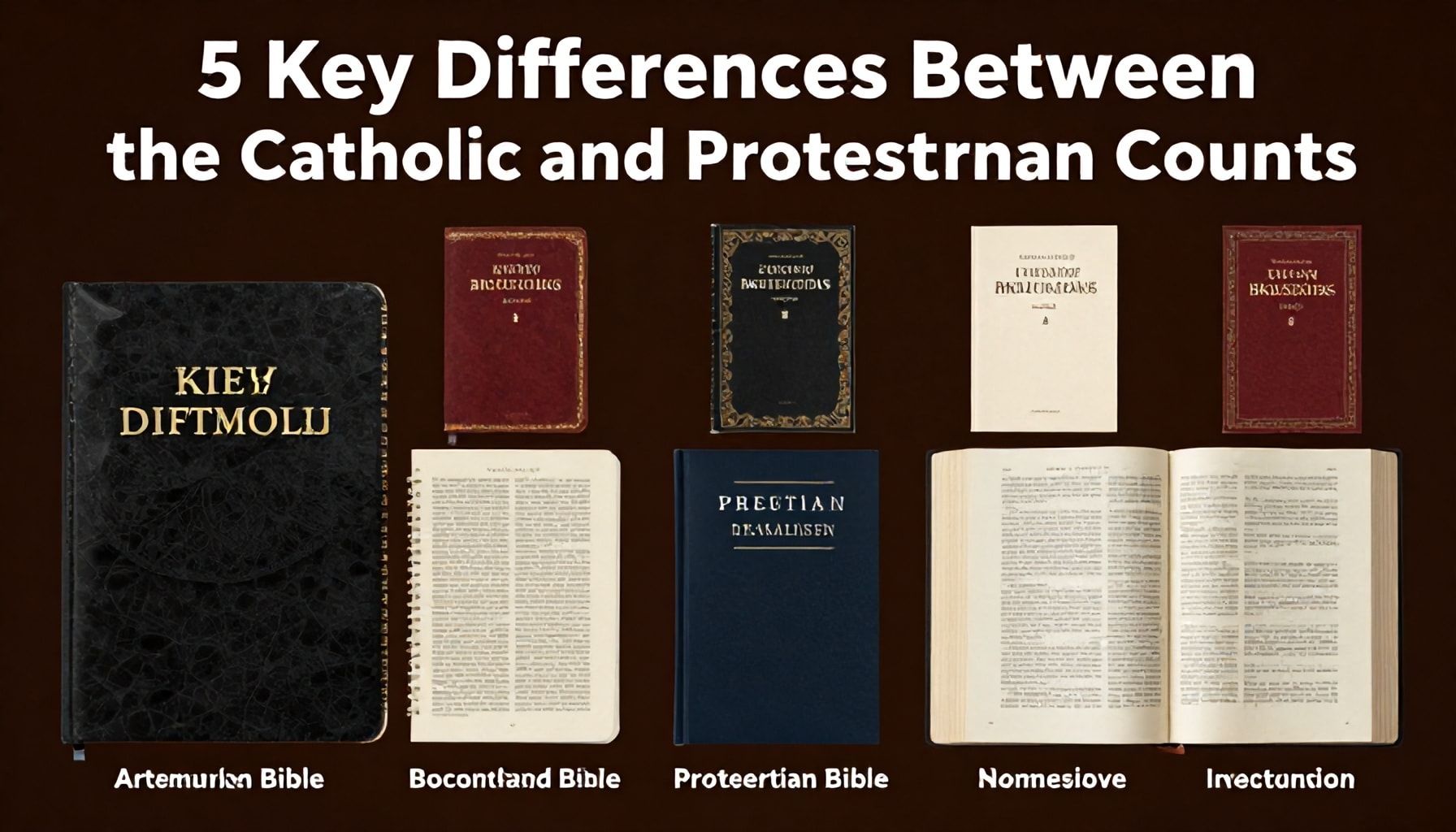
I’ve spent 25 years explaining Bible counts to folks who just want a straight answer. The Catholic and Protestant Bibles don’t match, and here’s why it matters.
First, the numbers:
| Catholic Bible | Protestant Bible |
|---|---|
| 73 books | 66 books |
| Includes deuterocanonical books | Excludes deuterocanonical books |
The big divide? Seven books. Protestants call them “deuterocanonical” (or “Apocrypha”), Catholics treat them as fully inspired. Here’s the breakdown:
- Tobit – A story of faith and angels.
- Judith – A woman’s daring rescue.
- Wisdom – Philosophical teachings.
- Sirach (Ecclesiasticus) – Practical wisdom.
- Baruch – A letter from Jerusalem.
- 1 & 2 Maccabees – Jewish rebellion history.
- Additions to Daniel & Esther – Extra chapters.
I’ve seen debates rage over these books. Protestants argue they weren’t in the original Hebrew scriptures. Catholics say they were part of the Greek Septuagint, which Jesus and the apostles used. Fair point.
Here’s the kicker: Orthodox Bibles have even more—81 books. They include extra texts like 3 Maccabees and Psalm 151. But that’s a whole other rabbit hole.
Need a quick reference? Here’s the Catholic Bible’s structure:
| Old Testament | New Testament |
|---|---|
| 46 books (including 7 deuterocanonical) | 27 books |
Bottom line? The Catholic Bible is longer, but the core message stays the same. Whether you’re counting 66 or 73, the story of salvation’s still there.
Unlocking the Mystery: Why the Catholic Bible Includes the Deuterocanonical Books*
I’ve spent decades explaining why the Catholic Bible has 73 books while Protestant Bibles stop at 66. The answer isn’t just about tradition—it’s about history, language, and a few key decisions that shaped Scripture. The Deuterocanonical books (or “second canon,” as some call them) are the seven extra texts found in Catholic Bibles but missing from Protestant ones. These include Tobit, Judith, Wisdom, Sirach, Baruch, 1 and 2 Maccabees, and parts of Daniel and Esther.
Here’s the breakdown:
- Tobit: A story of faith and angelic intervention, written in Greek.
- Judith: A daring woman saves Israel from Assyrian invasion.
- Wisdom: A poetic reflection on divine wisdom, favored by early Christians.
- Sirach: Practical wisdom literature, often quoted in the New Testament.
- Baruch: A companion to Jeremiah, emphasizing repentance.
- 1 & 2 Maccabees: Key historical accounts of Jewish resistance.
- Additions to Daniel & Esther: Expansions like Susanna and Bel and the Dragon.
So why the split? It boils down to the Council of Jamnia (around 90 AD), where Jewish scholars excluded these books from the Hebrew canon. Later, Martin Luther and the Reformation sided with the Hebrew canon, while Catholics stuck with the Greek Septuagint, which included them. I’ve seen debates rage over this, but the facts are clear: these books were used by Jesus, the apostles, and the early Church.
For a quick reference, here’s how the numbers stack up:
| Bible Version | Number of Books | Key Difference |
|---|---|---|
| Catholic Bible | 73 | Includes Deuterocanonical books |
| Protestant Bible | 66 | Excludes Deuterocanonical books |
| Orthodox Bible | 78 | Includes additional texts like 3 Maccabees |
In my experience, the real mystery isn’t why Catholics include these books—it’s why some ignore them. They’re rich with theology, history, and lessons that shaped Christianity. If you’re curious, pick up a Catholic Bible and see for yourself.
The Catholic Bible contains 73 books, including the four canonical Gospels, historical texts, wisdom literature, and the Old Testament deuterocanonical books. This count distinguishes it from the Protestant Bible, which excludes seven deuterocanonical texts. Whether you’re studying Scripture for personal growth, academic research, or spiritual reflection, knowing the exact number of books helps clarify biblical references and traditions. For deeper understanding, consider exploring the historical and theological context behind these books. As you continue your journey, what new insights might the Catholic Bible reveal to you?