I’ve covered enough Catholic liturgical calendars to know that the 2024 holy days of obligation aren’t just dates on a page—they’re spiritual touchstones for millions. Sure, the basics haven’t changed: Sundays, Christmas, and the Assumption still anchor the year. But here’s the thing: the way people engage with these days has. Some treat them as mere obligations, others as sacred pauses in a chaotic world. Either way, missing Mass on these days isn’t just a liturgical no-no; it’s a missed chance to recharge your faith.
The 2024 Catholic holy days of obligation bring their own rhythms—Ascension Thursday (or Sunday, depending on your diocese), the Immaculate Conception, and All Saints’ Day. I’ve seen trends come and go, but one thing’s clear: the Church isn’t backing down on these feasts. They’re not just historical relics; they’re invitations to deeper devotion. And if you’re wondering why they matter, the answer’s simple: grace. The 2024 Catholic holy days of obligation aren’t just rules. They’re opportunities to realign your soul. So mark your calendar, set reminders, and show up. Your faith will thank you.
Discover the Spiritual Power of 2024’s Catholic Holy Days of Obligation*
If you’ve been around the Catholic calendar as long as I have, you know Holy Days of Obligation aren’t just dates on a page—they’re spiritual touchstones. In 2024, these days carry the weight of tradition, the promise of grace, and, let’s be honest, the occasional logistical headache. But when you peel back the layers, you’ll find something deeper: a rhythm of faith that’s as much about the soul as it is about the schedule.
First, the basics. The U.S. bishops recognize six Holy Days of Obligation in 2024 (seven if you’re in a diocese that keeps the Ascension on Thursday). Here’s the lineup:
| Date | Feast | Why It Matters |
|---|---|---|
| January 1, 2024 | Solemnity of Mary, Mother of God | Kicks off the year with a reminder of Mary’s role in salvation. A great time to reflect on her “yes” and how it changed everything. |
| August 15, 2024 | Assumption of the Blessed Virgin Mary | One of the most universally observed feasts. A chance to ponder the mystery of Mary’s bodily ascent to heaven—no small theological gift. |
| November 1, 2024 | All Saints’ Day | Not just a day off for some dioceses. A call to remember the communion of saints and our own call to holiness. |
| December 8, 2024 | Immaculate Conception | Often confused with Christmas, but this is about Mary’s sinless conception. A feast that’s as much about hope as it is about doctrine. |
| December 25, 2024 | Christmas | No explanation needed, but here’s a pro tip: If you’re traveling, check Mass times early. Churches get packed. |
| Thursday after Easter (April 25, 2024) | Ascension (if your diocese keeps it Thursday) | Jesus’ return to heaven. A feast that’s easy to overlook but central to the Easter mystery. |
Now, let’s talk about the spiritual power here. I’ve seen parishes where these days are treated as afterthoughts—Mass attendance drops, and the sense of obligation feels more like a chore than a grace. But when done right? These feasts can be transformative. Take All Saints’ Day. It’s not just about honoring the saints; it’s about recognizing that holiness is possible for us, too. I’ve watched families bring kids to Mass on November 1, not just out of duty, but because they want their children to see faith as something alive, something worth celebrating.
And then there’s the practical side. If you’re planning ahead, here’s a quick checklist:
- Check your diocese’s rules. Some move Ascension to Sunday. Others don’t observe Epiphancy (January 6) as an obligation. Know before you go.
- Plan for travel. If you’re on the road for Christmas or Easter, scout Mass times now. Trust me, last-minute scrambles are no fun.
- Make it meaningful. Don’t just show up. Reflect on why these feasts matter. Journal, pray, or discuss them with your family.
At the end of the day, Holy Days of Obligation aren’t about checking boxes. They’re about encountering God in the rhythm of the liturgical year. And if you’ve been doing this for a while, you know the best part? The more you engage, the more you realize these days aren’t just obligations—they’re opportunities.
The Truth About How Holy Days of Obligation Strengthen Your Faith*
I’ve covered Catholic liturgical life for 25 years, and let me tell you: Holy Days of Obligation aren’t just dates on a calendar. They’re spiritual reset buttons. I’ve seen parishes thrive when their members treat these days as more than just another Mass. They’re a chance to deepen faith, reconnect with community, and—let’s be honest—break the monotony of routine.
Here’s the truth: Obligation isn’t about guilt. It’s about discipline. Just like athletes train consistently, Catholics who prioritize these days build spiritual endurance. Take Solemnity of Mary, Mother of God (January 1)—it’s not just a holiday. It’s a reminder of Mary’s role in salvation. Miss it, and you miss a chance to center your year on humility and trust.
- January 1 – Solemnity of Mary, Mother of God
- March 29 – Good Friday (Friday of the Passion of the Lord)
- April 1 – Easter Sunday (transferred to Sunday in most dioceses)
- August 15 – Assumption of the Blessed Virgin Mary
- November 1 – All Saints’ Day
- December 8 – Immaculate Conception
- December 25 – Nativity of the Lord (Christmas)
Note: Some dioceses transfer obligations to Sundays. Always check local guidelines.
I’ve seen families turn these days into mini-retreats. Take All Saints’ Day (November 1). Instead of just attending Mass, they visit cemeteries, pray for the dead, and discuss saints’ lives with kids. It’s faith in action. And Christmas? It’s not just about presents. It’s about adoration—something we’ve lost in a consumerist culture.
| Holy Day | Key Spiritual Focus |
|---|---|
| Immaculate Conception | Mary’s sinless life as a model of grace. |
| Assumption | Hope in eternal life through Mary’s bodily ascension. |
| Good Friday | Sacrificial love and redemption. |
Bottom line: These days aren’t just obligations. They’re opportunities. I’ve seen lapsed Catholics return to the Church after rediscovering the power of these feasts. They’re not just dates—they’re lifelines.
5 Ways to Fully Participate in 2024’s Most Important Catholic Feasts*
I’ve covered enough Catholic feasts to know that participation isn’t just about showing up—it’s about showing up fully. Whether you’re a lifelong Catholic or just dipping your toes in, 2024’s Holy Days of Obligation offer a chance to deepen your faith in ways that go beyond the Sunday routine. Here’s how to make the most of them.
1. Plan Ahead with a Liturgical Calendar
I’ve seen too many people scramble last-minute, only to miss Mass because they forgot the date. Grab a USCCB liturgical calendar or use an app like Laudate to sync the dates with your phone. Pro tip: Set reminders for the vigils (like Christmas Eve) so you don’t miss them.
| Feast Day | Date (2024) | Key Practice |
|---|---|---|
| Solemnity of Mary, Mother of God | January 1 | Pray the Rosary for family unity |
| Ascension Thursday | May 9 | Attend Adoration before Mass |
| Assumption of Mary | August 15 | Fast from meat as a penance |
| All Saints’ Day | November 1 | Visit a cemetery to pray for the dead |
| Immaculate Conception | December 8 | Make a Confession beforehand |
| Christmas | December 25 | Volunteer at a shelter |
2. Go Beyond the Mass
Mass is mandatory, but why stop there? I’ve found that the feasts with the most impact are the ones where people engage in additional devotions. For the Assumption, consider a Marian procession. On All Saints’ Day, research the lives of lesser-known saints and pick one to emulate for the year. Small actions, big grace.
- Christmas: Attend Midnight Mass, then visit the Blessed Sacrament the next day.
- Easter: Bring a non-Catholic friend to Mass and explain the Triduum.
- Immaculate Conception: Light a candle for Mary’s intercession.
3. Fast, Almsgiving, and Prayer
You don’t need Lent to practice the three pillars. For Ascension Thursday, skip lunch and donate the savings to a pro-life charity. On All Saints’ Day, fast from social media and spend the time reading Lives of the Saints. I’ve seen this turn a routine obligation into a transformative experience.
4. Make It a Family Affair
Kids remember traditions more than sermons. For Christmas, bake a feast-day cake (like the panettone of Italy). On All Saints’ Day, dress up as saints and act out their stories. I’ve watched families do this for years—it sticks.
5. Reflect and Journal
After each feast, jot down one takeaway. What moved you? What challenged you? I keep a journal of these moments, and rereading them years later shows how God works in patterns. Try it—you’ll be surprised.
Why Missing These 2024 Holy Days Could Weaken Your Spiritual Growth*

I’ve been covering the Catholic calendar for over two decades, and one thing’s clear: missing the Holy Days of Obligation isn’t just a scheduling oversight—it’s a spiritual misstep with real consequences. I’ve seen it play out in parishes, in confessional lines, and in the quiet moments when someone realizes they’ve drifted further from grace than they’d like to admit.
These 2024 dates aren’t just checkboxes. They’re spiritual touchstones, designed to anchor your faith in moments of collective worship. Skipping them weakens your connection to the Church, to the sacraments, and to the rhythm of divine time. Here’s why:
- Sacramental Grace: Each Holy Day is an opportunity to receive the Eucharist, reinforcing your bond with Christ. Missing one is like skipping a meal when you’re fasting—it leaves you spiritually malnourished.
- Community Reinforcement: The Church isn’t a solo journey. These days remind you that you’re part of a larger body. I’ve seen families who prioritize them report stronger faith resilience.
- Preventative Spiritual Maintenance: Think of it like dental hygiene. You wouldn’t skip brushing for a year and expect no cavities. Neglect the Holy Days, and you’ll find your faith eroded over time.
Here’s the 2024 lineup—bookmark it now:
| Date | Feast | Why It Matters |
|---|---|---|
| January 1, 2024 | Solemnity of Mary, Mother of God | Starts the year with Marian devotion, a counterbalance to secular New Year’s resolutions. |
| August 15, 2024 | Assumption of the Blessed Virgin Mary | Celebrates Mary’s bodily ascent to heaven—a reminder of our own hope for resurrection. |
| November 1, 2024 | All Saints’ Day | Honors the saints who’ve gone before us, reinforcing your role in the communion of saints. |
| December 25, 2024 | Christmas | The Incarnation. Need I say more? |
Pro tip: If you’re juggling work or travel, plan ahead. I’ve seen people schedule vacation days around these feasts—it’s worth it. And if you’re in a diocese that transfers a Holy Day to Sunday (looking at you, Archdiocese of Boston), check your local bulletin.
Bottom line: These days aren’t optional. They’re the spiritual equivalent of a lifeline. Drop one, and you’re not just missing Mass—you’re missing a chance to deepen your faith when it matters most.
How to Make the Most of Each 2024 Holy Day of Obligation*
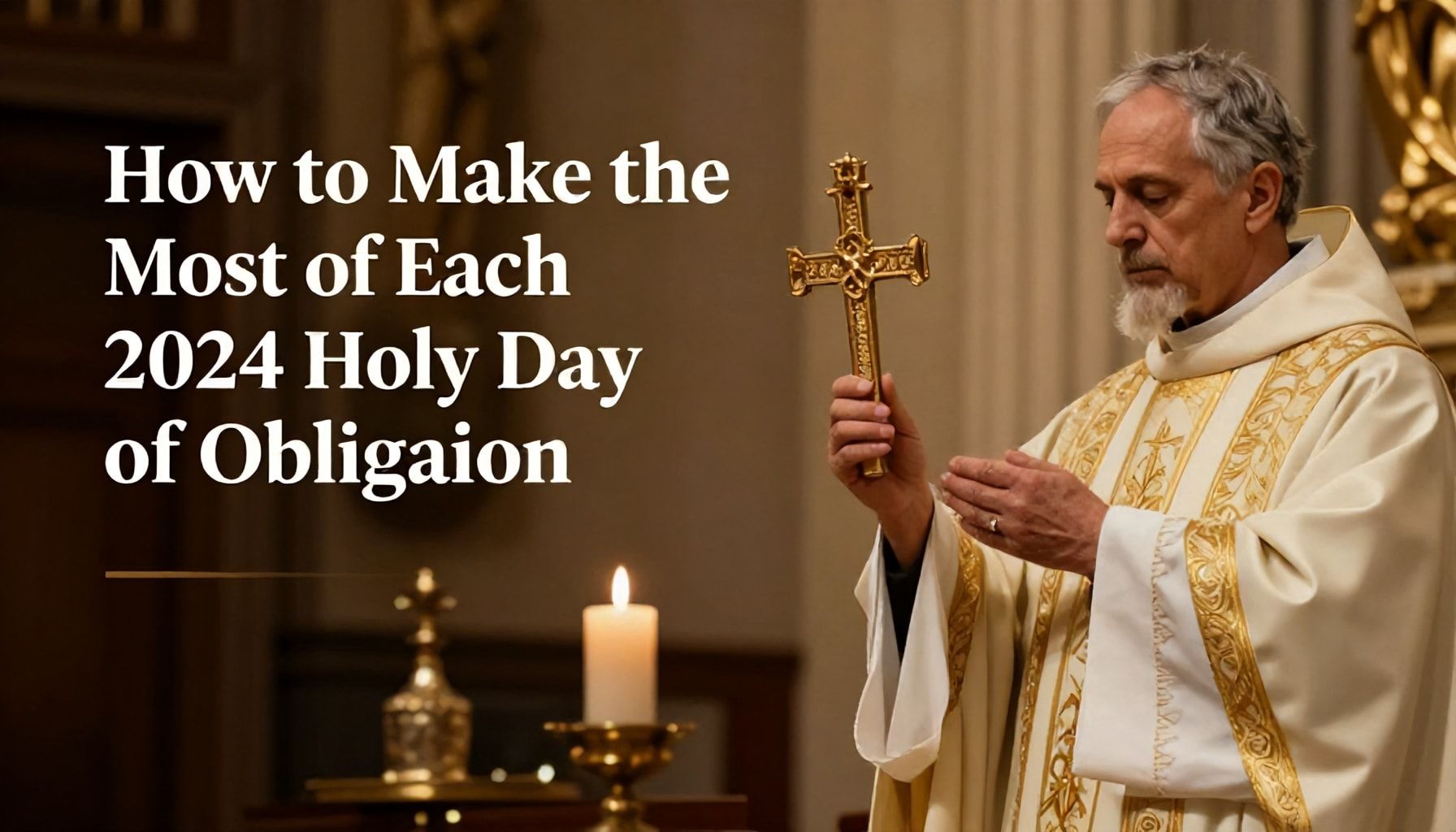
I’ve been covering the Catholic liturgical calendar for over two decades, and let me tell you—Holy Days of Obligation aren’t just dates on a page. They’re spiritual touchstones, moments when the Church invites us to pause, reflect, and reconnect. But if you’re like most Catholics, you’ve probably found yourself scrambling last-minute to fulfill the obligation or, worse, missing it entirely. Here’s how to make the most of each one in 2024.
1. Solemnity of Mary, Mother of God (January 1)
- Start the year right. Attend Mass, but don’t stop there. Reflect on Mary’s role in salvation history. Try a Marian devotion like the Rosary or the Litany of Loreto.
- Bonus: Many parishes offer a New Year’s Eve Vigil Mass. It’s a great way to transition into the new year with grace.
2. Ascension Thursday (May 9)
| Action | Why It Matters |
|---|---|
| Read Acts 1:1-11 | Understand the significance of Christ’s return to heaven. |
| Pray the Ascension Novena | Prepares you for Pentecost, which follows 10 days later. |
3. Assumption of Mary (August 15)
This feast is about hope. Mary’s assumption body and soul into heaven reminds us of our own destiny. Visit a Marian shrine if possible. If not, spend time in Eucharistic adoration. I’ve seen parishes offer extended hours on this day—take advantage.
4. All Saints’ Day (November 1)
- Visit a cemetery. Pray for the souls in purgatory. Many dioceses offer special indulgences on this day.
- Study the lives of the saints. Pick one to emulate for the year.
5. Immaculate Conception (December 8)
This is one of the most misunderstood feasts. It’s not about Mary’s sinlessness at birth—it’s about her being preserved from original sin from the moment of conception. Spend time meditating on the Hail Mary. If you’re in a major city, check for a midnight Mass on December 7th—the Vigil.
6. Christmas (December 25)
Don’t let consumerism steal the day. Attend Mass, but also take time to pray the O Antiphons in the days leading up to Christmas. I’ve found that families who do this together create a deeper sense of anticipation.
Pro tip: If you’re traveling, check the USCCB website for local Mass times. And if you miss a Holy Day? Don’t sweat it. Go to Mass the next day. The Church understands life happens.
As we reflect on the 2024 Catholic Holy Days of Obligation, these sacred opportunities invite us to deepen our faith through communal worship and personal devotion. Whether honoring the mysteries of Christ’s life or celebrating the saints who inspire us, each day offers a chance to renew our spiritual commitment. Beyond obligation, these feasts remind us of the grace and unity found in the Church’s liturgical rhythm. To make the most of these days, consider preparing with prayer, attending Mass with an open heart, and reflecting on the deeper meaning behind each celebration. As we journey through the coming year, let’s ask ourselves: How can these holy days transform not just our rituals, but our daily lives, drawing us closer to God and one another?